When the address took the whole back
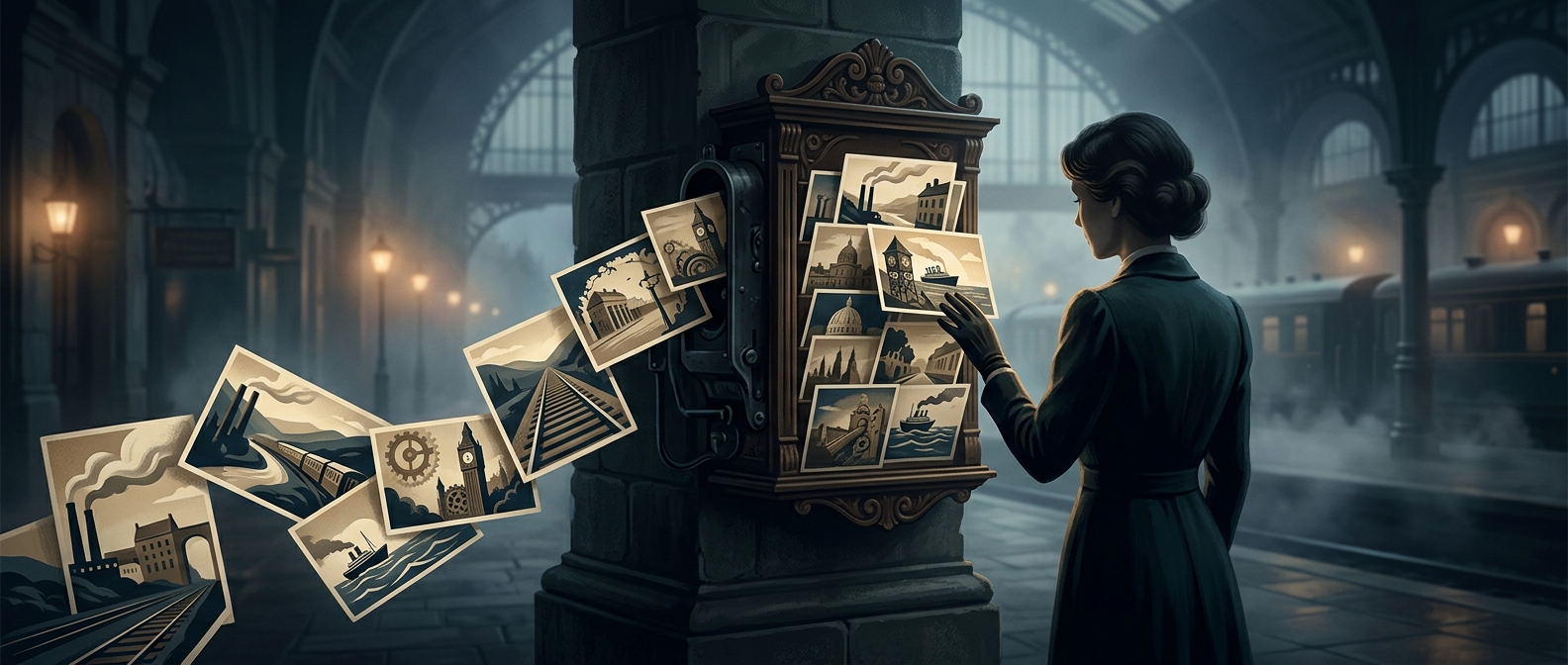
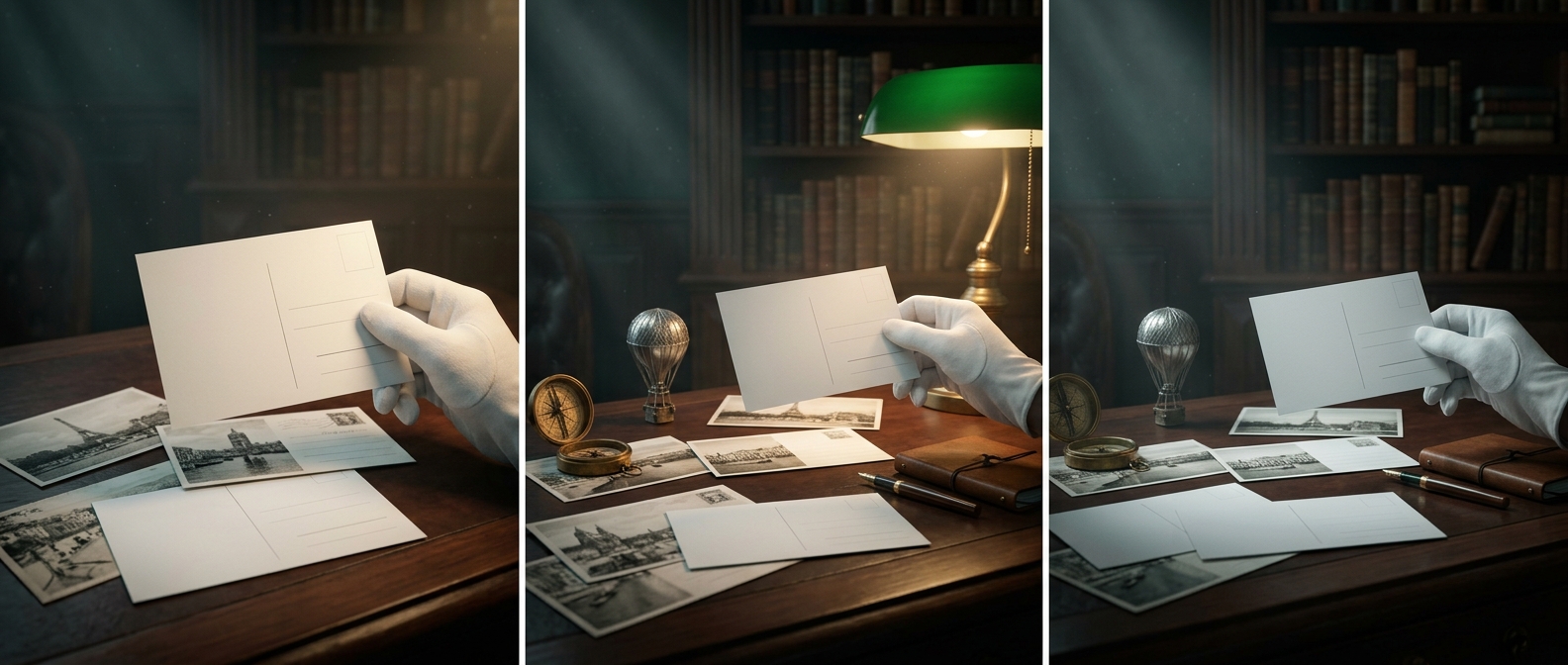
On an early postcard, the side that seems most convenient for writing was not necessarily available for a message. Postal rules reserved the back for the recipient’s address, so a sender had to write the note on the picture side—often in whatever blank space remained around the image.
That arrangement reflected the postcard’s job as a small, quickly handled piece of mail. The address and postage needed a clear place where postal workers could find them. The picture side, by contrast, was meant to be seen, even if a few lines of handwriting had to share it.
The image became part of the message
The restriction shaped how people used postcards. A sender might write in a margin, across an open patch of sky, or wherever the design left room. The choice of card mattered: a busy picture could leave little space, while a broad border offered more room for a note.
The result was a different kind of correspondence from a letter. A postcard encouraged brief, practical messages—news of arrival, a greeting, or a remark about the place pictured—while making the image itself part of what the recipient received.
Later postcard layouts divided the back between the address and the message, giving each its own space. Until then, a scenic view could double as stationery, and the sender’s handwriting became part of the picture.