A Monument Made by Removing Stone
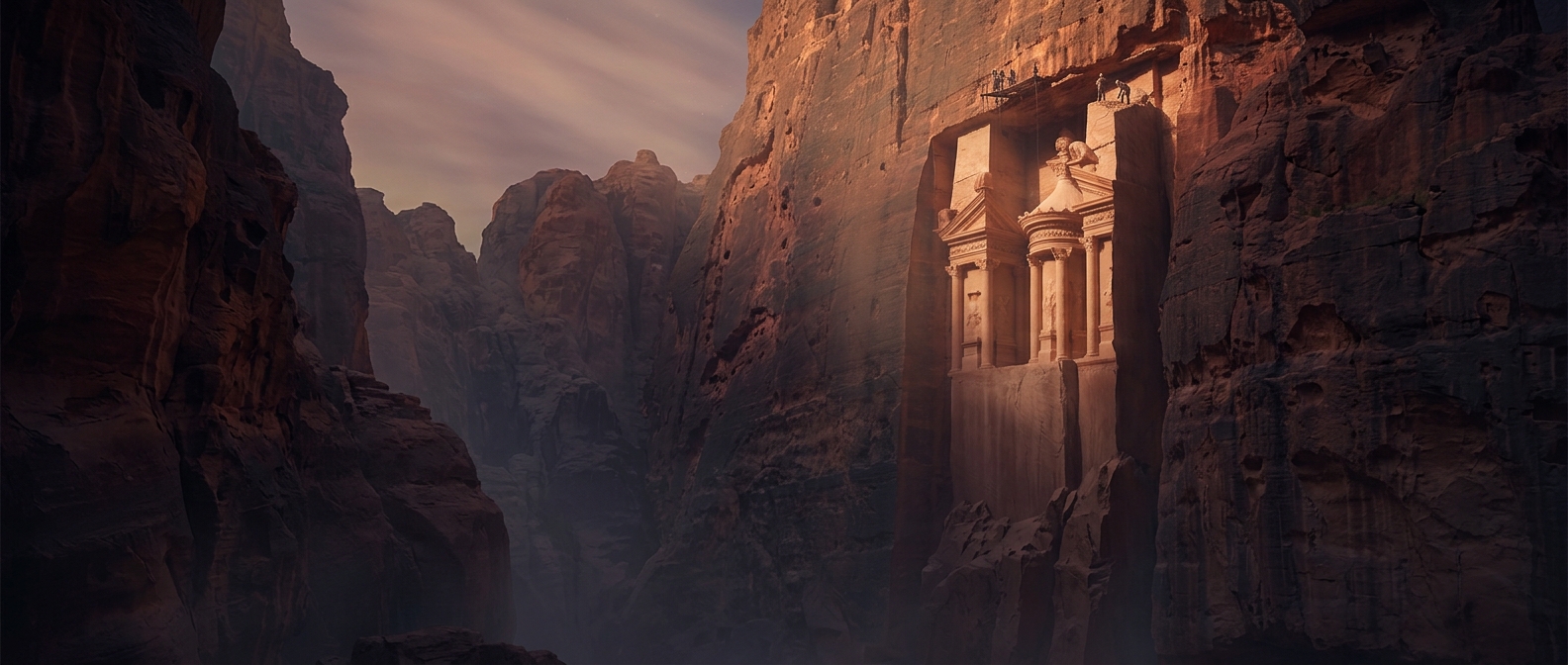
At Petra, a carved façade was not assembled from blocks brought to the site. The cliff itself was the building material. Workers cut away the rock around the design, leaving columns, pediments, doorways, and other features joined to the cliff behind them.
That made the work a one-way process: a misplaced cut could not be fixed by swapping in another block. The broad outline had to be established before the finer architectural details could be shaped. Starting high and working downward also kept newly removed rubble from piling up over finished work below.
The Cliff Was Both Building and Worksite
As the façade emerged, the remaining rock above still formed the workers’ access to the area being carved. Progressively cutting downward let them work through the design from its upper parts to its base, rather than trying to reach finished upper details after removing the rock around them.
The result is more than a building face attached to a mountain: it is a single sculpted surface whose columns and ornaments remain part of the sandstone. At Petra, the architecture was revealed by taking the cliff away.