A mission chapel, not a house with a cellar
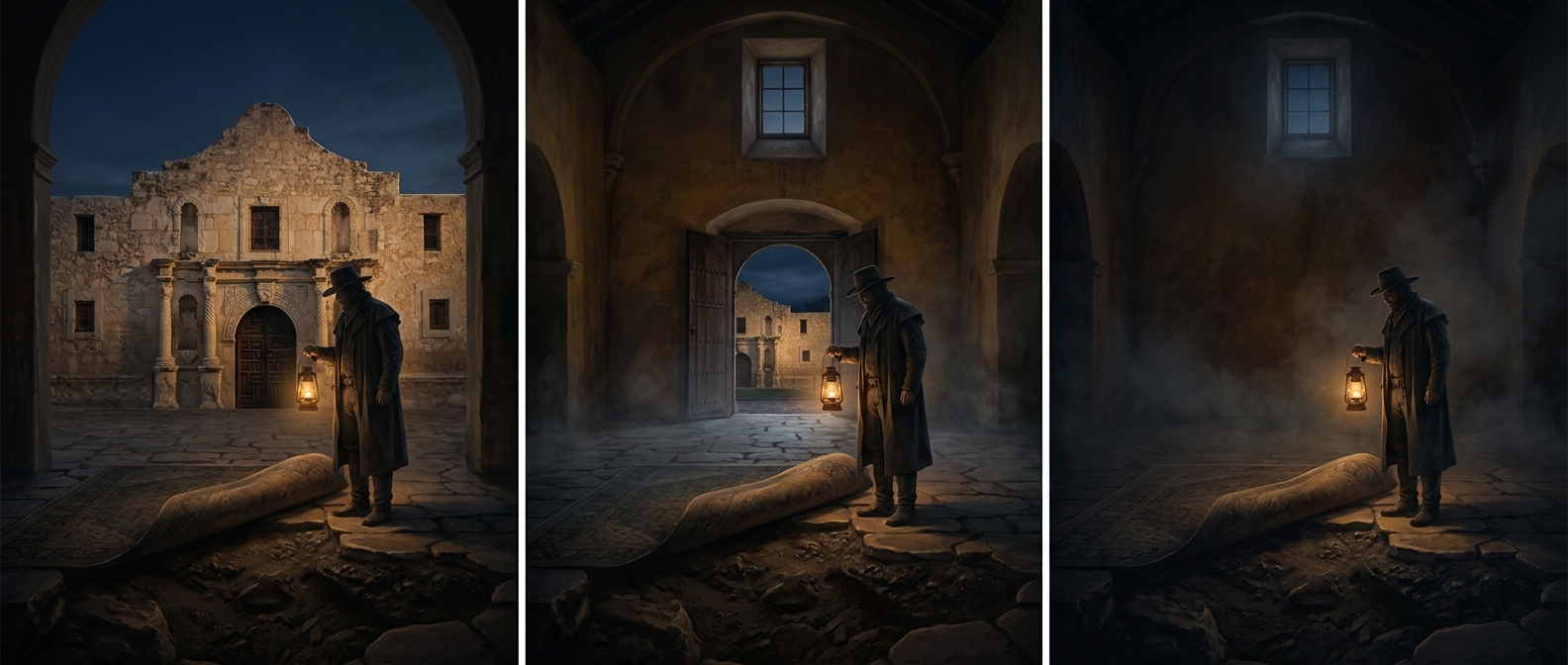
The Alamo began as a Spanish mission, and its best-known surviving building is the mission church, often called the Alamo chapel. It was built for worship, not organized like a modern house with rooms stacked above a utility level. The building’s story is mostly visible in its thick masonry walls and aboveground spaces; there is no visitor-accessible basement beneath the chapel.
That does not mean the ground below the Alamo is empty. Foundations and buried traces of earlier construction can survive underground, and archaeological work can reveal them. But those remains are not a hidden lower floor that visitors can descend into.
How a movie turned the question into a joke
The idea of an Alamo basement became widely recognizable through Pee-wee’s Big Adventure (1985), which plays the question for comedy. The joke works because it treats a famous historic site as if it must contain a secret room. Once the line entered popular culture, visitors began asking tour guides about the nonexistent basement as though it were part of the attraction.
At the real site, the interesting contrast is between the imagined secret passage and the ordinary work of preserving a centuries-old structure. What lies below may matter to historians and archaeologists; it is not a concealed space on the tour. The basement survives as a movie gag—and as a question guides still hear.