Why a mirror could signal power
In the 17th century, a mirror was not a routine household object. Producing a broad sheet of glass without bubbles, streaks, or distortions demanded specialized skill, and the reflective backing added another delicate step. Mirrors were made by applying a thin layer of tin treated with mercury to the glass—a process that involved toxic materials as well as careful workmanship.
That made a room lined with mirrors more than a decorative choice. It showed that the royal court could command costly materials and the craftspeople needed to turn them into an unusually ambitious display.
From scarce craft to a royal showcase
France was trying to build its own mirror-making capacity rather than depend on imported Venetian work. Under Louis XIV, the crown supported a royal glassworks, and French makers adopted techniques associated with Venetian glassmakers. The Hall of Mirrors, built in the late 17th century, put that developing skill on view at Versailles.
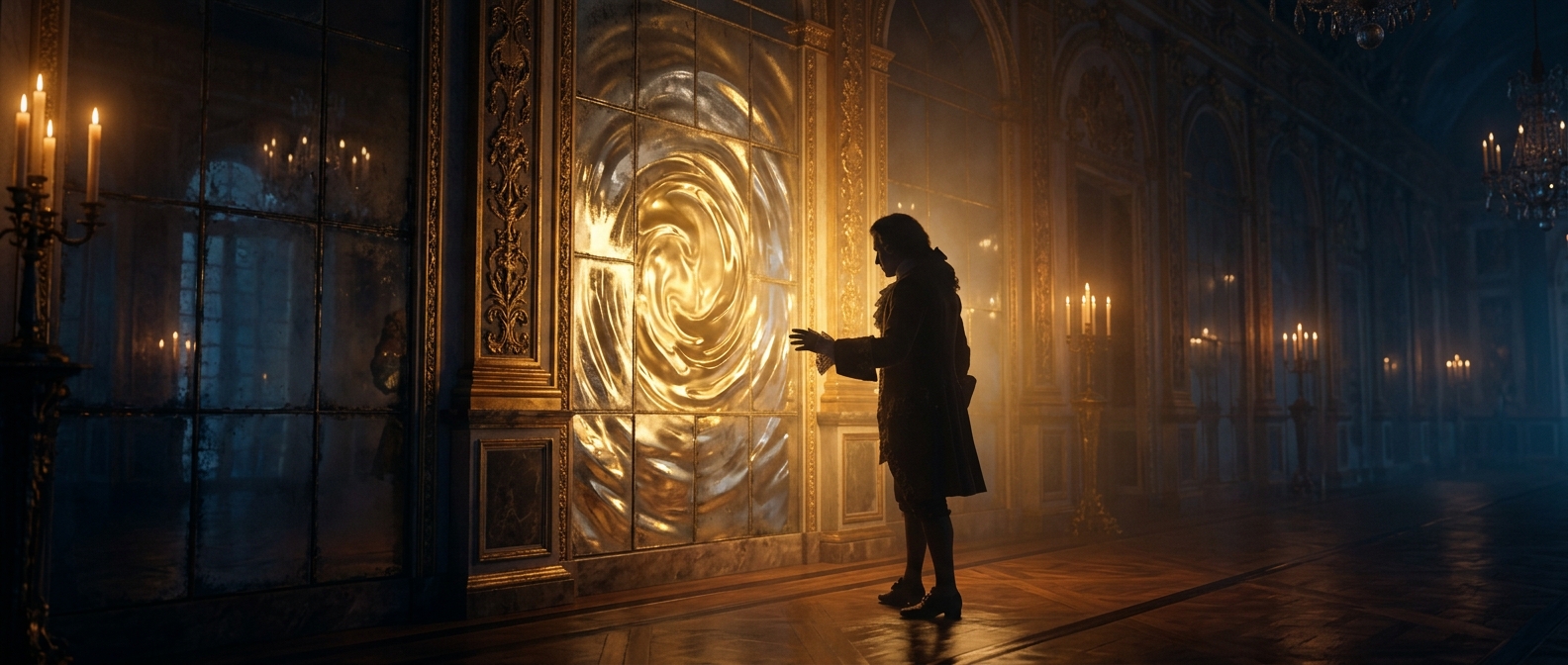
Its mirrors also changed how the gallery was experienced. Opposite the tall windows, they caught daylight and reflected the gardens, making the long interior seem brighter and more expansive. The effect depended on the very thing that made the mirrors valuable: they were large enough to reflect a room, not merely a face.
A visitor looking down the gallery sees not just a repeated pattern of glass, but an early statement that France could turn a guarded luxury craft into a feature of royal architecture.