A trunk designed for the journey, not just the wardrobe
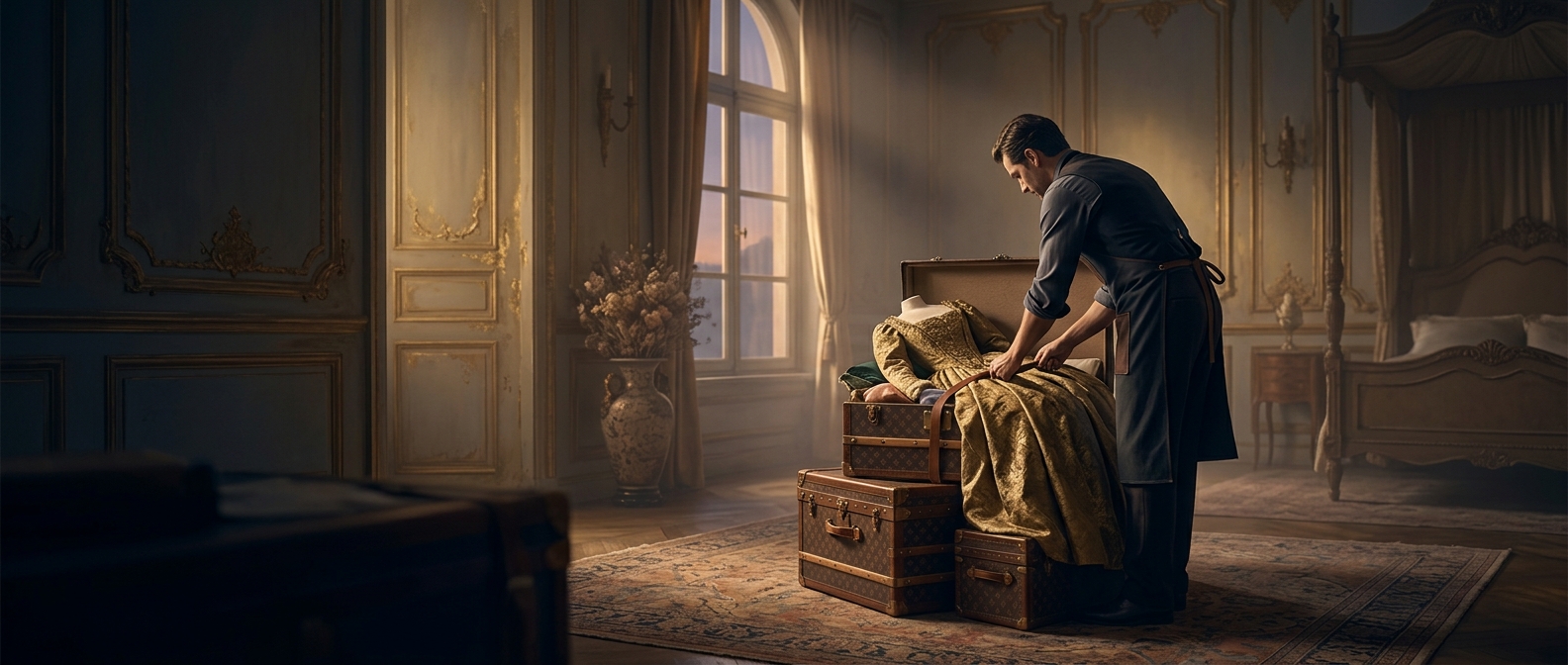
Before luggage was built to move efficiently through stations and onto trains, a traveling wardrobe demanded careful packing. Louis Vuitton’s work as a packer meant arranging garments and belongings so they would arrive usable, not simply squeezing them into a container. His early connection to the French imperial court placed that practical skill in a world where elaborate clothing had to travel with its owners.
Why a flat top mattered
Many traditional trunks had rounded lids that helped rain run off when trunks were carried on exposed vehicles. But that curved shape wasted the space above each case: another trunk could not sit securely on top. Vuitton’s flat-top design turned the lid into a usable surface, making cases easier to stack in the confined storage areas of trains and other forms of transport.
The change was modest in appearance but consequential in use. A traveler’s luggage could be arranged more compactly, and the trunk’s shape suited a journey in which belongings were repeatedly loaded, stored, and unloaded. The design answered a logistics problem: how to carry a large wardrobe without letting the luggage’s shape dictate how everything else had to be packed.
From personal service to travel goods
Packing and trunk-making addressed two parts of the same problem. The packer organized what went inside; the trunk protected it and made it manageable in transit. As rail travel made long-distance movement more routine for affluent travelers, luggage had to work as equipment as well as a container. Vuitton’s path from packing gowns to designing stackable trunks reflects that shift: the business of travel began with the contents, then extended to the case that carried them.