A Fairground landmark with an uncertain future
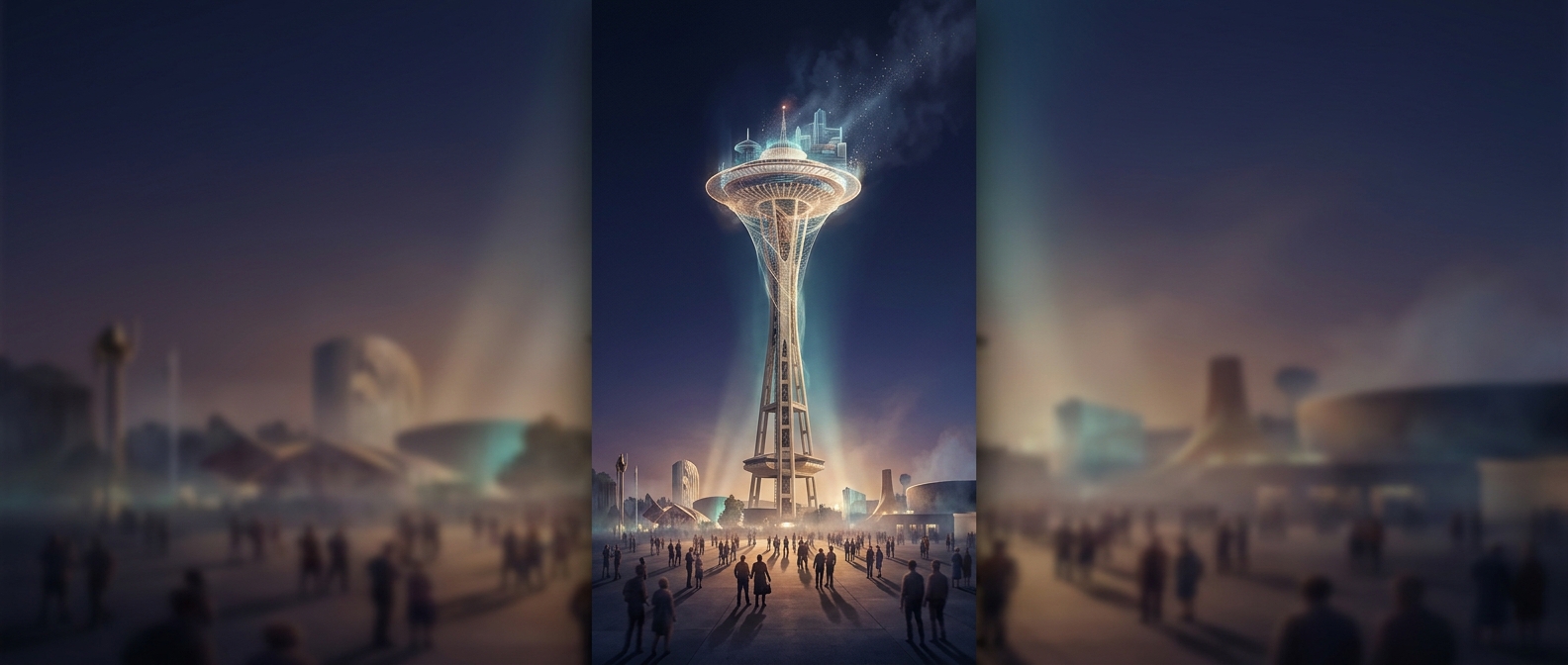
The Space Needle was built for Seattle’s 1962 World’s Fair, an exposition designed to draw visitors with exhibits, attractions, and a vision of the future. Many fair structures were temporary: they served a short event, then made way for whatever came next. The Needle, rising above the grounds as a viewing tower, was expected to share that fate.
That expectation made its survival a practical question, not just a matter of affection. A tall tower takes ongoing work and money to maintain, and once a fair ends, its crowds and immediate purpose disappear. Keeping it would require the city and its visitors to find a reason for it to remain useful.
The fair ended; the attraction did not
Instead of clearing the site and letting the Needle vanish with the exposition, Seattle kept it as a permanent landmark. The fairgrounds became Seattle Center, giving the tower a continuing place in a public destination. Visitors could still ride up for a panoramic view, while the structure itself became a recognizable marker of the city.
That shift—from event attraction to lasting destination—is what turned the Needle’s survival into part of its story. A building designed for a short-lived spectacle became valuable precisely because people kept coming to see it after the spectacle was over.