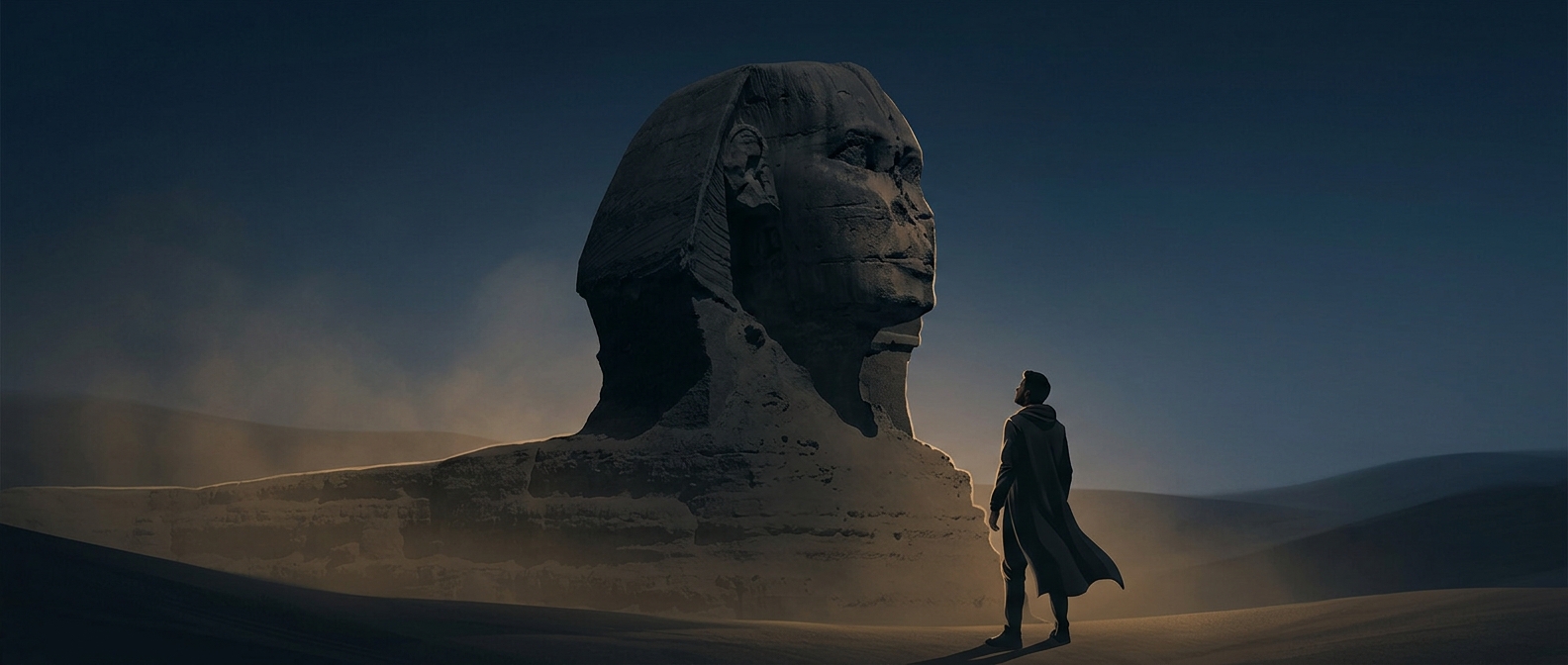
Why the Sphinx’s Face Weathered Unevenly
The Great Sphinx was carved directly from a limestone outcrop, rather than assembled from uniformly shaped blocks. Limestone is relatively soft, and the rock at Giza varies from layer to layer: some bands resist weathering better than others. As windblown grit and moisture gradually wore at the exposed stone, the face lost material—but not at the same rate everywhere.
The nose also projects outward from the face, leaving it more exposed and easier to damage than the broad, recessed areas around it. Chisel blows could break away that projecting stone much faster than natural weathering could.
A Missing Feature, Not a Missing Face
The nose’s loss makes the Sphinx’s expression difficult to read, but much of the surrounding face remains. That contrast is a visible record of two different forces: slow, uneven decay across the limestone and deliberate blows concentrated on a vulnerable feature. The stone’s varied texture is why weathering across the monument looks patchy rather than like a smooth, uniform wearing-down.