An army moved at the pace of its food
For Alexander’s army, distance was not just a matter of how many miles soldiers could walk. Every day’s advance also depended on getting enough food to the people—and animals—moving with them. Grain was valuable because it could be stored and carried more easily than fresh food, but it was not ready to eat: it had to be ground or cooked, which meant finding time, equipment, and fuel along the way.
That made a marching force a traveling supply system. Soldiers could carry some provisions, while pack animals bore heavier loads; as the army crossed inhabited regions, supplies could also be obtained locally. Neither option was effortless. Animals needed fodder and water, while relying on local food meant that the army’s route and pace were tied to what a region could provide.
Terrain turned logistics into a daily calculation
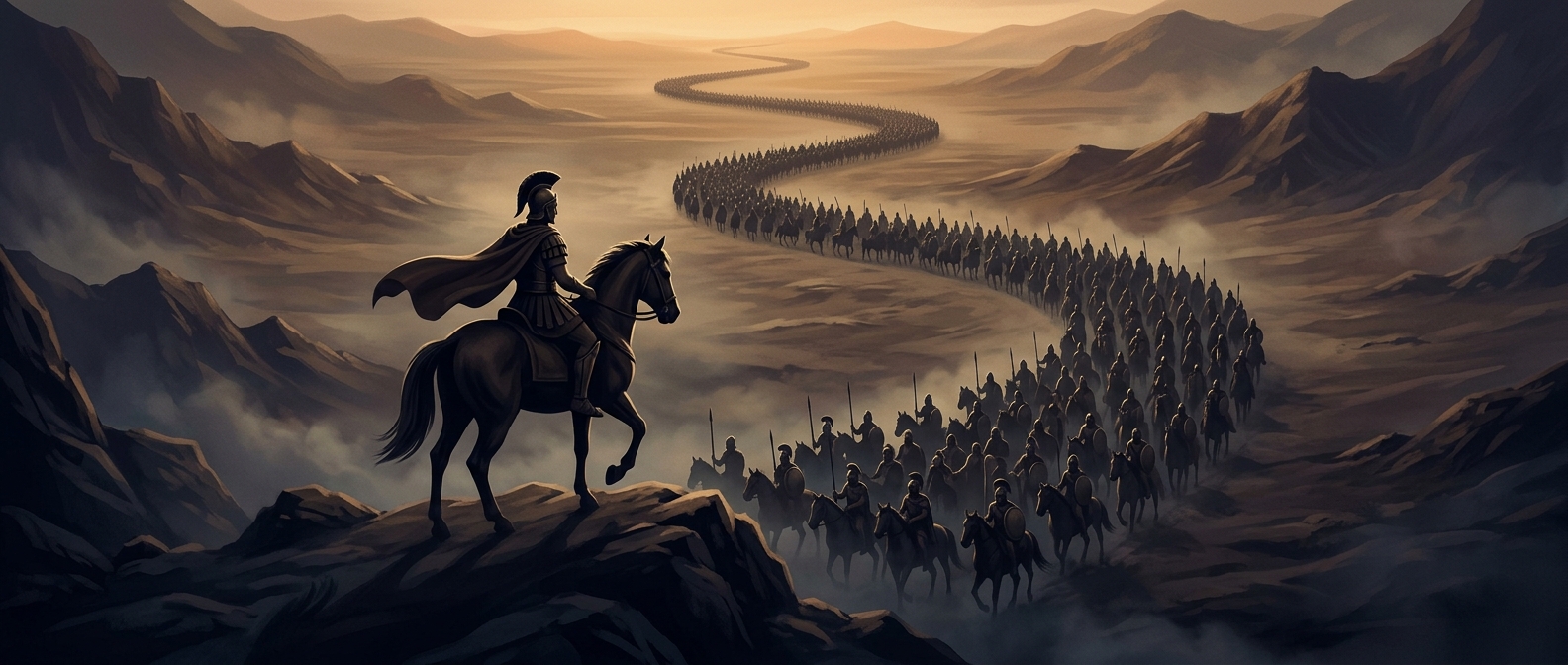
A desert crossing made water the immediate limit. In mountains, steep paths and narrow passes slowed people and animals, making it harder to move supplies and keep the force together. A route that looked shorter on a map might therefore be less practical than one with reliable water, usable paths, or settlements where provisions could be found.
The army could not simply keep marching at full speed. It had to pause, organize supplies, and adjust its progress to the landscape. The real achievement was not merely crossing vast distances, but keeping food moving through places that made every stage of the journey different. Grain connected the military campaign to the geography: where it could be carried, prepared, and replenished helped determine where an army could go next.