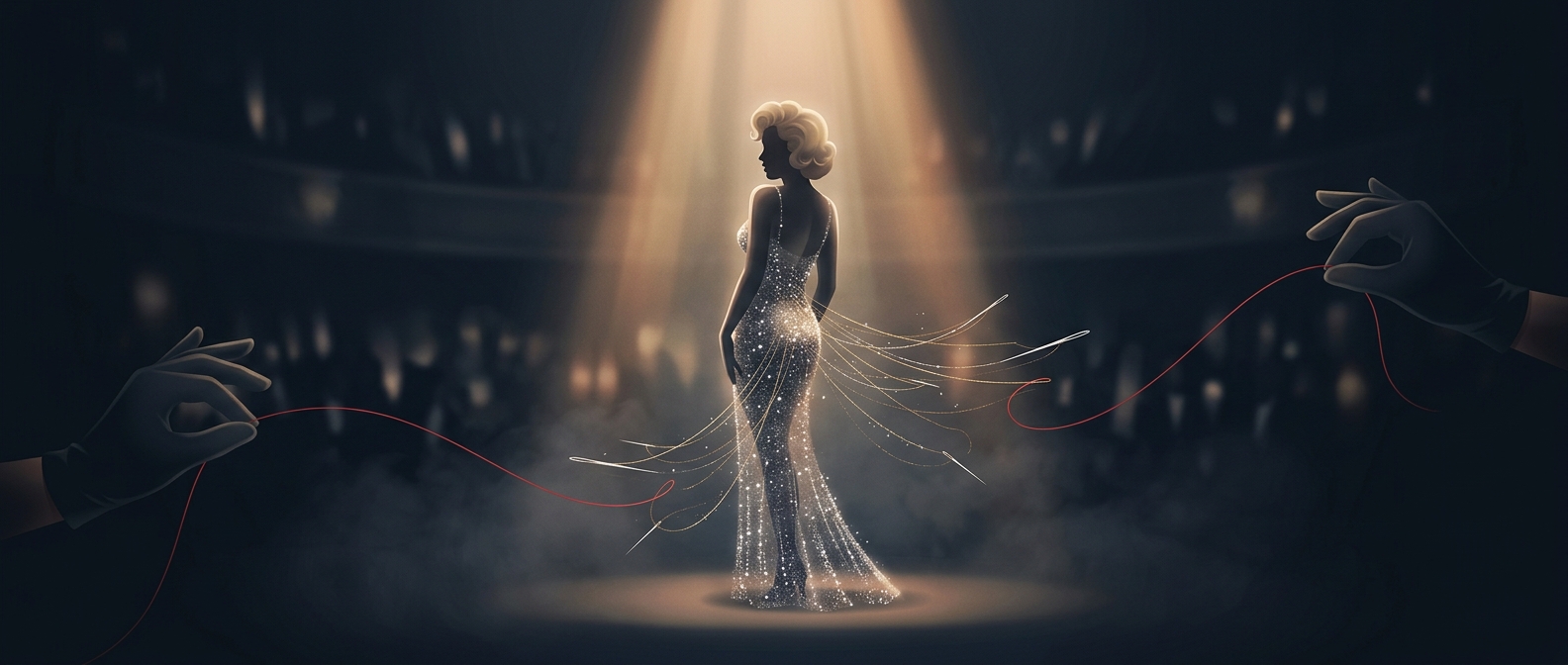
Why the gown had to be closed on her body
The dress’s effect depended on a near-invisible fit. Its sheer, skin-toned fabric was covered in crystals, leaving little room for ordinary seams or undergarments without risking visible lines beneath the stage lights. Monroe wore nothing underneath, and the gown was stitched closed while she was wearing it so it could fit closely without a conventional closure breaking up its outline.
A stage effect with a practical cost
That close fit helped create the illusion that the sparkling gown was barely there. But it also meant Monroe could not simply step into it and fasten it herself: the final adjustment had to be made around her body, and getting out required undoing the stitches. The famous look was therefore not just a matter of choosing a daring dress; its visual impact depended on a garment that was difficult to put on—and designed to be difficult to move in.