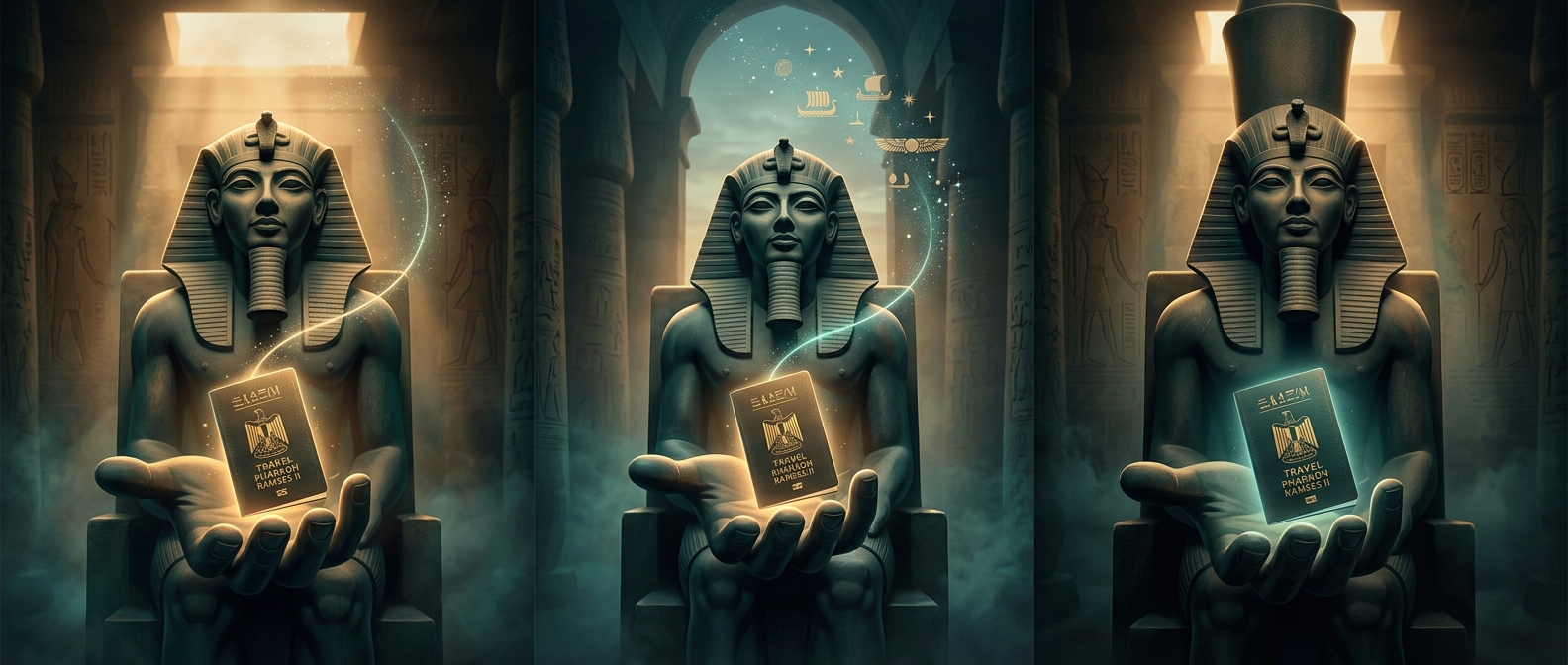
How a Royal Seal Carried Authority on the Road
A royal seal did more than decorate a scroll: it acted as a physical mark of approval. Pressed into softened wax with a carved seal, it left a distinctive impression associated with the ruler or royal office. A recipient who recognized that mark could treat the document as authentic rather than as an ordinary message written in the ruler’s name.
The Mark and the Messenger
The seal helped connect a document to its sender. If wax closed the scroll, its impression could also show whether someone had opened it: breaking the seal would damage the mark or its wax. A messenger carrying an intact, recognizable seal therefore carried evidence that the message had not been tampered with on the way.
That was not the same as a modern photo ID. The seal authenticated the document and helped establish the messenger’s authority to deliver it; it did not, by itself, prove the bearer’s personal identity. Its force depended on recipients recognizing the impression and trusting that the seal had been used legitimately.
Why the Journey Mattered
Wax was useful because it could take a crisp impression, but it was vulnerable to heat and rough handling. If it softened, melted, cracked, or was damaged, the mark might become harder to recognize—or raise doubts about the message’s condition. The seal’s authority thus depended on a small, fragile object making it intact from the royal court to its destination.
A messenger did not just carry words across the distance. The unbroken impression helped carry the ruler’s authority with them.