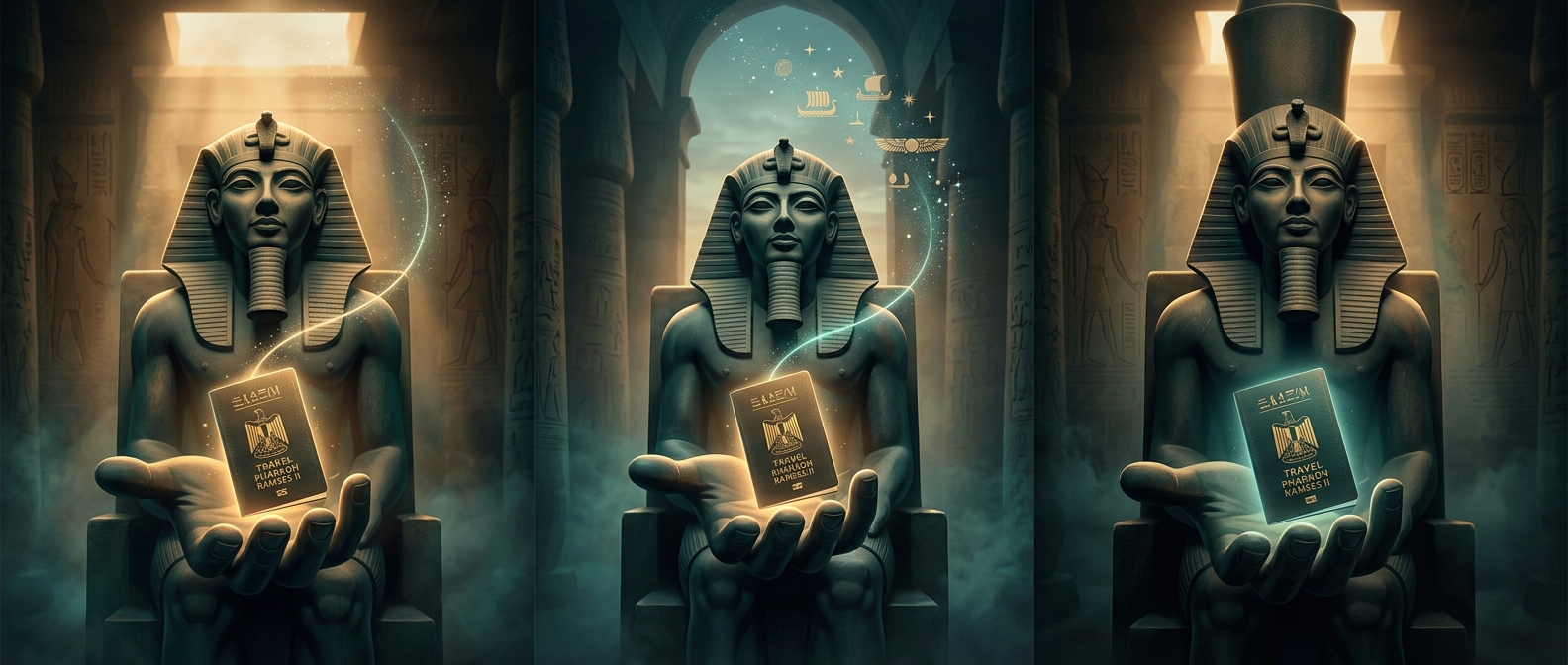
A king’s body met a modern border
In 1976, Ramses II’s mummy was sent from Egypt to Paris for conservation work. The journey crossed an international border, so officials needed travel documentation for the remains. Egypt issued the ancient ruler a passport—not because he could travel in the ordinary sense, but because modern border procedures still had to account for the person represented by the body.
The paperwork followed the remains
A passport normally connects a living traveler to a nationality and identity. For Ramses II, that familiar document served a more unusual purpose: it identified the mummy as the Egyptian king being transported for treatment. The contrast is striking, but the practical problem was straightforward. A priceless human remain could not simply be shipped across borders without official documentation.
The trip also reflects how conservation can require moving an object—or, in this case, a person’s preserved body—to where specialists and suitable facilities are available. Once in Paris, the mummy received treatment before returning to Egypt.
An ancient identity in a modern system
The passport did not make Ramses II a traveler in the legal or personal sense. It made his identity legible to a system built for contemporary journeys. For a few days, the king who had ruled more than three millennia earlier was also a documented passenger, carried across a border under the rules of the modern world.