Why one pull can move the whole map
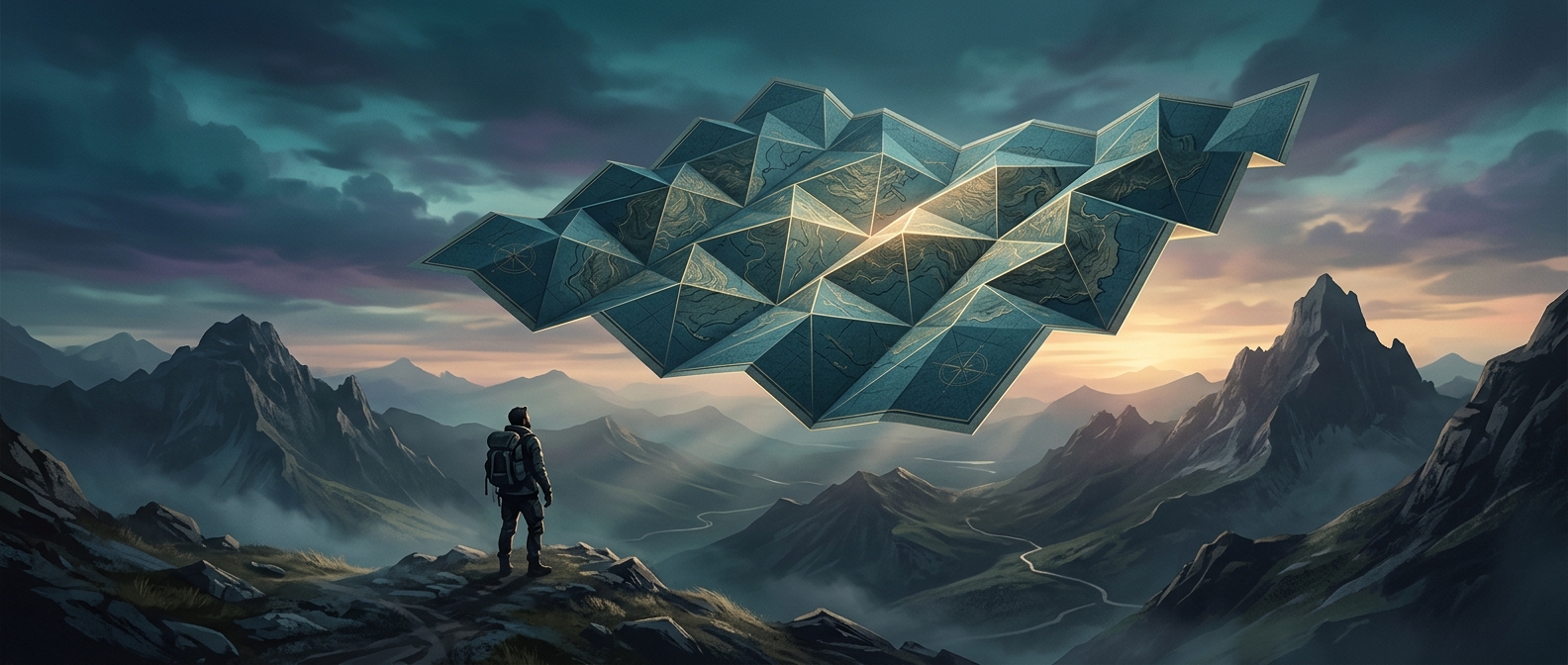
A Miura-ori fold divides a sheet into repeating parallelograms, with creases arranged in alternating directions. The pattern matters: each small panel is linked to its neighbors, so opening one part changes the angles of many others at once. Instead of unfolding one crease after another, you can pull the sheet open in a coordinated motion—and push it closed again.
The geometry also makes the fold compact. The panels stack into a narrow bundle, while the linked creases let the sheet expand across a much larger area. In mechanical terms, the pattern has a single coordinated mode of movement: the folds cannot move independently without the surrounding panels moving too.
Folding changes where the strain goes
A plain sheet bent repeatedly in the same place can develop a weak spot. In a patterned sheet, bending is guided along designed creases, while the panels between them mostly keep their shape. That helps limit uncontrolled buckling and distributes movement across the pattern, reducing the chance that the sheet will tear during repeated opening and closing.
For a map, the payoff is practical: a broad surface can collapse into a small package and reopen without a user having to find and reverse a maze of individual folds. The same geometry is useful wherever a large, thin surface must travel compactly and deploy quickly.