How a passing train makes the track sing
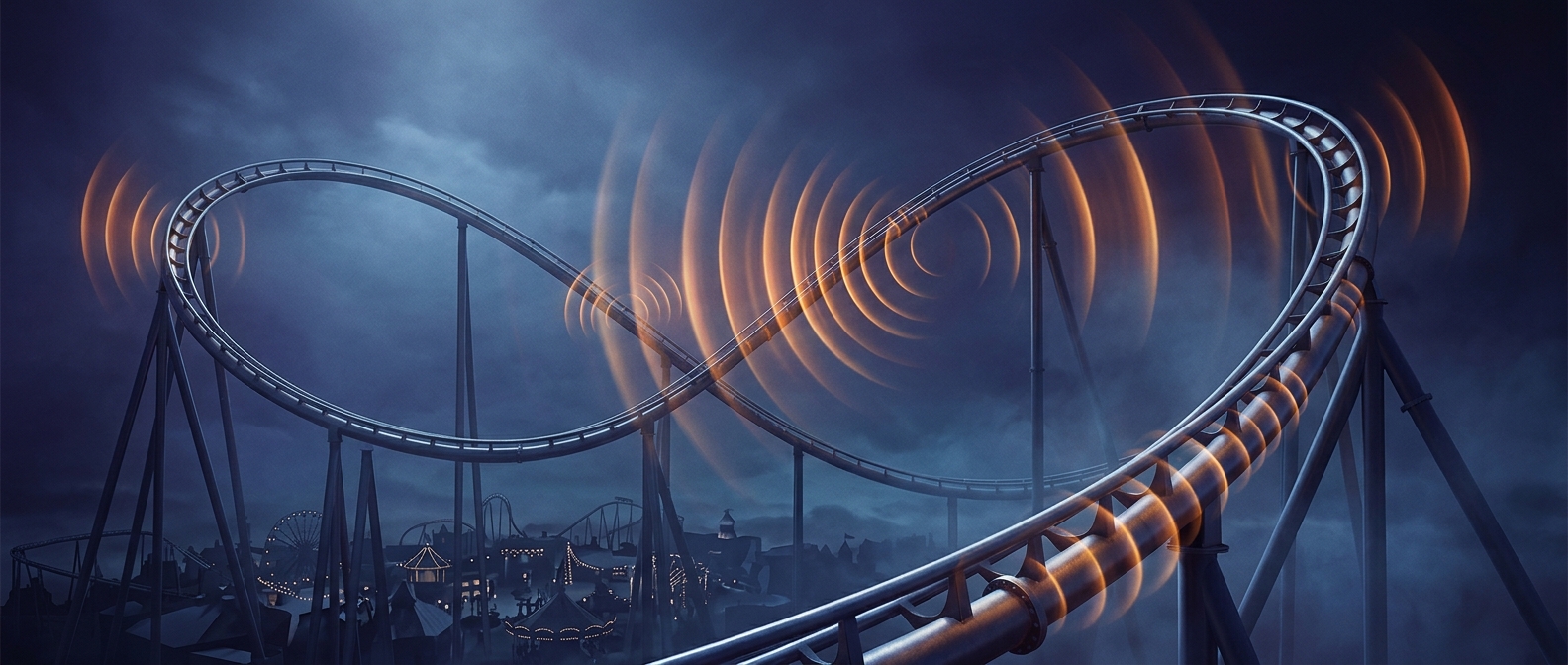
A coaster train does not simply glide over a silent rail. Its wheels press and roll against the steel track, and small changes in the rail’s shape, joints, and alignment create vibrations. The wheels and track both vibrate; the track then passes some of that motion into the air as sound.
Many steel coaster rails are hollow tubes. Like the body of a drum, a tube can resonate: vibrations make its walls flex, and the enclosed air and steel reinforce certain pitches. The result is a louder, more sustained sound than the wheel contact alone might suggest. It is not one perfect note, but a shifting roar as the train moves across different sections of track.
Why the roar changes along the ride
The sound depends on more than the hollow rail. Wheel design and speed affect the vibrations, while track curves, transitions, and supports alter how those vibrations travel. A section that transfers energy efficiently into its structure can make a passing train especially loud; other sections may sound comparatively quiet. The track and its supports can carry vibration beyond the point where the wheels first set it off.
That is why the roar can seem to swell as a train approaches, peak as it passes, and fade after it is gone. The track is not merely a path for the train: it is part of the ride’s sound-making machinery, turning the motion of wheels and steel into a noise that can be heard across the park.