Why a Full Flight Can Run Out of Bin Space
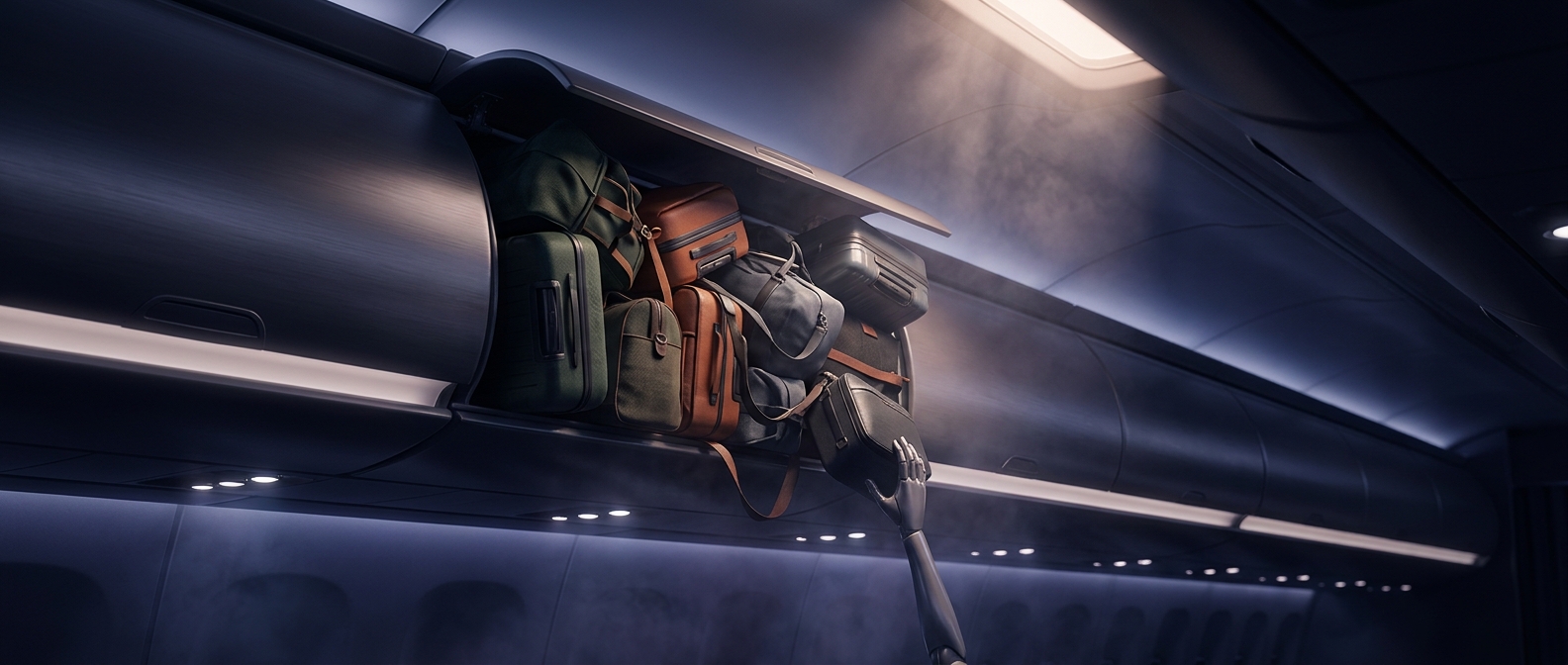
An overhead bin is shared cabin storage, not a compartment assigned to each seat. Its usable capacity depends on the aircraft’s layout and the shape of the bags passengers bring. A roller bag may fit only when placed on its side, while soft bags can be squeezed into gaps; bulky coats and smaller items also take up room. Even bags that meet an airline’s carry-on size limit do not pack together like identical boxes.
That makes boarding order matter. Passengers who board earlier can use the available space first, and later arrivals may find that nearby bins are full even if there is still room elsewhere in the cabin. Crew members may shift bags to make space, but they cannot safely pack every last gap: bins must close securely, and some items may need to go under a seat instead.
What Happens When the Bins Fill
If a bag cannot be stowed safely, airline staff may ask its owner to check it at the gate. The bag is tagged and carried in the aircraft’s cargo hold rather than kept in the cabin. The process can vary: travelers may collect a gate-checked bag at the jet bridge after landing, or at baggage claim.
The practical lesson is that a carry-on allowance guarantees permission to bring a bag, not a particular spot for it. Keeping medications, valuables, and anything needed during the flight in a small personal item under the seat can prevent a last-minute change of plan when the overhead space is gone.