Why an Airplane Toilet Uses Air to Move Waste
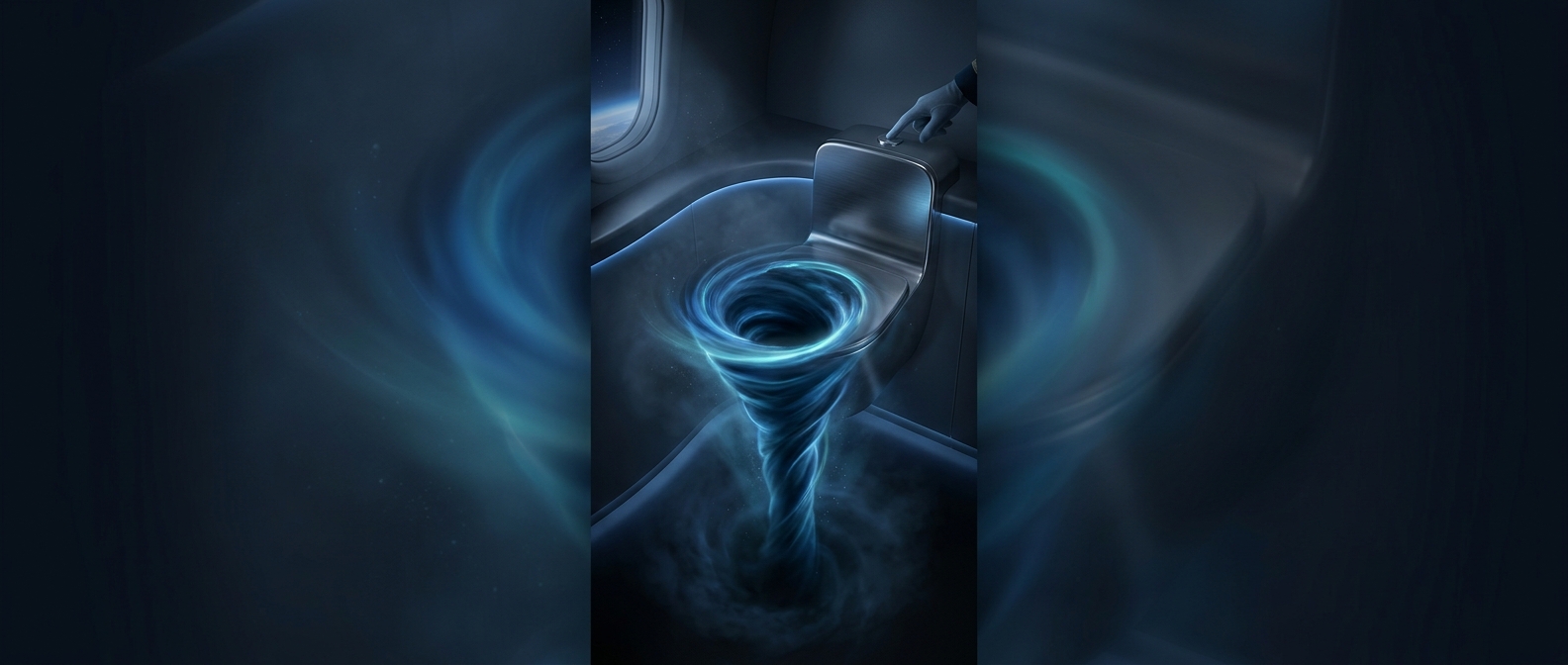
A conventional toilet spends a substantial amount of water pushing waste around a curved bowl and into a drain. On an aircraft, carrying that water would add weight, so the lavatory uses a different tool: a controlled difference in air pressure.
When the flush is activated, a valve briefly opens between the bowl and the waste line. Air rushes toward the lower-pressure pipe, carrying waste with it. The flush uses only a small amount of rinse water; the airflow does most of the transporting. The valve then closes, isolating the bowl from the plumbing and helping keep smells from returning to the cabin.
A Short Route to a Sealed Tank
The pipes lead to a sealed holding tank rather than to the outside of the aircraft. Keeping waste contained is essential: the system must work through changes in altitude and pressure without leaking into the cabin. Seals and valves therefore do more than direct the flush—they maintain the boundary between the lavatory and the rest of the aircraft.
After landing, ground crews connect service equipment at an exterior panel to empty the tank. The result is a system that can move waste with very little water while storing it safely until the aircraft is serviced. That sharp whoosh is the sound of the pressure difference doing the work a larger volume of water would do at home.