Why a Bedroom Mirror Can Feel Out of Place
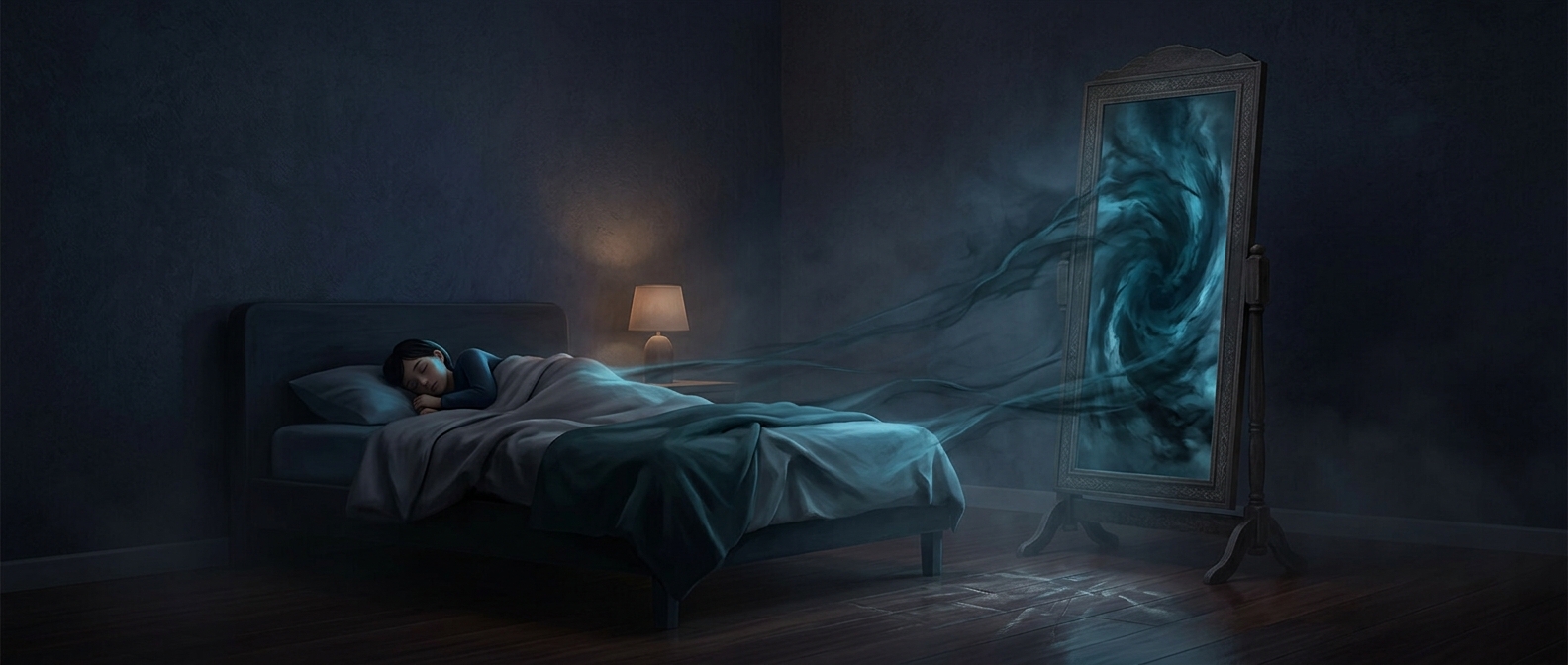
In some feng shui traditions, a bedroom is meant to support rest and intimacy, while mirrors are treated as objects that amplify or redirect what is around them. A mirror facing the bed can therefore be understood as bringing too much activity into a space meant to feel settled. The idea belongs to a system of symbolic principles about arranging a home—not to a scientifically established force moving through the room.
The Meaning Behind the Placement
Feng shui uses qi, often described as the movement of life energy, to talk about how a space feels and functions. Within that framework, reflecting the bed may seem to keep energy in motion rather than letting the room feel quiet. Some people also associate a mirror opposite the bed with a sense of exposure: the sleeping area appears doubled and less private.
Those interpretations vary among traditions and households. They are not a universal rule, and people may follow them for cultural, spiritual, or personal reasons rather than because they expect a measurable effect.
A Practical Test
The placement can matter even without a spiritual explanation. A reflection that catches movement, a light source, or a person waking in the dark may make the room feel less restful. Turning the mirror, covering it at night, or moving it out of the direct sightline of the bed can preserve the room’s intended calm—whether that calm is understood through feng shui or simple comfort.