A Rule That Shapes the Fight
This gangster’s code is not a promise to avoid violence. It is a boundary around whom he considers fair to strike. That distinction makes the rule revealing: he can use startling force against male opponents, but he will not cross the same line even when a woman attacks him first.
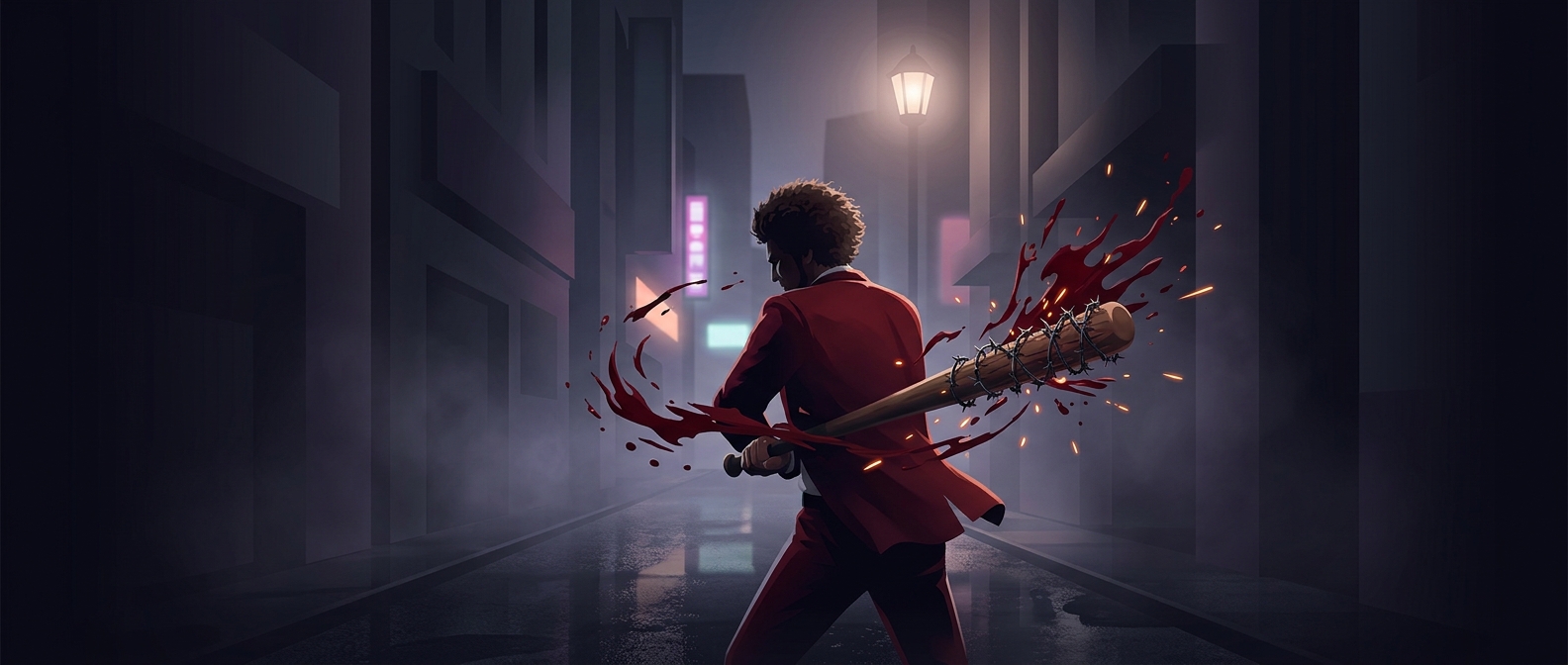
In a brawler, that choice affects more than the character’s image. If the game lets players unleash improvised weapons and brutal finishing moves on one set of enemies, while withholding those actions against another, the combat system turns his personal rule into something the player can see. The limit is part of the characterization, not evidence that he is harmless.
Restraint Can Make Violence More Legible
A code like this gives the character a recognizable moral boundary in a world where ordinary restraint has largely vanished. The contrast is intentionally sharp: a bicycle can become a weapon against a man, yet a woman’s attack does not erase the prohibition. That rigidity can make the rule feel principled, stubborn, or both.
It also creates a useful tension for action storytelling. The hero’s violence remains spectacular, but it is not indiscriminate; the audience is asked to notice the difference between his capacity to hurt people and the line he chooses not to cross. The code does not make him nonviolent—it defines the terms on which he is willing to be violent.