Sleep as a Form of Daoist Practice
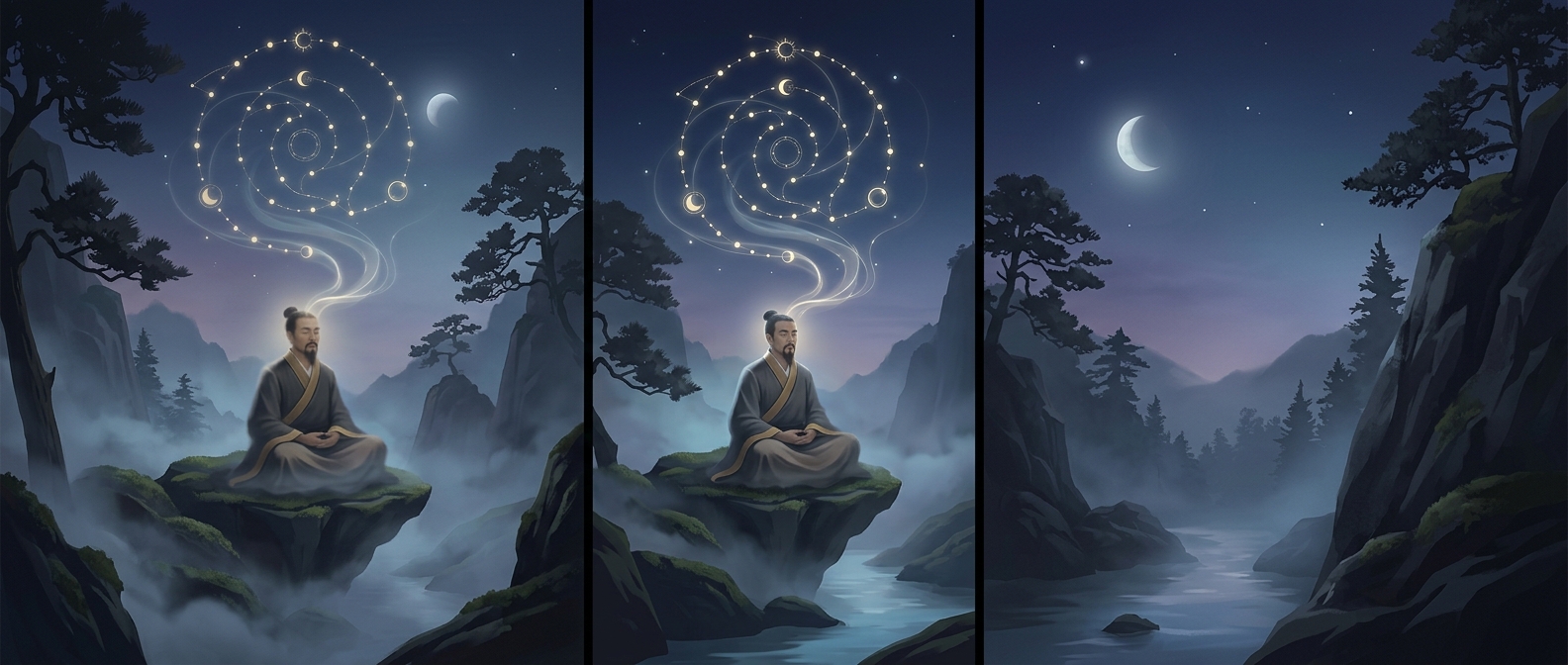
Stories about Chen Tuan’s extraordinary sleep place him in a tradition that treated spiritual cultivation as more than deliberate prayer or strenuous self-denial. Daoism—the Chinese religious and philosophical tradition concerned with living in harmony with the Dao, or “the Way”—includes practices for quieting the body and mind. In that setting, sleep could be imagined as a radical withdrawal from ordinary activity: instead of pursuing insight through effort, the practitioner becomes still.
What the Legend Makes Visible
The tale’s contrast with fasting and meditation is important. Fasting works through restraint; meditation usually suggests sustained attention. Chen Tuan’s legendary method appears to abandon both kinds of exertion. Its startling duration turns a familiar bodily need into a sign of unusual detachment from everyday life.
That is a religious image, not evidence that prolonged sleep grants supernatural powers. The story’s force lies in what it says about spiritual discipline: the ideal sage might seem to do almost nothing, yet be understood as profoundly removed from ordinary desires and distractions.
A Recluse’s Reputation
Chen Tuan is remembered in Daoist lore as a reclusive figure, and accounts of his sleep helped make withdrawal itself part of his legend. The hundred-day claim is best read as a feat of sacred storytelling, not as a practical regimen. Its memorable twist is that the path to the divine is portrayed not as doing more, but as becoming so still that the world appears to fall away.