A disappearance designed to become a story
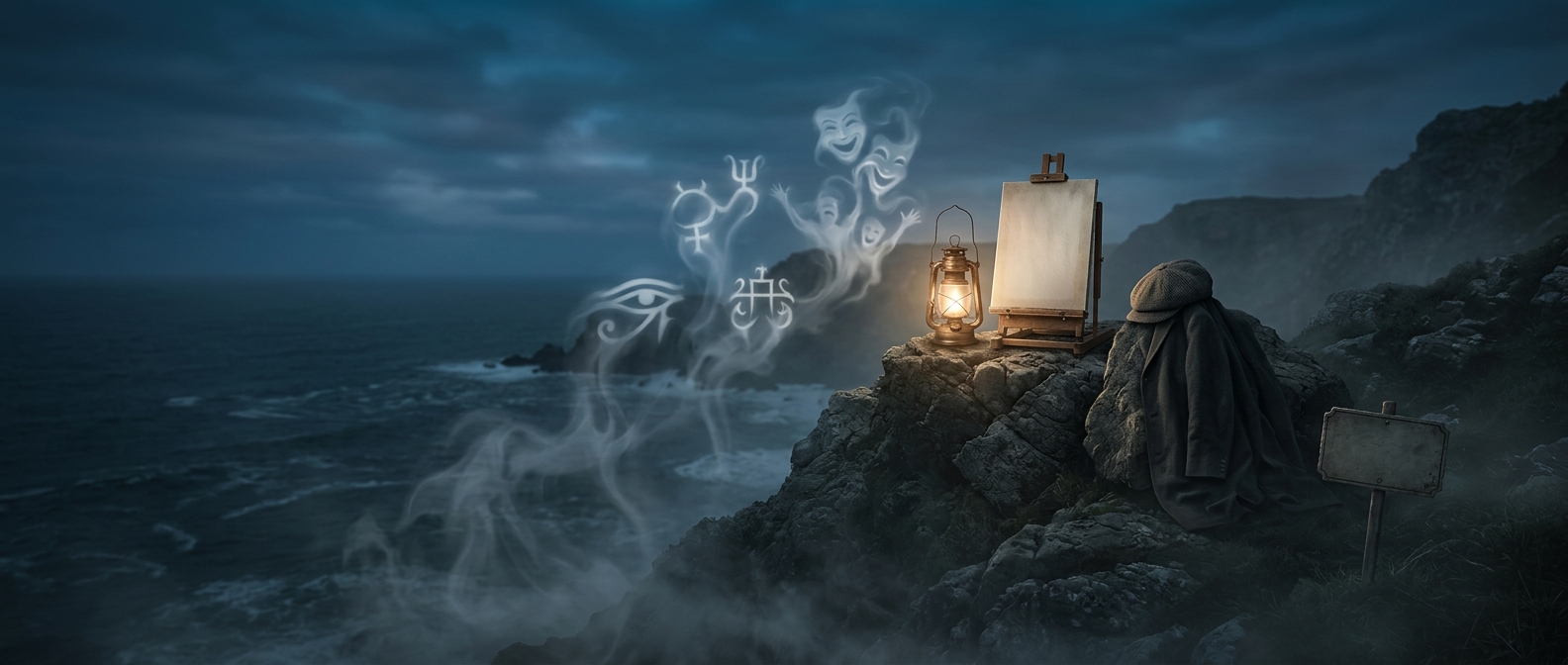
Boca do Inferno—Portuguese for “Mouth of Hell”—is a rugged coastal cleft near Cascais, where waves crash into a gap in the rocks. In 1930, it gave Crowley’s disappearance a ready-made scene: a dramatic place, an apparent suicide, and a note left behind. The setting made an absence look like an event that demanded explanation.
The note was the crucial prop. Without it, Crowley might simply have seemed to be missing; with it, the scene invited reporters and readers to treat his disappearance as a mystery. Poet Fernando Pessoa helped stage the episode, lending the stunt a local collaborator as well as a striking location. Crowley then stayed away for three weeks before reappearing.
Turning notoriety into attention
Crowley was already known for his occult persona—the public image of a man associated with esoteric beliefs and rituals. The stunt used that reputation as fuel: an apparent death was more likely to attract notice when it involved someone people already regarded as enigmatic. The timing also tied the drama to a practical aim: drawing attention to his esoteric paintings.
The mechanism was simple but effective. A staged disappearance created a news hook; the period of uncertainty kept the story alive; the reappearance supplied its ending. Crowley did not need to persuade people that the paintings were mysterious. He made his own absence mysterious enough to put them in the conversation.