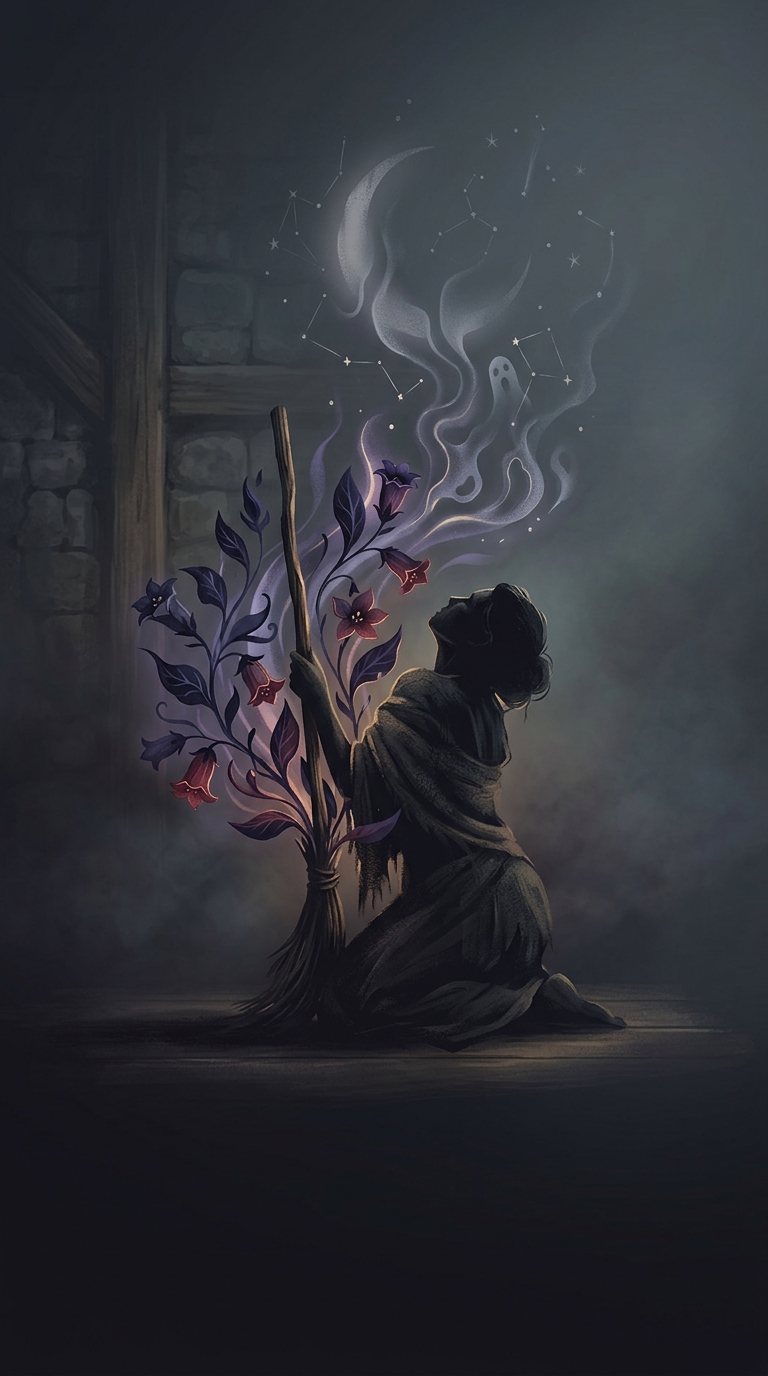
How “flying ointment” could produce extraordinary sensations
Stories of witches flying on broomsticks have sometimes been linked to ointments made with plants such as belladonna or henbane. These plants contain chemicals that interfere with acetylcholine, a messenger the nervous system uses to regulate attention, memory, vision, and bodily functions. In sufficient doses, the chemicals can cause confusion, vivid hallucinations, and a distorted sense of movement—not controlled flight, but experiences that might feel like leaving the ground.
The dose and route matter. Swallowing these plants can cause severe poisoning. Some compounds can also enter the body through moist tissue, which helps explain why later writers proposed that ointment might have been applied to sensitive areas rather than eaten. But absorption is unpredictable, and the same plants can cause dangerous, disorienting effects.
A hypothesis, not a settled account of medieval practice
Historical references and later folklore discuss magical ointments, but the familiar story of witches rubbing a broom handle against the genitals is not established as a widespread medieval practice. It is an interpretation of scattered evidence, not a conclusion historians can confidently apply to European witches as a group. A broom may have figured in stories and rituals without serving as a drug-delivery device.
The enduring idea comes from a striking overlap: poisonous plants can alter perception, and people have long used flight as a way to describe dreams, visions, or sensations of movement. That makes the ointment theory plausible in outline, but it cannot turn a legend into a documented recipe or explain every account of a witch’s flight.