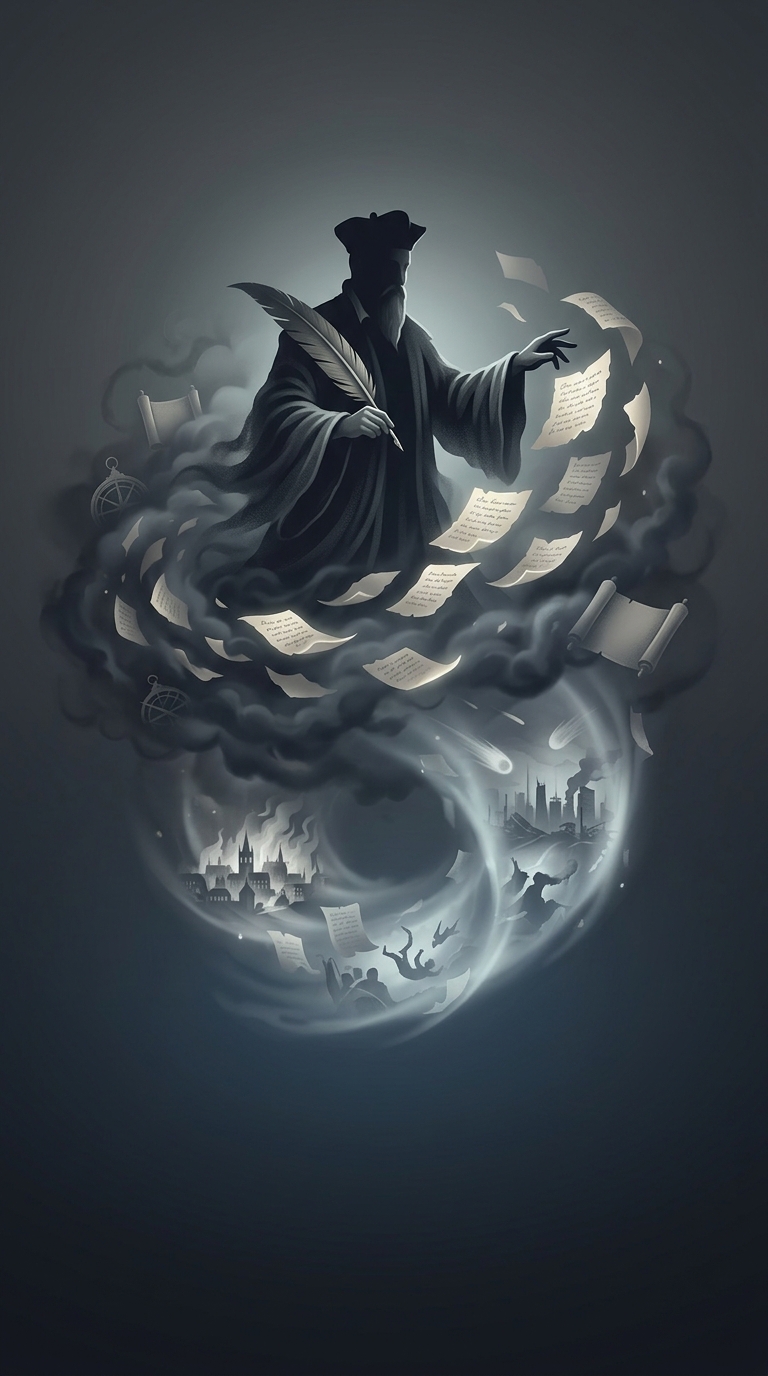
How Nostradamus’s Quatrains Invite Interpretation
A quatrain is a poem of four lines. Nostradamus arranged hundreds of them into numbered groups in Les Prophéties, first published in 1555. Their compressed, allusive language can feel like a puzzle: a line may combine images, place references, or unusual wording without making clear who is acting or when.
That openness matters because the poems rarely provide the kind of detail that would pin a prediction to one event—a clearly identified person, a fixed date, and an unambiguous description. Readers instead build connections between a verse and events they already know.
Why Later Events Can Seem to Fit
The process often works backward. After a war, disaster, or political upheaval, a reader searches the poems for a matching image or phrase. Broad references to conflict, fire, rulers, or upheaval can then be read in light of the event, while lines that do not fit may receive less attention. Translation adds another layer: a word or phrase can carry different shades of meaning in different languages.
This does not require every reader to be deliberately forcing a match. A suggestive fragment can feel striking once a real event supplies the missing context. But without a specific date or identifiable subject, there is little in the wording to rule out other interpretations—or to show, in advance, which event a verse was meant to describe.
The result is a lasting interpretive loop: each generation brings its own crises to the poems, and the poems’ spare, evocative language gives those readers room to see them there.