Kircher read hieroglyphs as hidden symbols
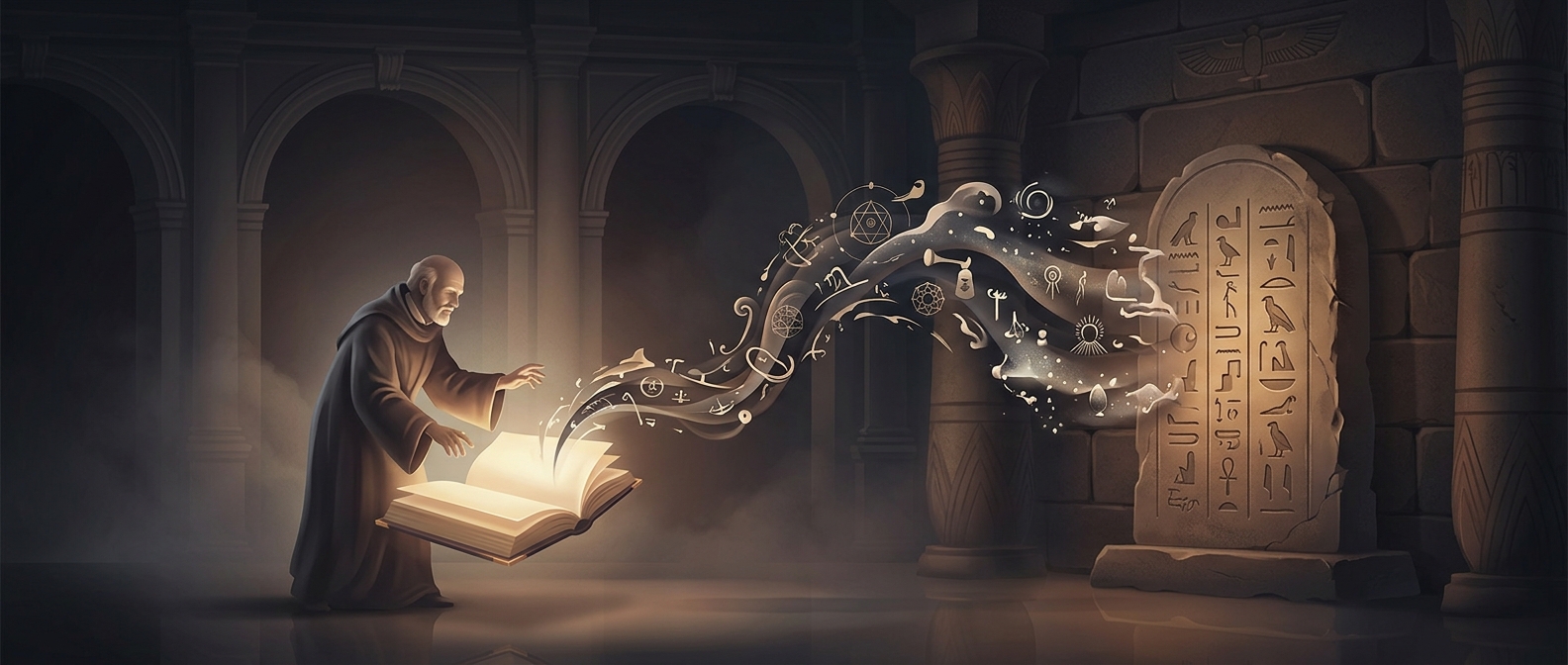
In the 17th century, Athanasius Kircher tried to interpret ancient Egyptian hieroglyphs, but he did not work out how the writing system actually functioned. He treated the signs largely as symbolic expressions of profound ideas, rather than as parts of a writing system that could represent sounds and words. That approach invited elaborate interpretations—but they did not reliably tell readers what an inscription said.
The distinction matters because hieroglyphs are not simply a picture-language in which each image stands for an abstract concept. Egyptian scribes used signs in different ways, including signs that represented sounds. To read an inscription, a decipherer had to recognize those patterns, not just assign a symbolic meaning to each image.
Why his effort fell short
Kircher’s work came long before scholars had successfully deciphered Egyptian writing. The Rosetta Stone, discovered in 1799, provided the crucial comparison: it carried versions of the same decree in Greek and Egyptian scripts. By comparing the texts, later scholars—including Jean-François Champollion—could test interpretations against a language they could read.
Kircher’s failure was therefore not that he lacked imagination or effort; it was that his symbolic method could not be checked against the structure and sounds of the language. His case shows the danger of treating an unfamiliar script as a collection of riddles: a reading can seem richly meaningful while still failing to translate the words on the stone.