The forge made hidden skill visible
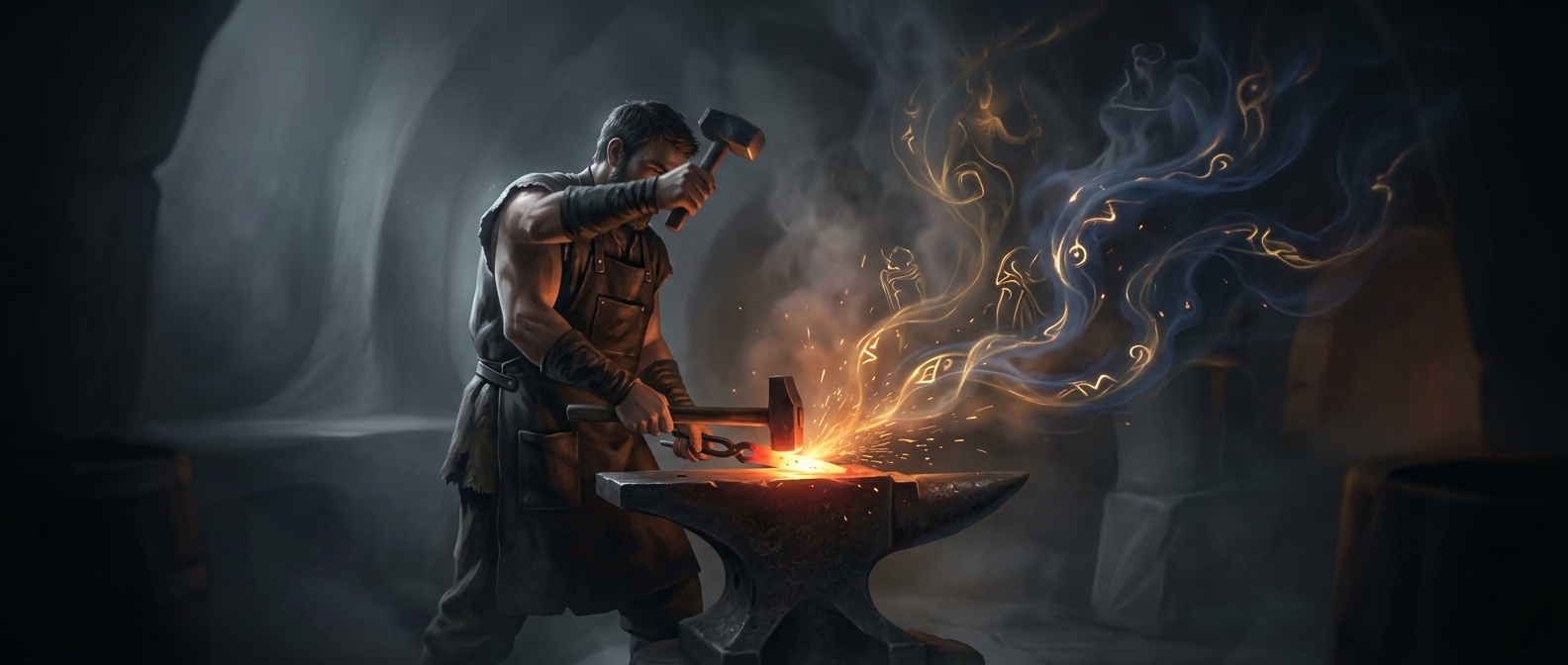
Ironworking could look almost like command over nature. A smith heated metal until it softened, then used repeated hammer blows to change its shape. The work demanded practiced judgment: metal that was too cool resisted shaping, while metal heated or handled poorly could crack or become unusable. To observers without that knowledge, the smith seemed able to make a useful tool emerge from stubborn material by mastering fire and force.
“Making iron” was often a chain of work
Turning ore into a finished tool was not always one person’s job. Smelting—the process of extracting iron from ore—was distinct from smithing, which shaped and repaired iron. In some communities, the blacksmith’s visible work could stand for the whole difficult process, even when other workers and steps were involved.
Practical power acquired a symbolic edge
Smiths made objects that mattered in daily life, from working tools to weapons. Their skill could therefore bring both practical influence and an aura of mystery: they handled intense heat, understood a material’s changing behavior, and produced objects others could not readily make. The reputation rested on real expertise, magnified by how unfamiliar and consequential that expertise was.