How a carpet became part of Aladdin’s story
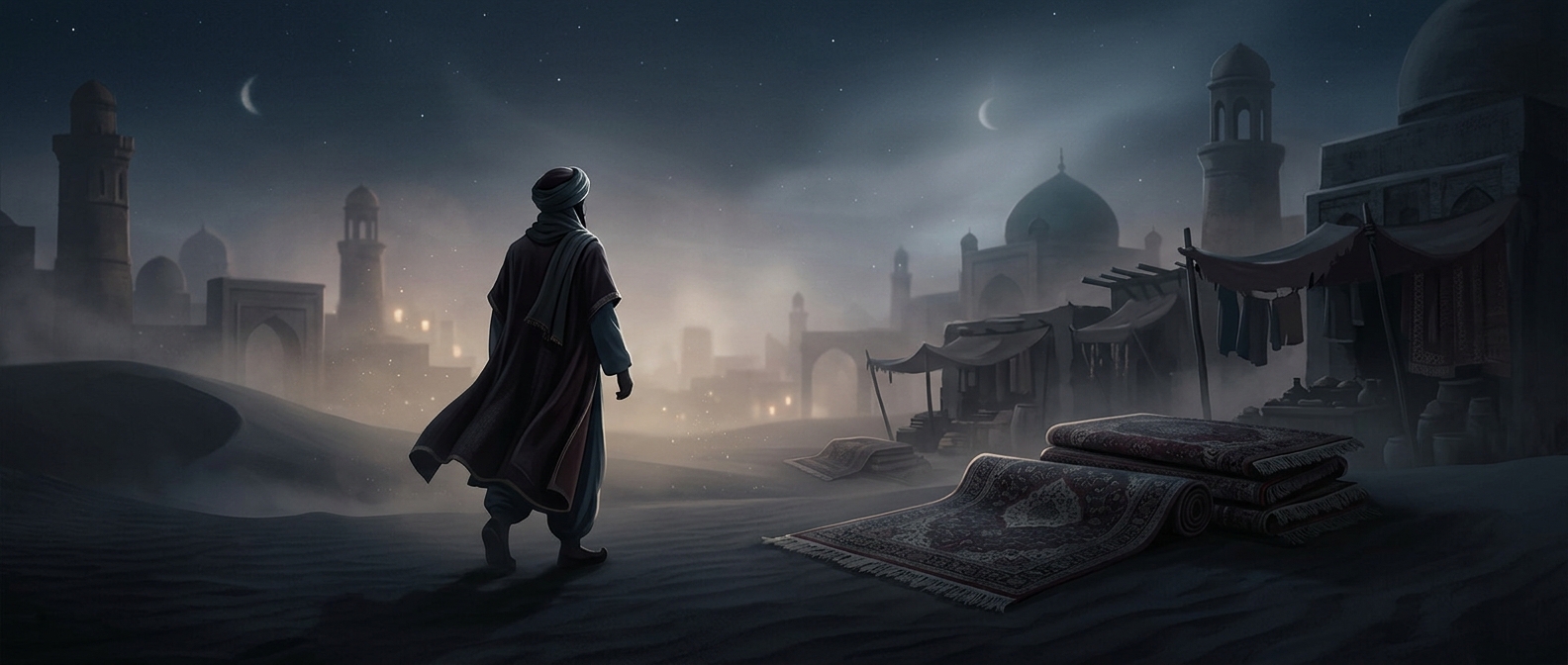
The flying carpet belongs to the wider world of The Arabian Nights, but it is associated with a different tale: “The Story of Prince Ahmed and the Fairy Pari Banu.” As stories from the collection circulated in translation and adaptation, memorable magical devices could migrate between them. A carpet was an easy image to attach to Aladdin’s adventures, even though it was not part of the story’s earliest recorded form.
Aladdin’s original shortcut was a genie
In the familiar early version, Aladdin’s escape from ordinary limits depends on genies, not on a vehicle he can steer. When he needs to travel, supernatural servants can carry him or accomplish the task for him. That changes the story’s feel: Aladdin does not master a piece of enchanted technology; he calls on beings whose power exceeds his own.
The carpet, by contrast, gives a scene a clear visual action—someone climbs aboard and flies. That image is especially suited to stage, film, and illustration, where a visible ride can make magic instantly legible. Once retellings paired Aladdin with a flying rug, the image became more familiar than the distinction between the tales that supplied their different magical wonders.