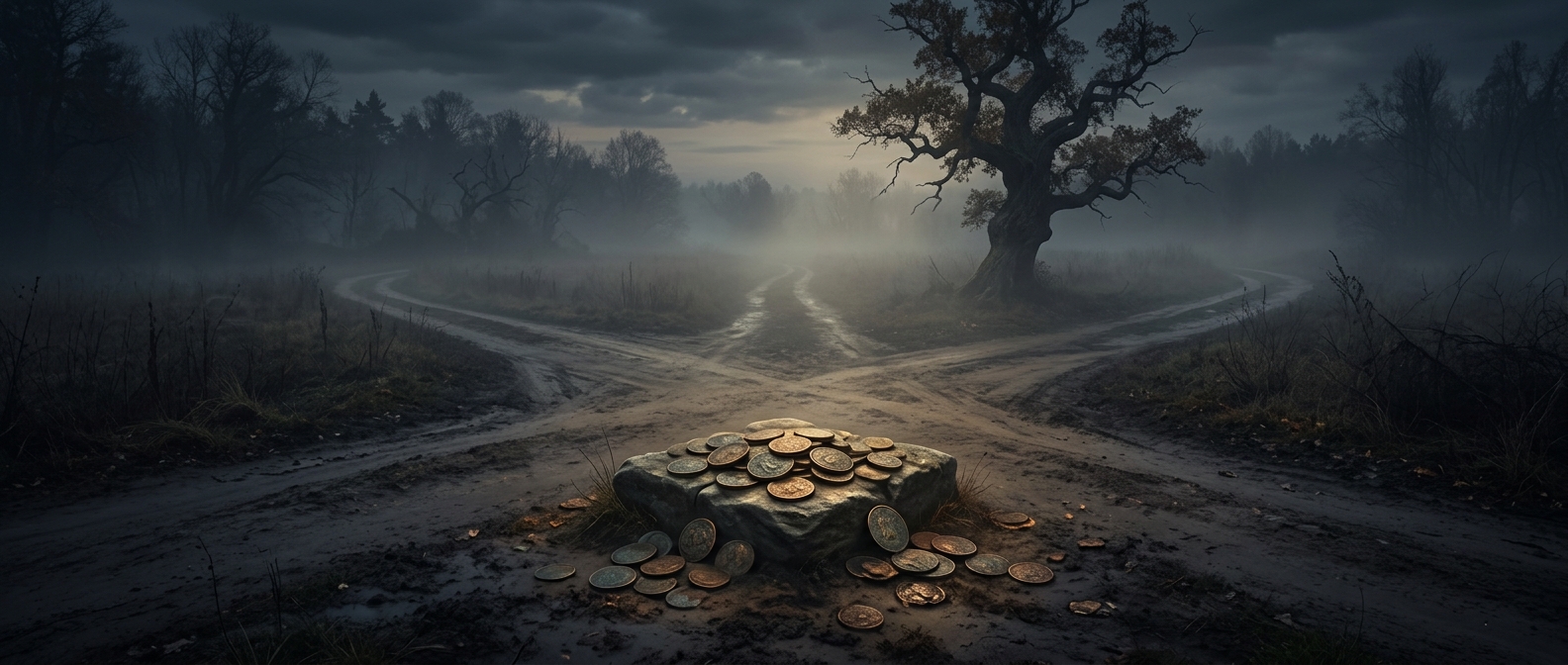
Why a crossroads could invite an offering
A crossroads is more than a place where roads meet: in many folk beliefs, it is a boundary space, linking one route to another and, symbolically, the familiar world to what lies beyond it. That made intersections fitting places for offerings to spirits, deities, or other unseen powers. In ancient Greek practice, for example, Hecate was associated with crossroads, and offerings were left for her at such places.
A coin as a small exchange
Loose change could serve as a modest token of payment: something valuable given in hope of safe passage, protection, or favor. Calling it a “bribe” captures the human logic of the gesture, but need not mean people imagined a precise bargain or expected a guaranteed return. The offering acknowledged a power that could not be seen or controlled—and asked, quietly, not to be harmed.
Practices differed across places and periods; coins were not the only kind of offering, nor did every crossroads carry the same meaning. But the image is easy to understand: someone pauses where paths divide, leaves a small piece of value behind, and continues on as if the road ahead might now be a little safer.