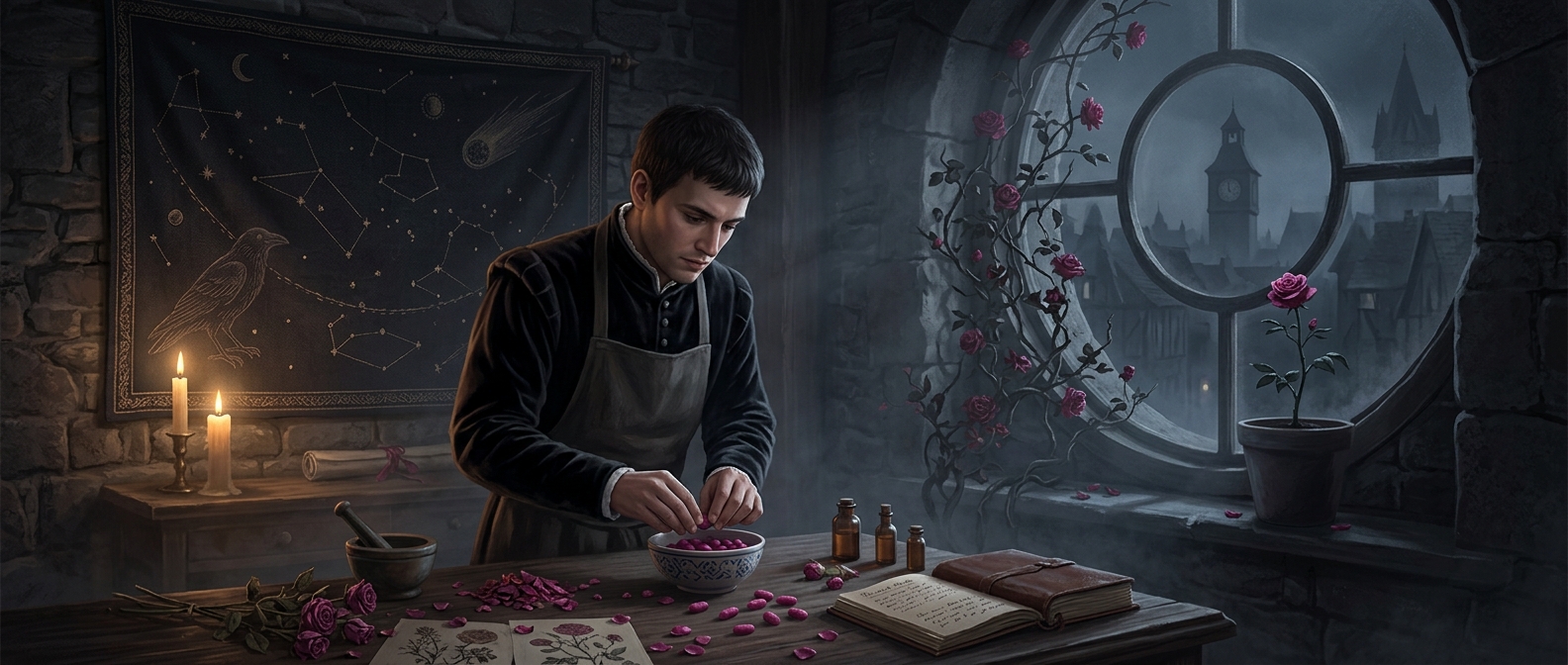
A Remedy Built for a World Without Germ Theory
When plague struck, physicians had no way to see or understand the bacteria behind it. They instead worked within older ideas about bodily balance and harmful air, relying on substances thought to strengthen the body or counter foul smells. An apothecary—a maker and seller of medicines—prepared remedies from ingredients available in everyday trade, not from tested knowledge of what caused infection.
Rose-based pills fit that world of practice. Their ingredients could be ground and mixed into a form patients could swallow, but a pill’s polished appearance and elaborate recipe were not evidence that it could stop plague. The illness spread through infected fleas and, in some forms, from person to person—routes the remedy could not block.
The Gap Between a Remedy and a Cure
Nostradamus’s work as an apothecary belongs to a period when practical medicine and speculation overlapped. A person could make and prescribe treatments without understanding the disease’s underlying mechanism. That distinction matters: the pills show what people tried during an emergency, not that they had an effective defense.
Their ingredients also reveal how limited the options were. A patient could take a carefully prepared dose and still face the same exposure to infection as before. In an epidemic, that gap between the reassuring ritual of treatment and the disease’s actual route of spread could be fatal.