A verse that acquired a royal meaning
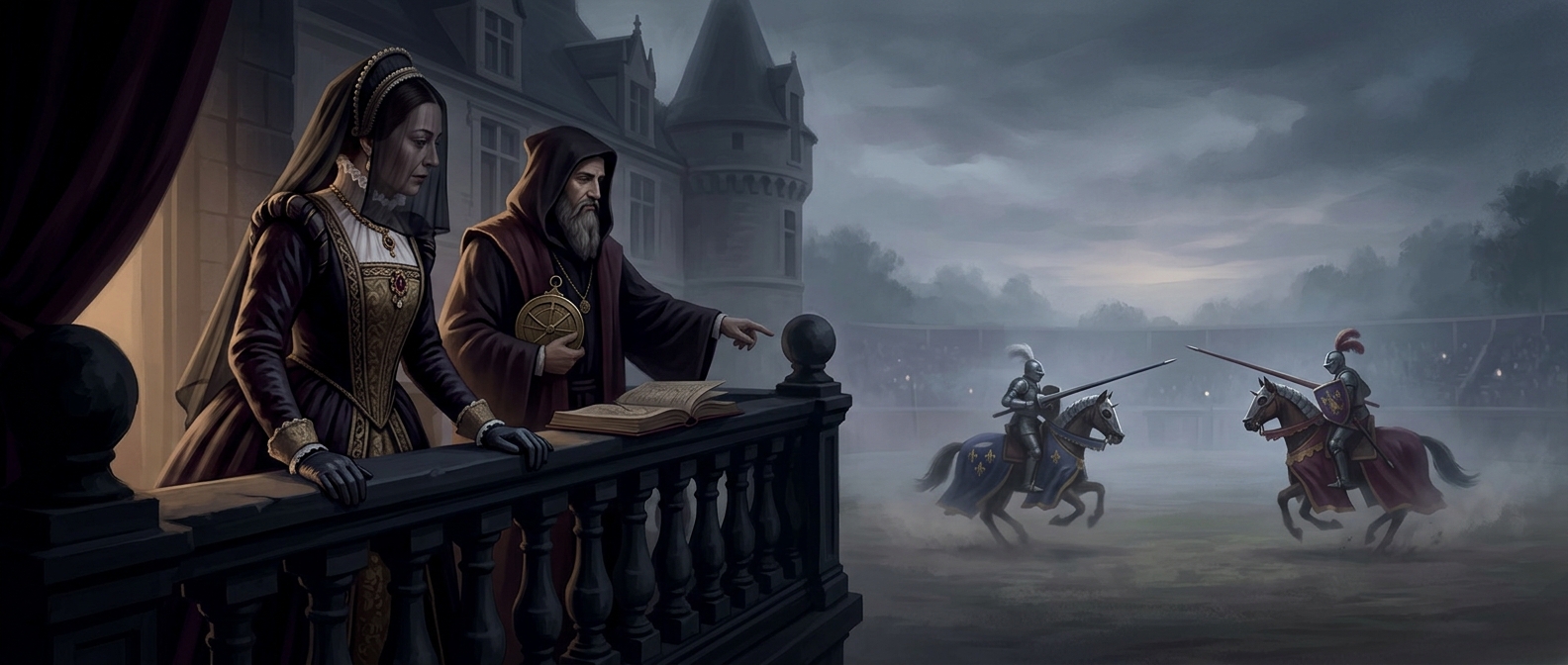
Nostradamus’s fame at court rested on a short, cryptic poem later linked to Henry II’s death. It describes a “young lion” defeating an older one, piercing his eyes through a golden cage, and leaving him to die. After Henry was mortally injured in a tournament in 1559, readers connected the poem’s images to the king, his opponent, and the splinter that entered his eye through his helmet’s visor.
That match made the prophecy difficult to forget—and gave Catherine de Medici a reason to take the astrologer seriously. She appointed Nostradamus to a position at court as Counselor in Ordinary. The title signaled royal favor and access; it did not mean he served as a modern, dedicated accident forecaster.
Why the prediction seemed so precise
Jousting was a dangerous spectacle in which armored opponents charged with wooden lances. A lance could break on impact, and its fragments could reach a rider through the openings in his helmet. The fatal mechanism was real, but the poem did not name Henry, describe the tournament, or specify when the injury would happen. Its vivid phrases became more pointed when applied to an event that had already occurred.
For a royal court, such a prediction could matter even without functioning like a dependable forecast. It offered a story that made a sudden death feel legible—and made the person credited with anticipating it seem worth keeping close. Nostradamus’s court standing grew from the collision of an ambiguous verse with a very specific, very public tragedy.