Why an astrologer needed reliable planetary tables
An ephemeris is a table showing where celestial bodies are expected to appear at particular times. In Renaissance astrology, such tables were working tools: astrologers used planetary positions to cast charts and decide when significant alignments occurred. A mistaken calculation could therefore shift a planet’s recorded position or the timing of an event in a chart.
That made arithmetic more than a matter of neatness. An astrologer could offer elaborate interpretations, but those readings rested on the positions entered into the chart. If the underlying numbers were wrong, colleagues could challenge the foundation before debating what the heavens supposedly meant.
A technical flaw with professional consequences
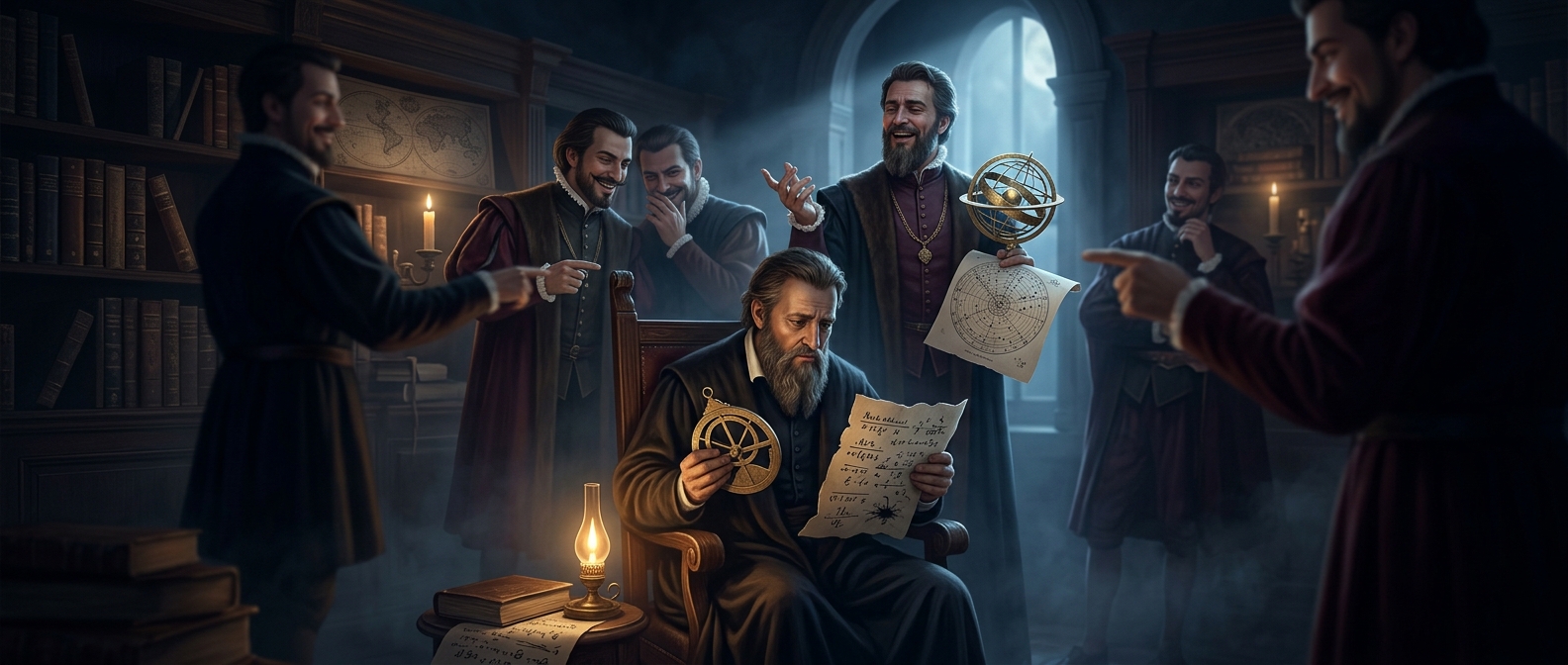
Nostradamus’s ephemerides drew criticism from fellow astrologers for basic mathematical errors. Their objections show that practitioners did not simply accept every set of planetary tables: calculations could be checked, and accuracy mattered within the profession’s own standards.
The criticism also points to a practical weakness in astrological work of the period. Producing tables required calculations, while using them depended on getting those calculations right. A respected reputation or dramatic prediction could not make a faulty planetary position more accurate. For readers of the time, the episode offered a pointed distinction: an astrologer might be famous for interpreting the future, yet still be judged by whether he could calculate the sky correctly.