How hats became part of Team Fortress 2’s identity
Team Fortress 2 began as a class-based shooter built around instantly recognizable characters: a bulky Heavy, a sharp-suited Spy, a helmeted Soldier. Cosmetic items gave players a way to alter those familiar silhouettes without changing what their weapons or abilities did. A hat could make a Sniper look theatrical, ominous, or simply ridiculous while leaving the match’s combat rules intact.
That separation mattered. Players could show personality without gaining a gameplay advantage, and teammates could still recognize which class they were facing. As the game added more cosmetic options, players began combining items across available loadout slots. Some combinations looked less like practical outfits than carefully assembled—or gloriously chaotic—costumes.
Rarity made the look a status symbol
Cosmetics also became collectibles. Some items were harder to obtain than others, and special “Unusual” versions came with animated visual effects, such as flames or sparks. The effect made an already conspicuous hat impossible to miss, turning a cosmetic choice into a public display of rarity as well as taste.
Trading helped those items circulate between players. A hat was no longer just something to unlock and wear; it could be sought after, exchanged, and used to signal how long someone had played or what they valued in the game’s collecting culture. The appeal was not always to look cool. In a game known for broad comedy, looking absurd could be the point.
A shooter with room for a runway
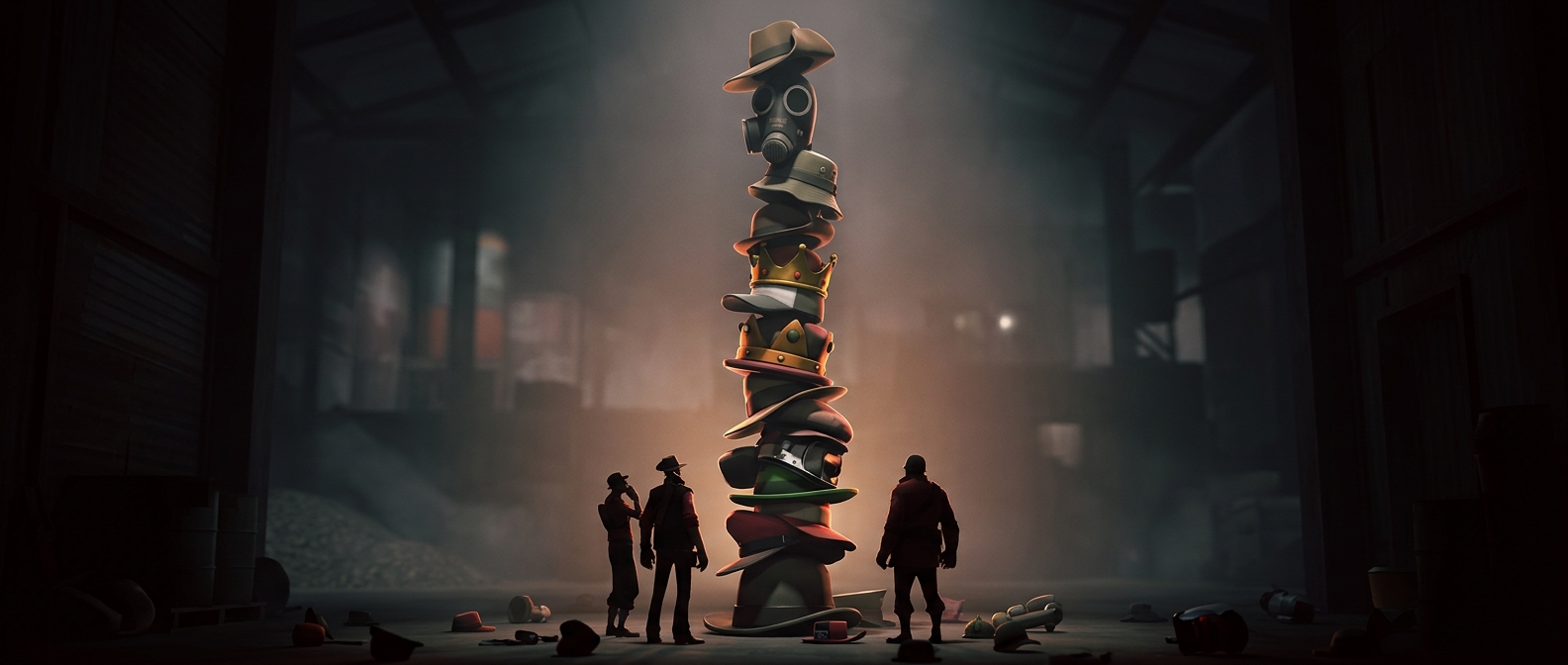
The result was a second kind of competition layered over the firefights: players built recognizable looks from pieces, effects, and class-specific silhouettes. A Sniper wearing several blazing top hats turns the game’s serious combat setting into a visual joke—and makes that joke visible to everyone in the match. The hats stuck because they let players perform a character, not just play one.