A spiritual autobiography built around a startling claim
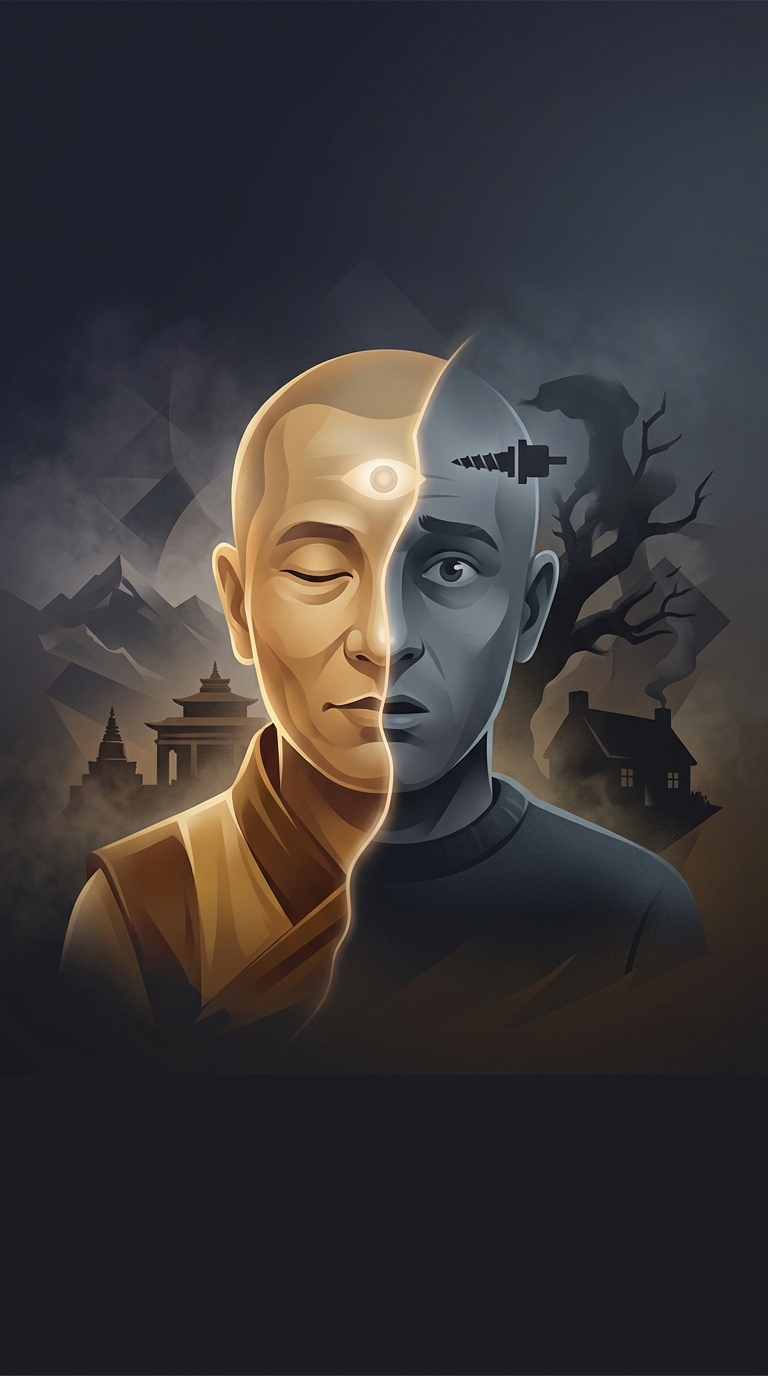
In The Third Eye, published in 1956, Cyril Hoskin presented himself as Lobsang Rampa, a Tibetan lama, and described an operation in which a wooden plug was drilled into his forehead to awaken his “third eye.” The detail turned an abstract promise of spiritual insight into a vivid physical episode: readers were invited to imagine wisdom as something literally opened inside the body.
The third eye is commonly used as a spiritual image for heightened perception or insight. Rampa’s account made it unusually concrete, folding the image into a first-person story about Tibetan life and mystical training. That combination gave the book the texture of testimony rather than a detached discussion of belief.
The author’s identity changed how the story was read
The book became an international bestseller, but investigators who examined its author found that Hoskin was a British plumber’s son who had never left the United Kingdom. That discovery put the question of authorship at the center of the book’s reception: the narrator’s claimed authority rested on a Tibetan identity that Hoskin did not have.
The contrast is what makes the episode more than an odd anecdote about a forehead operation. A story can feel convincing through its detailed scenes and confident voice, yet those qualities do not establish that its narrator experienced what he describes. In Rampa’s case, the gap between the claimed life and the author’s actual background became impossible to ignore—and the bestseller’s mystical authority became part of the controversy itself.