A Self-Balancing Ride Becomes a Moving Field Position
A Segway stays upright through a constant loop of sensing and correction. Sensors detect when the rider and machine begin to tip; electric motors turn the wheels to move underneath them. Lean forward and the Segway rolls ahead. Shift back, and it slows or reverses. The rider steers by turning the handlebar, which changes how the wheels move relative to each other.
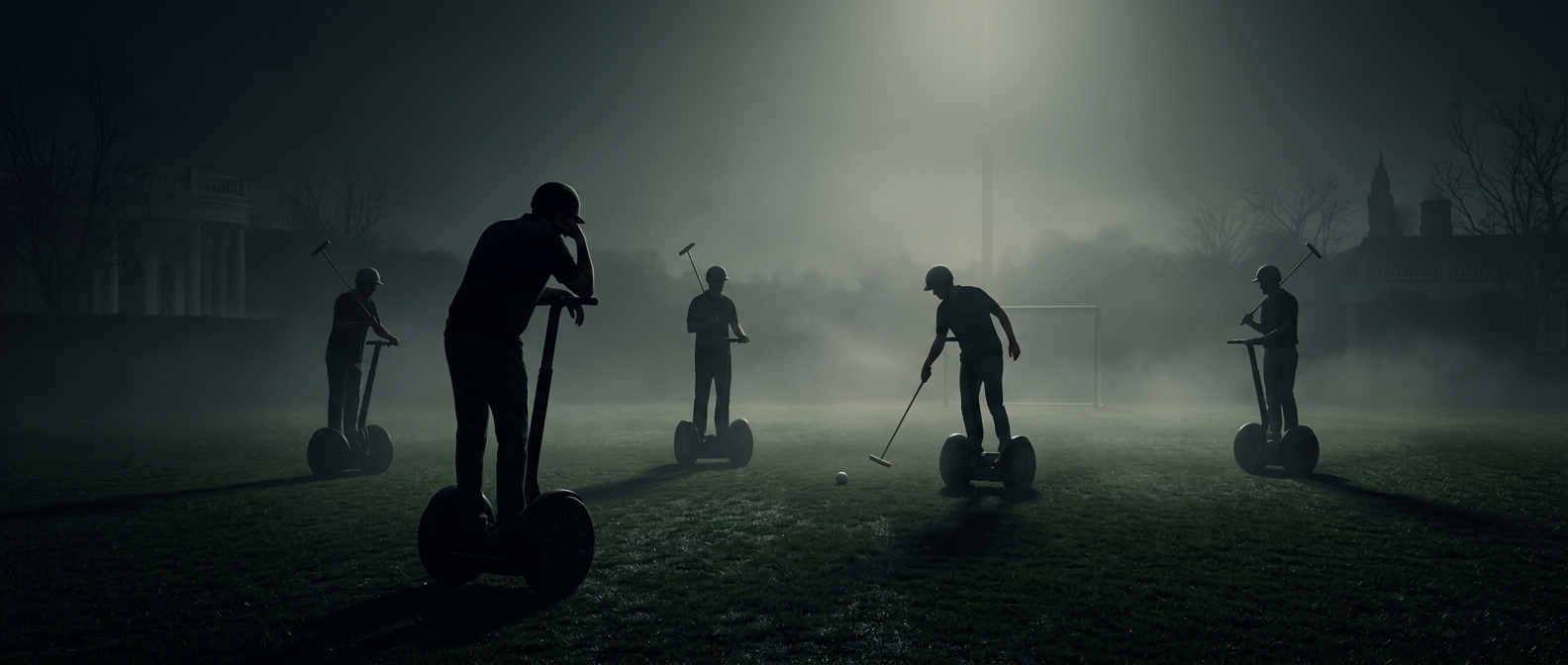
That makes polo a test of several kinds of control at once. A player has to steer toward the ball, manage speed with small shifts in body weight, and swing a mallet—often while the ball is moving unpredictably. The vehicle can respond quickly, but it does not erase momentum: a sharp turn or sudden stop still requires room and timing.
Why the Mallet Changes the Ride
On a bicycle, a player can use both hands to steer and keep balance. On a Segway, the machine handles much of the balancing, but the rider still needs a steady stance and precise control. Taking one hand off the handlebar to swing shifts the task from constant two-handed steering to quick corrections before and after each shot.
The result is a sport shaped by the vehicle’s strengths and limits. Electric drive makes repeated starts and low-speed maneuvering practical, while the upright stance gives players a clear view of the ball and opponents. But close play demands restraint: the same quick response that helps a player chase the ball can make crowded turns difficult. The challenge is not just hitting the ball—it is lining up the shot without letting the ride carry you past it.