Why Arctic permafrost cannot keep seeds cold enough
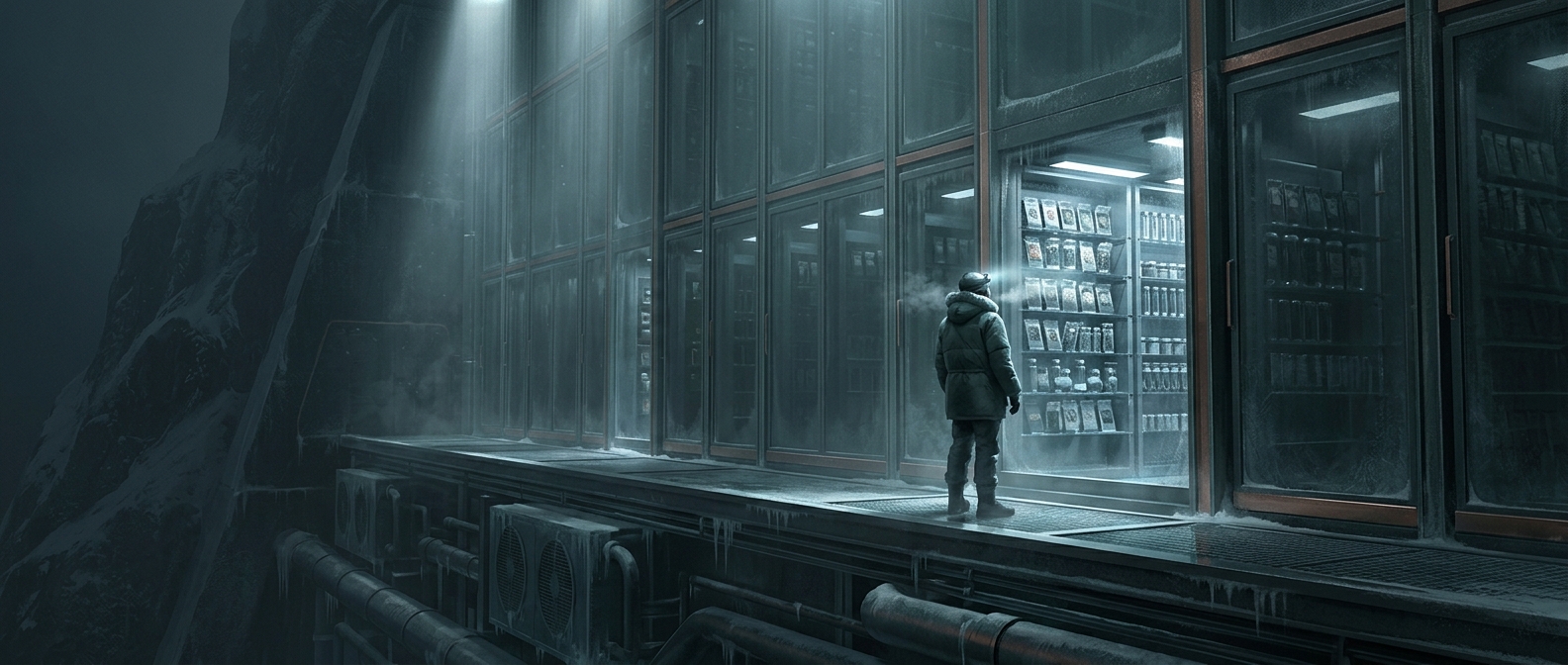
The Svalbard Global Seed Vault is built inside a mountain in the Arctic, but the surrounding rock is only naturally cold—not cold enough to preserve seeds at the vault’s target temperature. Permafrost, ground that stays frozen year-round, can help keep the facility cool, but it does not act like a freezer set to a stable storage temperature.
That difference matters because seeds gradually lose their ability to sprout. Cold storage slows the chemical and biological changes that cause this decline. The vault therefore uses mechanical refrigeration to hold its storage rooms near −18°C, even when the outside conditions shift.
The lasting cost of preserving a backup
The mountain provides a useful buffer: it limits heat from the outside and can slow warming if the cooling system stops. But it cannot replace refrigeration. Keeping the rooms reliably cold requires powered equipment, monitoring, and maintenance over time—not just the one-time cost of excavating the chambers.
That creates a distinctive economic commitment. The vault’s value lies in protecting seeds for future use, potentially far beyond the lifespan of the equipment installed today. Its preservation strategy must therefore account for recurring energy and upkeep costs, as well as construction. The Arctic setting reduces some of the cooling burden, but the seeds’ long-term safety still depends on an active system—a practical reminder that even a remote, naturally cold place needs infrastructure to function as a dependable freezer.