The farm is built around a suspended crop
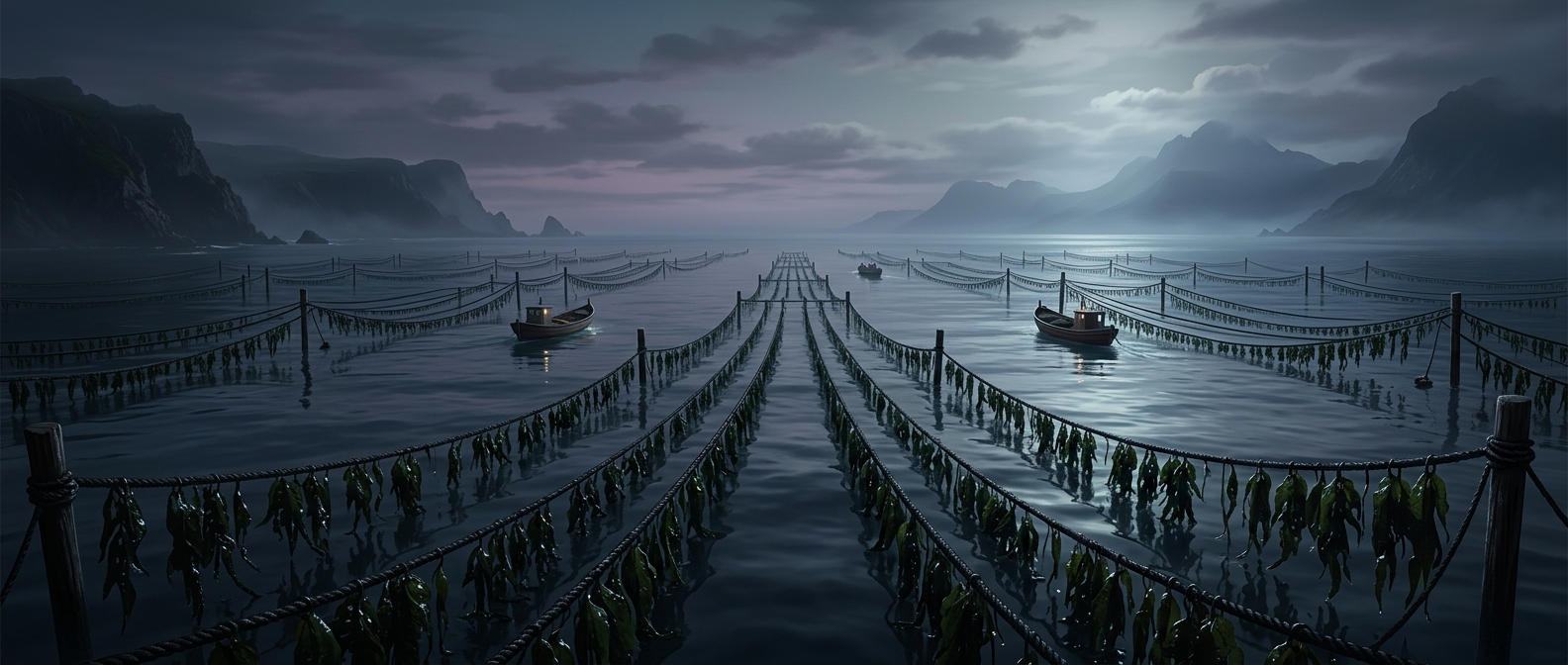
A kelp farm begins before the ropes reach the bay. In a hatchery, young kelp is grown on thin twine; that seeded twine is then attached to heavier lines. Anchors hold the lines in place, while floats keep them suspended in the water. The kelp grows from the ropes, with its blades extending into the surrounding seawater.
This arrangement turns open water into productive growing space without needing fields, irrigation, or fertilizer. The crop takes up nutrients already dissolved in the water, so the farm’s basic infrastructure is also its growing surface.
The shoreline becomes part of the production system
Long lines cover substantial areas because each must be spaced and secured, not simply laid down in a dense pile. Their placement has to suit local depth, currents, and shelter: the water must bring nutrients past the crop, while the lines and anchors must endure movement from waves and tides.
That makes the farm’s costs different from those of a land crop. Instead of buying and maintaining soil inputs, operators invest in rope, floats, anchors, boats, and the work of installing and tending gear at sea. Harvesting also means bringing a wet, heavy crop back from the water, so distance from shore and access to equipment affect how practical a site is.
The tradeoff is in the infrastructure
Ropes let farmers grow kelp vertically through the water column, but they also make the crop dependent on a carefully maintained network. A damaged line can disrupt a stretch of the farm, and seasonal conditions determine when the seeded ropes can be placed and the crop collected. The farm’s productive asset is not just the kelp; it is the coastal system that keeps the kelp suspended, fed, and reachable.