The press separates water from flavor
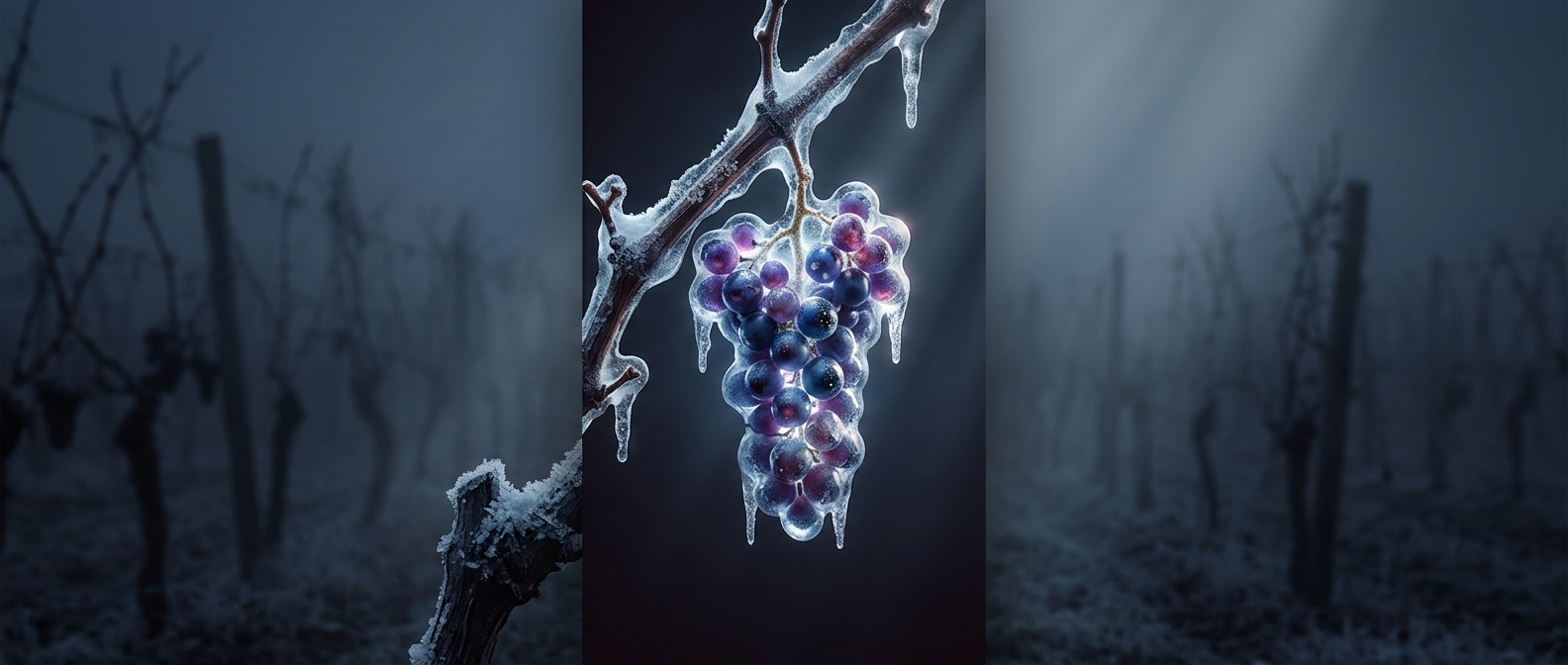
Freezing does not make grapes produce extra sugar. It changes where the water is. In a frozen berry, much of the water has become ice, while the remaining liquid is unusually concentrated with sugar, acids, and other dissolved compounds. When producers press the grapes while they are still frozen, ice stays behind and a small volume of dense juice runs out.
That juice is the starting point for ice wine. Its concentration helps explain the wine’s sweetness, but fermentation still turns some of the sugar into alcohol. The result depends on a narrow harvest-and-pressing window: if the berries thaw before pressing, the water mixes back into the juice and the concentration advantage shrinks.
A small yield magnifies the risk
The economics begin in the vineyard, long before bottling. Grapes have to remain on the vine until suitable freezing weather arrives, leaving the crop exposed to changing conditions and potential losses. Then the fruit must be harvested and pressed under cold conditions, often at an inconvenient hour. Producers bear those costs even though the frozen berries release far less liquid than ordinary wine grapes.
That means each bottle represents more than a sweet style of wine: it reflects a crop left hanging longer, a time-sensitive harvest, and a pressing process that deliberately leaves much of the fruit’s water behind as ice. Scarce juice, rather than added ingredients, is the central reason ice wine can command a high price.