The forest supplies more than the trees
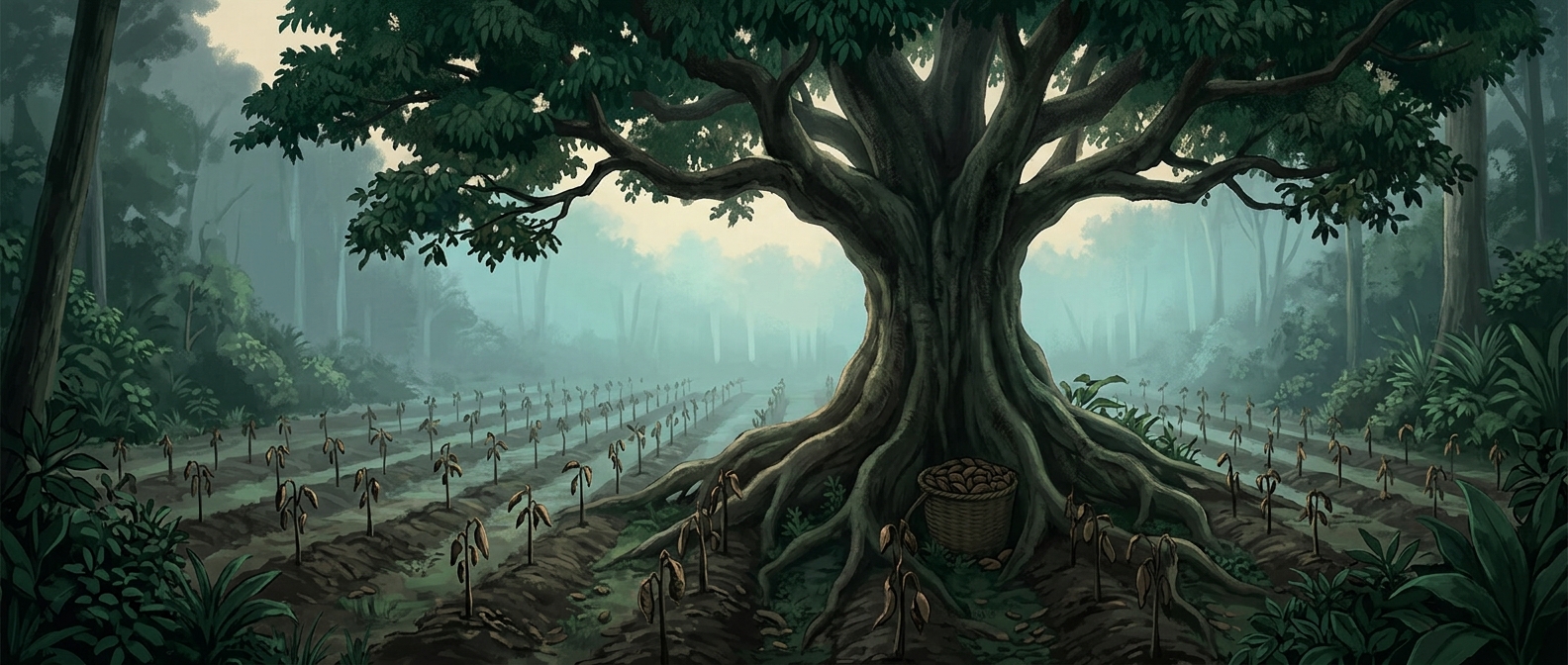
A Brazil nut tree can be planted, but planting one does not guarantee a crop. Its flowers have a hooded shape that large bees must push open to reach the nectar. Those bees are part of a wider rainforest community: some male orchid bees collect fragrances from orchids, and the scent helps draw them through the forest. When a bee visits a Brazil nut flower, it can carry pollen from one tree to another, enabling the tree to produce fruit.
That distinction matters commercially. The orchid is not a substitute pollinator or a farm input; it is one link in an ecological chain that helps sustain the bees. A plantation with Brazil nut trees but too few suitable pollinators may yield poorly. Keeping the surrounding forest intact supports the habitats and food sources those insects need.
Why harvest follows the forest’s rhythm
The tree’s fruit is a hard, round capsule containing several seeds—the nuts sold as Brazil nuts. It matures high in the canopy and falls to the ground, where harvesters gather it. The crop therefore depends not only on flowering and pollination, but also on trees growing in forest landscapes where the fruit can be collected.
This creates an unusual economic incentive: the forest is part of the production system, not merely land waiting to be cleared for one. Brazil nuts can provide income from standing rainforest, while the same forest keeps the pollination network functioning. The crop’s value depends on preserving the living connections around the tree as well as the tree itself.