The costly part is moving water
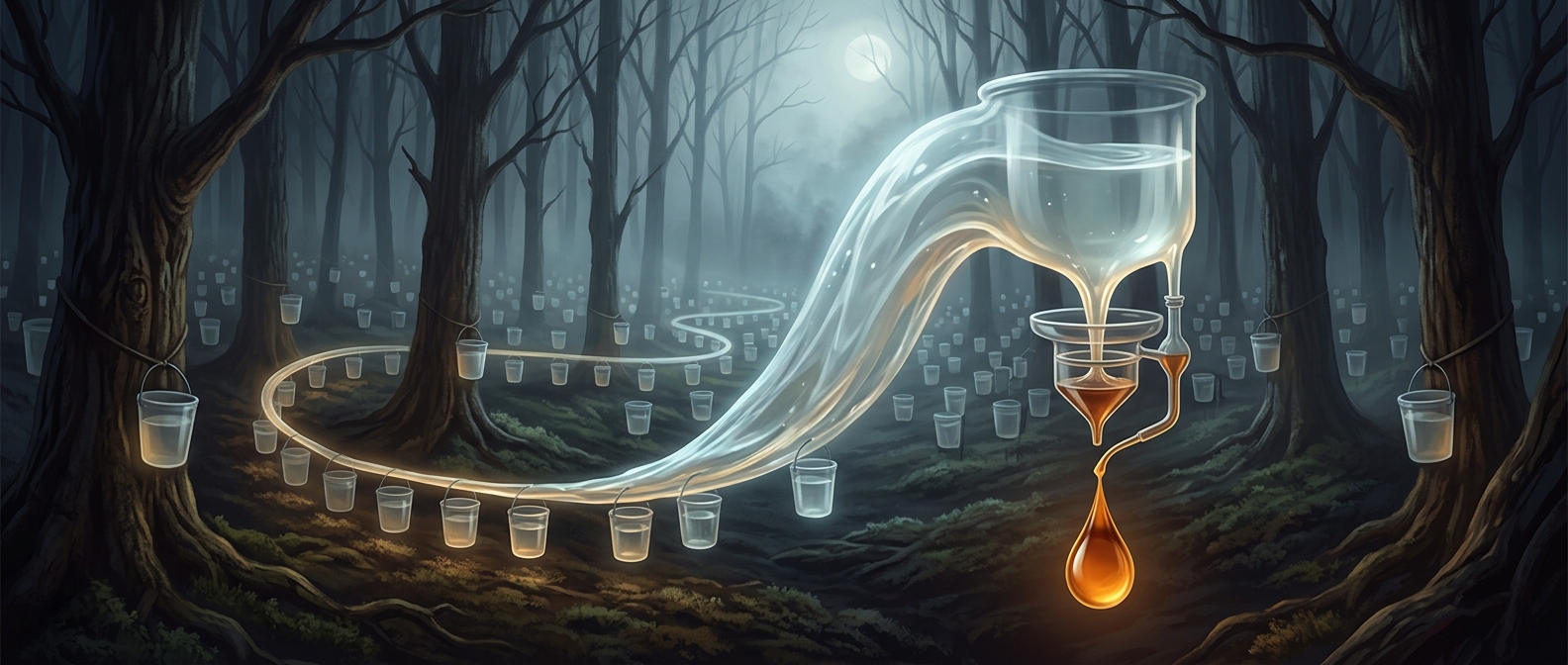
Maple sap is mostly water, with a small amount of dissolved sugar. To make syrup, producers heat it until enough water escapes as steam and the sugar becomes concentrated. The sugar does not vanish during boiling; the bulk of the liquid does. That makes syrup production an energy-intensive way to turn a thin, perishable fluid into a dense food.
The work begins before the evaporator—the heated pan or system that boils sap. Producers must gather sap from tapped trees and get it to the sugarhouse while it is still usable. As it runs through the evaporator, steam carries away water, while the remaining liquid grows sweeter and thicker. Boiling must stop at the right concentration: too early, and the product is too thin; too late, and it can become overly concentrated or scorch.
Why efficiency matters
Fuel is a major production cost because so much water must be removed. Some operations use reverse osmosis, a process that pushes sap through a membrane to separate out part of its water before boiling. That can reduce the amount of heating needed, but it requires specialized equipment and does not replace the finishing boil that gives syrup its final concentration.
The ratio also helps explain why maple syrup is a premium product: producers spend time, equipment, and energy processing a much larger volume of raw sap. A full evaporator is not a vat of nearly finished syrup—it is a machine steadily sending most of its contents into the air as steam.