A truffle is a partnership, not a stand-alone crop
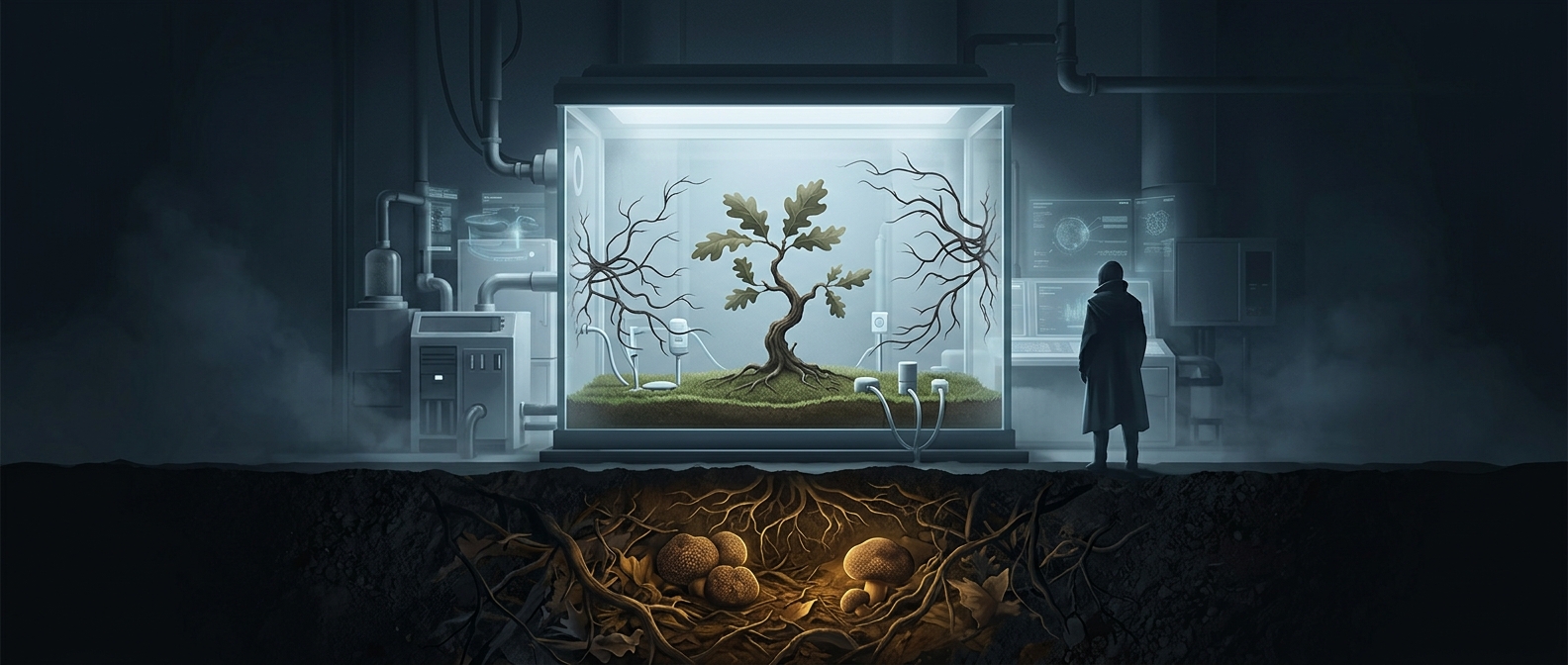
Most prized truffles grow underground in close association with the roots of trees such as oaks and hazels. The fungus forms a network around fine roots, helping the tree take up water and nutrients; in return, it receives sugars made by the tree. This relationship is called mycorrhiza—a partnership between a fungus and plant roots.
That means a grower cannot simply plant truffle spores in a field and harvest a predictable crop. The right fungus must establish itself on the right tree roots, in soil with suitable chemistry and drainage, while competing fungi and other organisms are also present.
An orchard takes years to prove itself
Growers can plant young trees whose roots have been inoculated with truffle fungus, then manage the site to favor the partnership. But a suitable-looking orchard is not proof that the fungus has taken hold and will eventually produce truffles. The trees and fungus need time to develop, and changing conditions—including moisture and temperature—can affect whether fruiting occurs.
The delay makes mistakes expensive: land, trees, and maintenance costs accumulate before a grower knows whether the orchard will yield. Even when cultivation succeeds, harvests can vary from year to year. The challenge is not just creating the right soil once; it is sustaining a living, underground system whose development and fruiting are difficult to control. That uncertainty is why truffles remain a risky crop rather than a reliably scheduled one.