A harvest measured in flowers, not fields
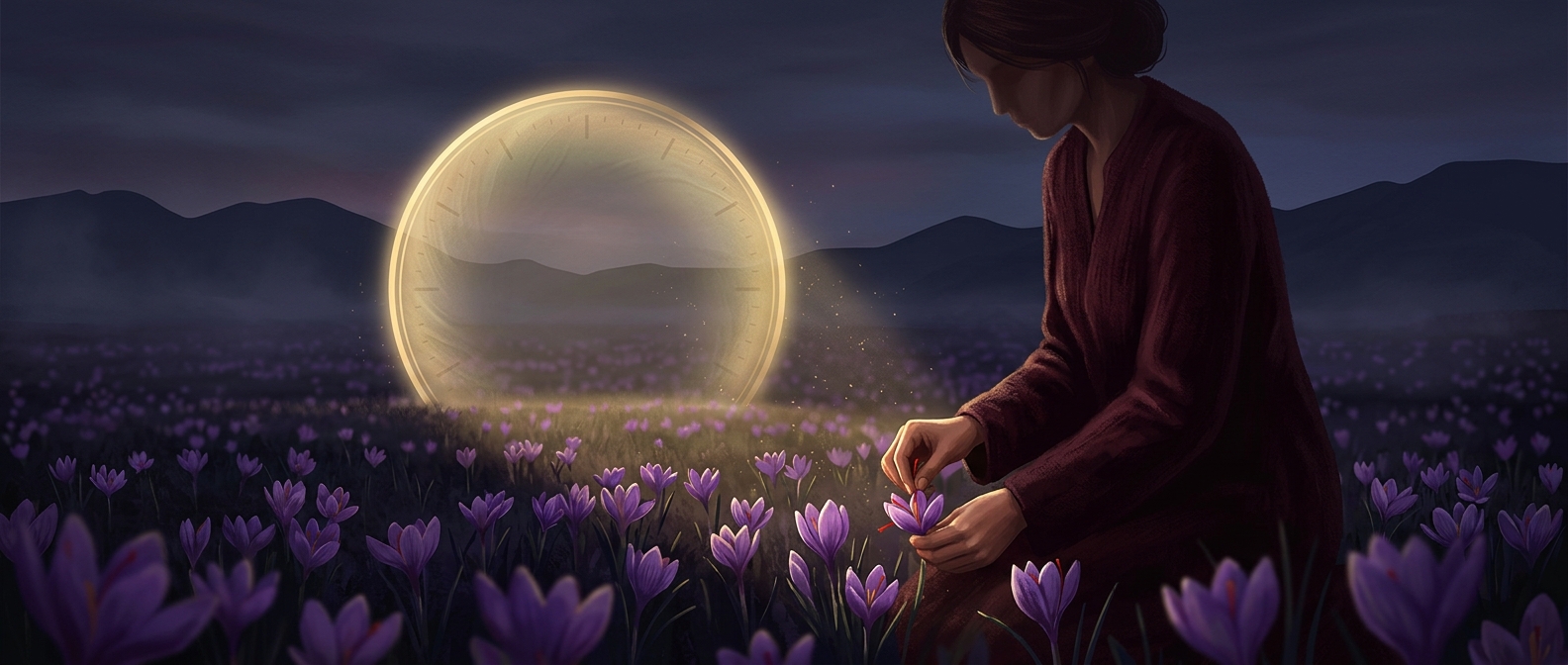
Saffron comes from the tiny red stigmas—the pollen-catching parts—inside each purple crocus flower. They must be separated by hand, so a field that looks abundant can still yield only a small amount of the spice. The work begins as soon as flowers appear: each one is picked, then its delicate stigmas are removed before the flower fades or is damaged.
Why a late day can cost the crop
The flowers do not arrive as a steady stream over the season. They emerge in a concentrated flush, and weather can make that flush especially compressed. Farmers therefore need enough hands ready at the right moment; waiting to assemble a crew can mean leaving flowers in the field past their best condition. Harvesting early in the day is common because newly opened flowers are easier to handle before exposure to heat and wilting.
After picking, the stigmas must be separated and dried. Drying removes most of their water, making the final product compact and storable, but it also means the harvest must move quickly from field to processing. The bottleneck is not simply growing crocuses—it is finding labor to collect and prepare many small flowers at once. That is why a short bloom can shape a farm’s costs and income for the entire year: missed flowers cannot be saved for a later harvest.