A heavy crop can crowd out next year’s buds
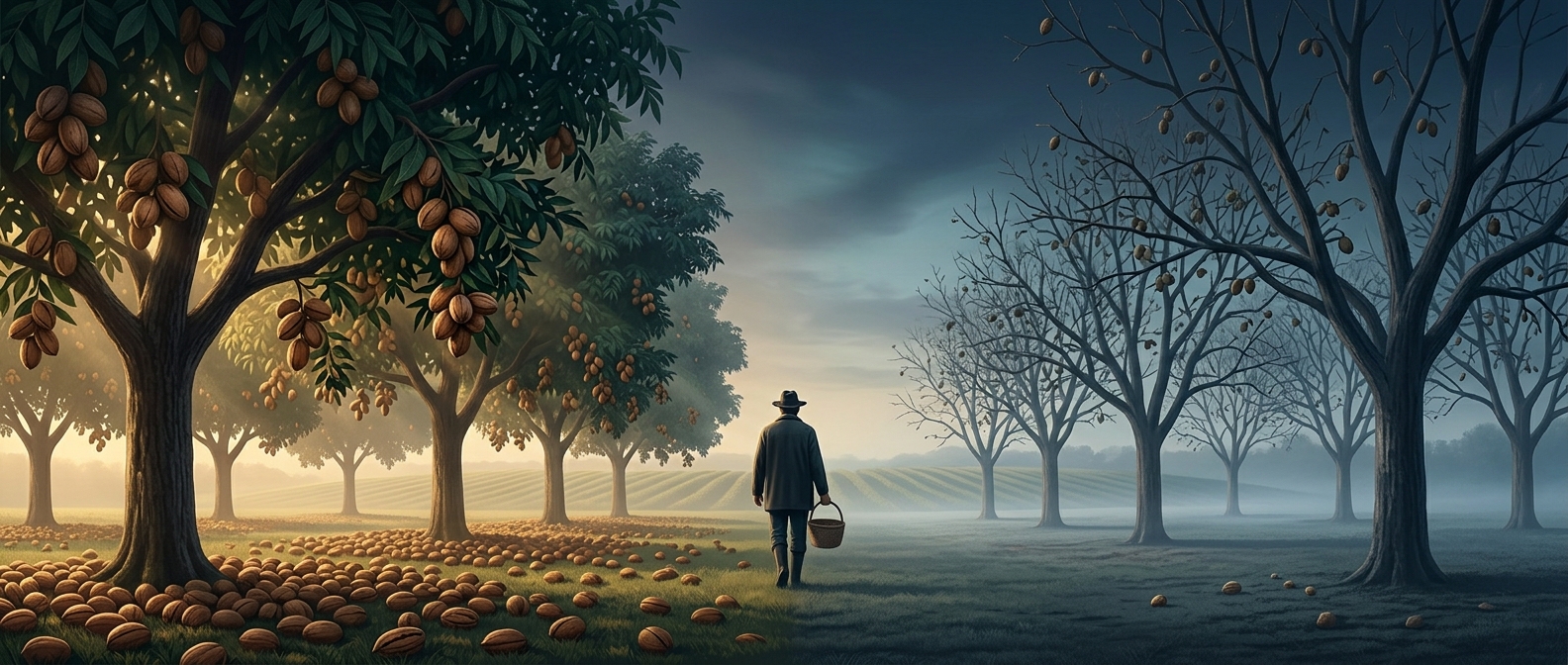
Pecan trees set the next season’s flower buds while this season’s nuts are still developing. When a tree carries a large crop, the nuts draw heavily on its sugars and nutrients. The tree may then produce less new growth and fewer flower buds, leaving fewer nuts to mature the following year. With a lighter crop, it can rebuild resources and set more buds—sometimes setting up another abundant harvest.
This pattern is called alternate bearing. It is not a perfect two-year clock: weather, water stress, pests, and differences among trees can strengthen or disrupt the swing. But the tree’s current crop load can help shape its next one.
Why the swing reaches the market
Pecan orchards cannot quickly make up for a weak harvest. New trees take years to bear, and existing trees cannot simply be switched to a larger crop on demand. Growers can manage orchards to encourage more consistent production, but they cannot fully control the biological cycle or the weather that affects it.
That makes the amount of pecans available from one season to the next difficult to forecast. When a lighter year coincides across many orchards, processors and buyers have less fruit to work with; when a heavy year follows, supply can rebound. The tree’s cycle therefore shows up beyond the orchard, in the uncertainty growers face when planning harvests and buyers face when securing nuts.