A wartime bargain with two kinds of value
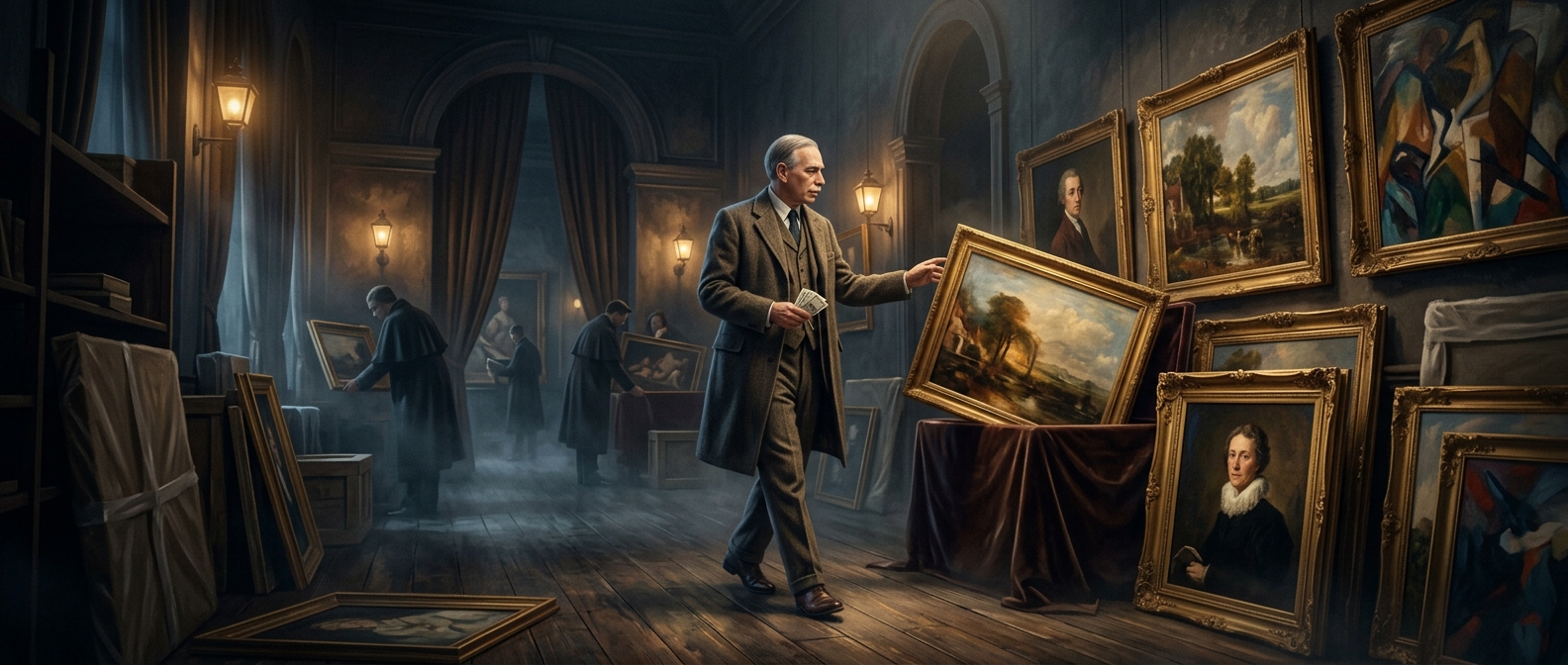
During World War I, uncertainty and financial strain weakened Britain’s art market. That created a risk Keynes saw in economic as well as cultural terms: if British owners sold important paintings to buyers abroad, the works—and the money paid for them—could leave the country. He persuaded the Treasury to buy paintings by Cézanne and Degas rather than leave the market entirely to private buyers.
The move treated art as more than decoration. A painting could be a store of value: an asset that might hold or gain worth over time. But unlike a government bond, it also carried cultural value that could not be measured by its eventual sale price.
Why buying during a slump could pay
When buyers are wary, sellers may have fewer people competing to purchase an asset. A government able to act in that moment can acquire works at prices that look attractive later, when confidence returns. That is the investment logic behind the purchases: the Treasury took on the immediate cost and the risk that the paintings might not rise in value, while keeping them in Britain.
The decision was not simply a bet on a quick resale. Public ownership could preserve access to works that might otherwise have gone overseas, while any later increase in their market value would benefit the country rather than a private owner. The collection ultimately made Britain a profit, giving the intervention both a cultural return and a financial one.
A public purchase with lasting consequences
Keynes’s episode shows how a government can act as a buyer of last resort—not by supporting every seller, but by purchasing assets it considers worth keeping when private demand falters. In this case, the gamble had an unusual payoff: Britain retained significant paintings and, when their value rose, the public purse benefited too.