A wedding made of words
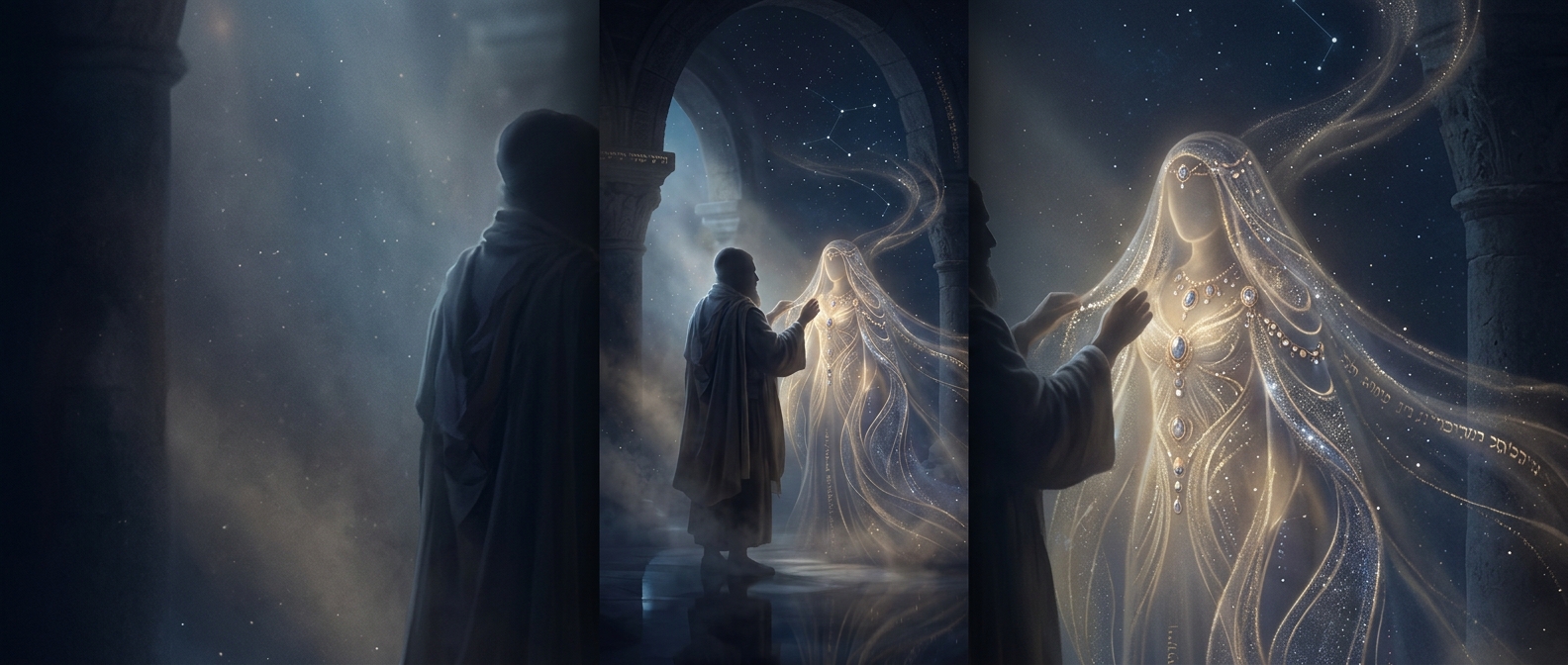
In the Zohar’s Shavuot passage, Rabbi Shimon bar Yochai and his companions stay awake studying Torah. Their learning is pictured as adorning the Shekhinah—the divine presence, often represented in Kabbalah as feminine—for her union with God’s masculine aspect. The jewelry and bridal gown are metaphors: the adornments are the sacred words and interpretations assembled through study.
That image gives an intellectual act a cosmic role. The students are not merely recalling scripture; in the Zohar’s mystical framework, their study helps bring divine forces into relationship and harmony.
Why Shavuot becomes a bridal night
Shavuot commemorates the giving of the Torah at Mount Sinai. Jewish mystical tradition connects that revelation with a marriage: Torah is received through a covenant between God and Israel. The Zohar extends the wedding image into the divine realm, making the students’ nighttime study part of the preparation for a sacred reunion.
The scene also reverses the usual sense of preparation. Instead of dressing themselves for a celebration, the learners use attention, interpretation, and recitation to prepare the Shekhinah. Their wakefulness becomes service, with each passage contributing another symbolic ornament.
From mystical image to practice
The Zohar’s account helped give meaning to the custom of staying up to study on Shavuot, often called Tikkun Leil Shavuot—a “rectification” or spiritual preparation for the night. The practice can include readings from the Torah and other Jewish texts. Its point is not that studying literally sews a garment, but that learning is understood as active participation in a relationship between the human and divine.
That is what makes the bridal metaphor more than decoration: in this mystical reading, a night spent studying is itself part of the wedding preparation.