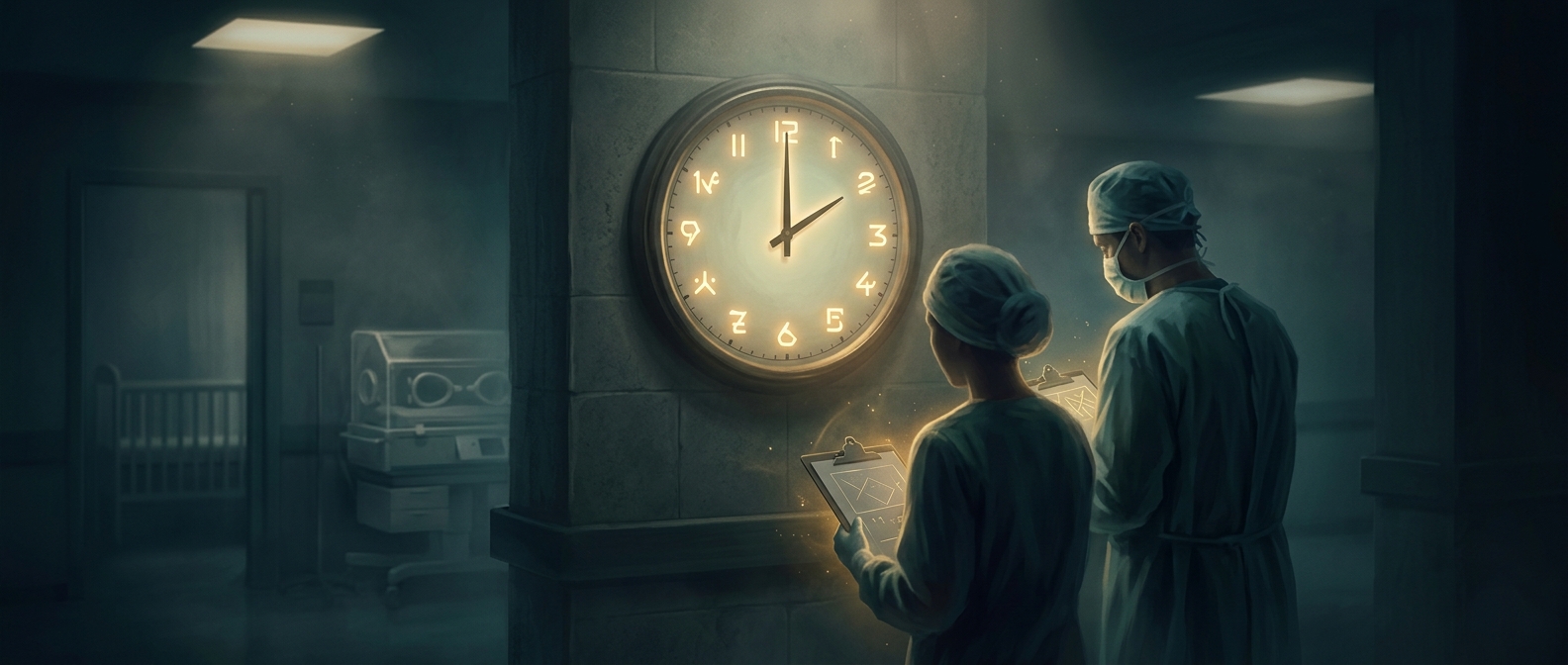
A delivery room has a side of the line
A state border drawn through a hospital is more than a curious feature of its floor plan. It means rooms in the same building can sit under different state jurisdictions. The mother may remain in one facility throughout labor, but the precise place where the baby is delivered can matter for how the birth is recorded.
Birth records are generally tied to where a birth occurs, not where labor began. So when a hospital crosses a state line, the room’s location may determine which state records the birth. If the border also separates time zones, the local clock can differ from one part of the building to another—an unusual complication for noting the time of birth.
One building, overlapping rules
A hospital does not become one legal jurisdiction simply because it has a single entrance or staff. State requirements can vary, and a border-crossing facility may need to account for which side particular rooms or services occupy. The exact procedures depend on the states involved, but the underlying issue is concrete: a map line can pass through places where care is delivered.
For a family, the boundary may be invisible during a busy delivery. Later, it can become a detail on official paperwork: the location that matters is not necessarily the hospital’s mailing address or where labor started, but the room where the child was born.