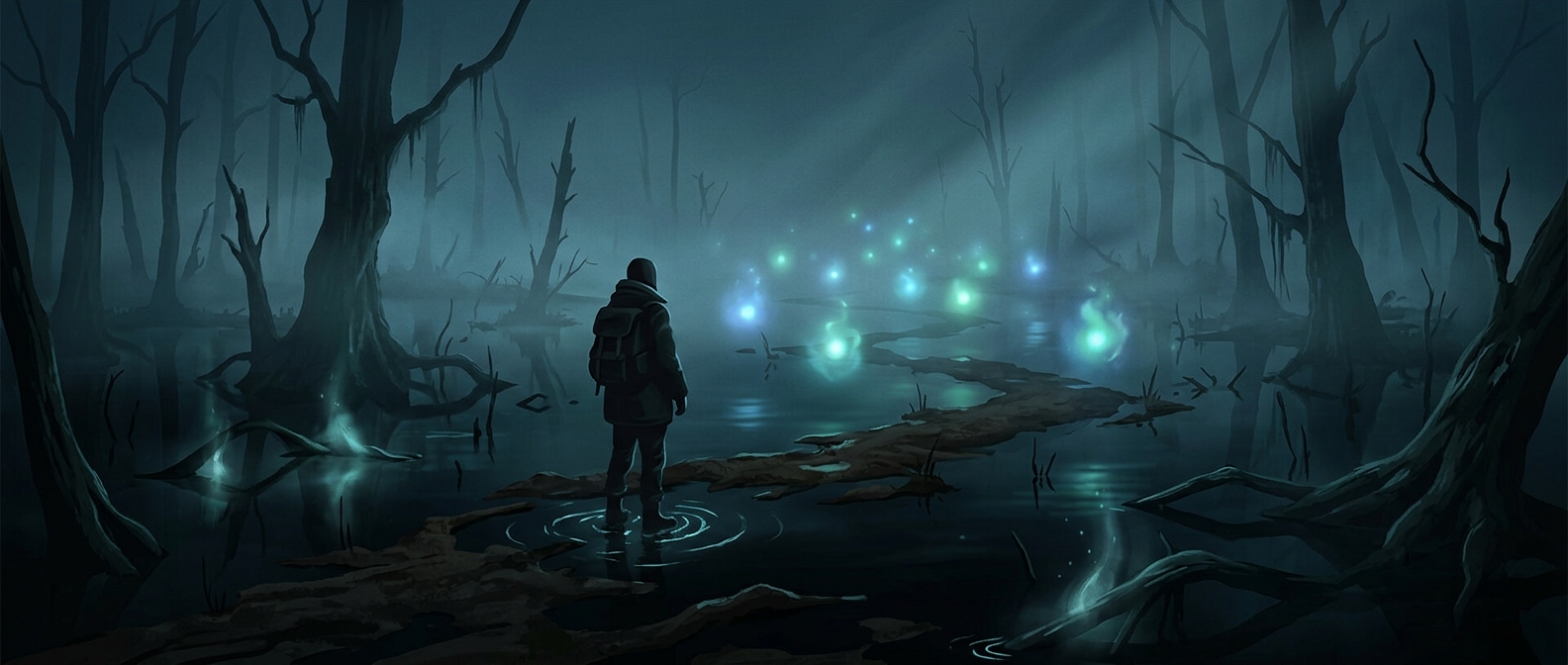
How Rotting Wetlands Could Make a Wandering Flame
In a waterlogged swamp, dead plants break down in mud with little oxygen. That decay can release gases, including methane and compounds containing phosphorus. The traditional “swamp gas” explanation proposes that these gases may sometimes ignite, producing a brief, wavering light above the ground. The exact chemistry behind reported blue marsh lights is not firmly established, so the idea is best understood as a possible explanation rather than a settled account of every sighting.
Why a Light Can Seem to Lead Someone On
A small flame or glow against a dark, featureless landscape offers few clues to its distance or position. As a person moves, the light may appear to shift too, making it seem like a destination just ahead. But a glow over wet ground does not reveal whether the mud is shallow, whether there is solid footing nearby, or how far away the light really is.
That mismatch between what the eye suggests and what the terrain allows is the danger. Someone trying to approach a flicker can leave a familiar path and step into soft mud or water, where progress is difficult and landmarks disappear.
The Story Behind the Warning
Across folklore, mysterious lights in marshes became known by names such as will-o’-the-wisp. Their meaning could be supernatural in traditional stories, but the practical warning remains clear without assuming anything paranormal: a light in a swamp is not a safe guide through it. What looks like a beckoning point may be a fleeting glow above ground that cannot support a traveler below.