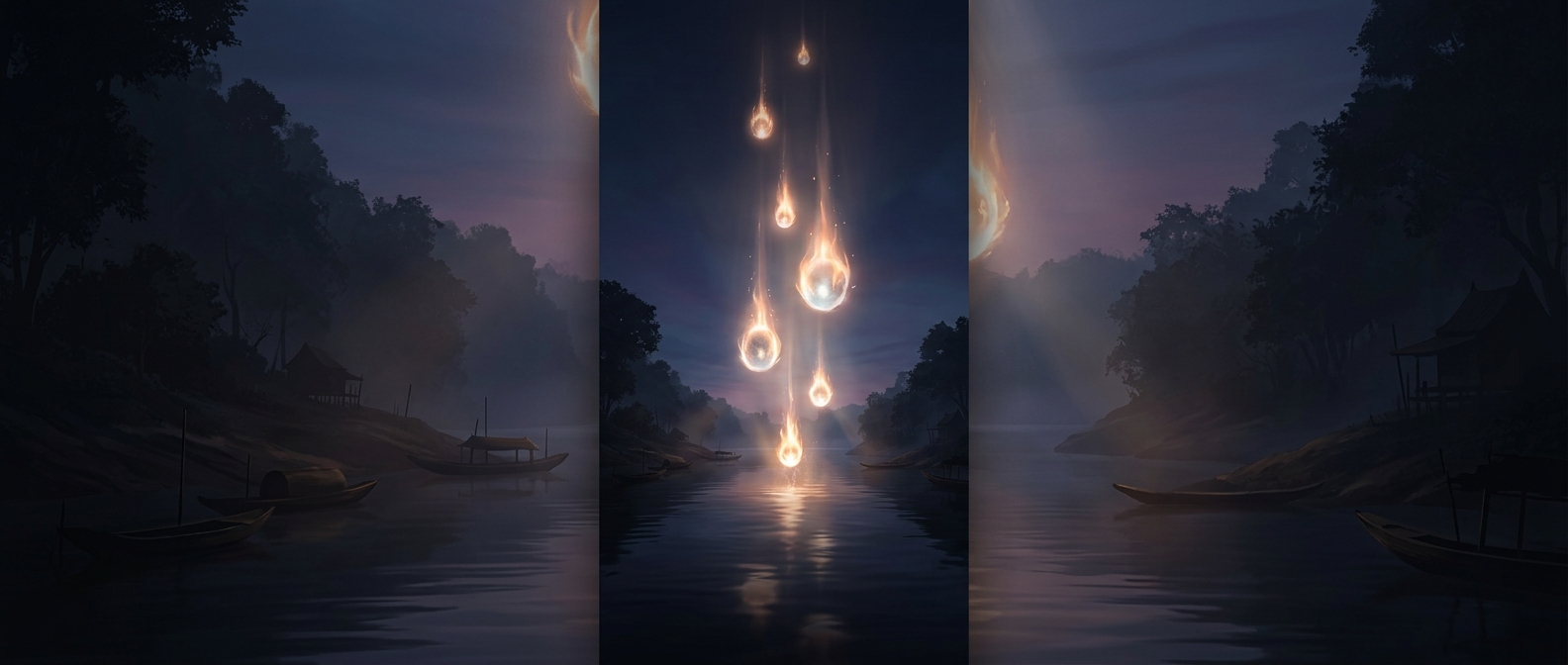
Why a steady light can seem to blink
A distant light has to travel through many layers of air before it reaches an observer. Those layers can differ in temperature and density, bending the light slightly along its path. If the air is changing, the amount of light reaching the eye can fluctuate, making a steady source appear to flicker, dim, or shift position. This bending is called refraction—the same basic effect that makes objects look displaced when seen through water.
A temperature inversion, in which air near the ground is cooler than air above it, can create especially uneven layers. Headlights far away may then be visible over the horizon or appear to hover where no nearby road is obvious. But those possibilities do not establish what any particular observer has seen.
Seeing a light is not identifying it
At great distances, people have few visual clues for judging a light’s size, speed, or location. A small change in brightness can look like a light switching on and off; movement in the atmosphere can make it seem to dart. Without a clear view of the source, observers may describe similar appearances but disagree about what produced them.
That gap between a striking sight and a settled explanation is part of the lights’ enduring pull. The horizon offers a display that feels close enough to watch yet too distant to inspect—leaving each flash vivid, and its source uncertain.