Why the rock seems to turn a corner
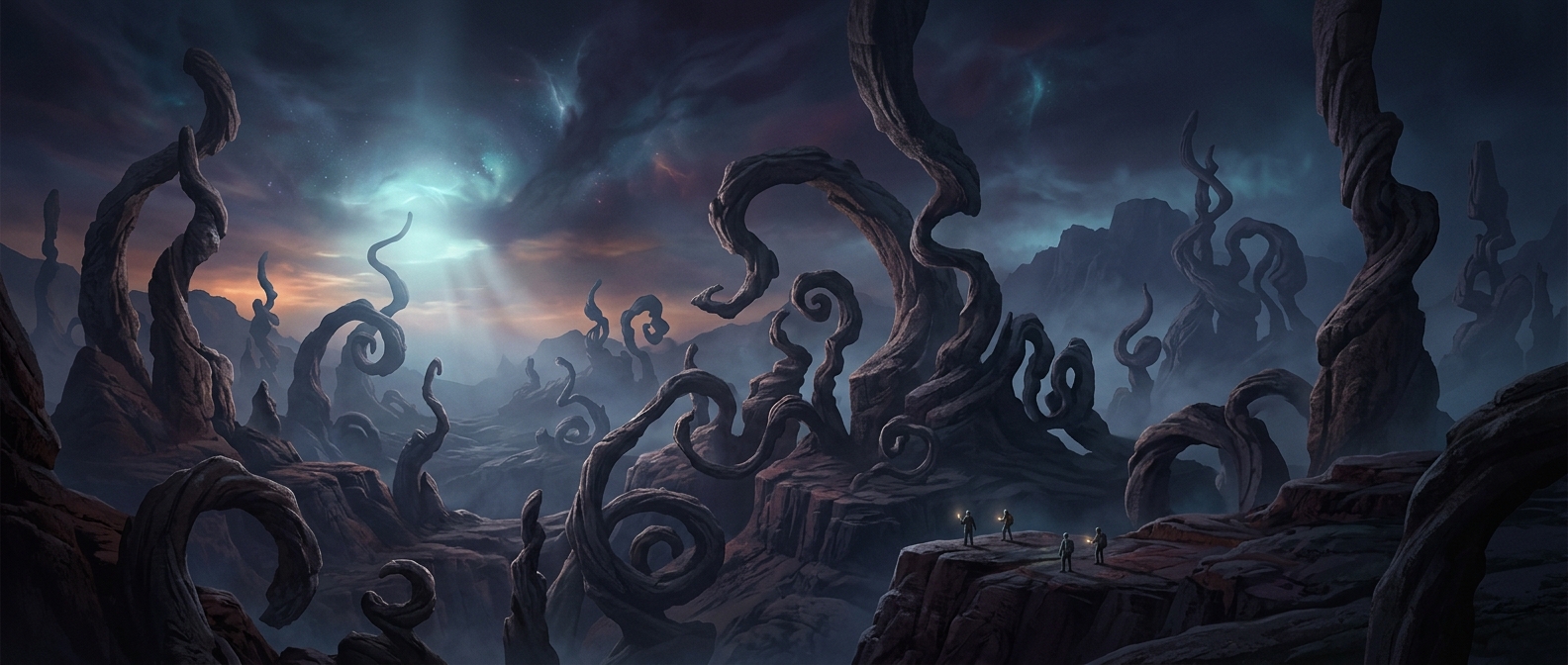
A rock outcrop can look as if it bends because the ground exposes different parts of a once-continuous layer. Sedimentary rock forms when sand, mud, or other material settles in layers and hardens. Later, forces in Earth’s crust can tilt or fold those layers; erosion then strips away softer material and reveals the harder rock in a striking shape.
A sharp change from a low, sideways-looking section to a vertical rise does not mean solid rock flowed like a liquid. It may mark a change in the rock’s orientation, or a boundary between layers with different strength. From one viewing angle, those structures can line up like a deliberate right-angle turn.
Erosion does the carving
Wind, rain, and runoff wear away exposed rock at different rates. A resistant layer may remain standing while adjacent material crumbles, leaving a narrow ridge or column. Cracks also guide erosion, splitting a larger mass into separate forms. When the same layers and weaknesses extend across a broad area, erosion can produce many similar shapes rather than a single oddity.
The precise sequence depends on the site’s rock types and geological history, which cannot be determined from appearance alone. But the visual trick has a tangible cause: ancient layers and later fractures are made visible by the removal of the rock around them. The formations seem to defy gravity because the landscape has been carved away until the surviving stone looks improbably arranged.