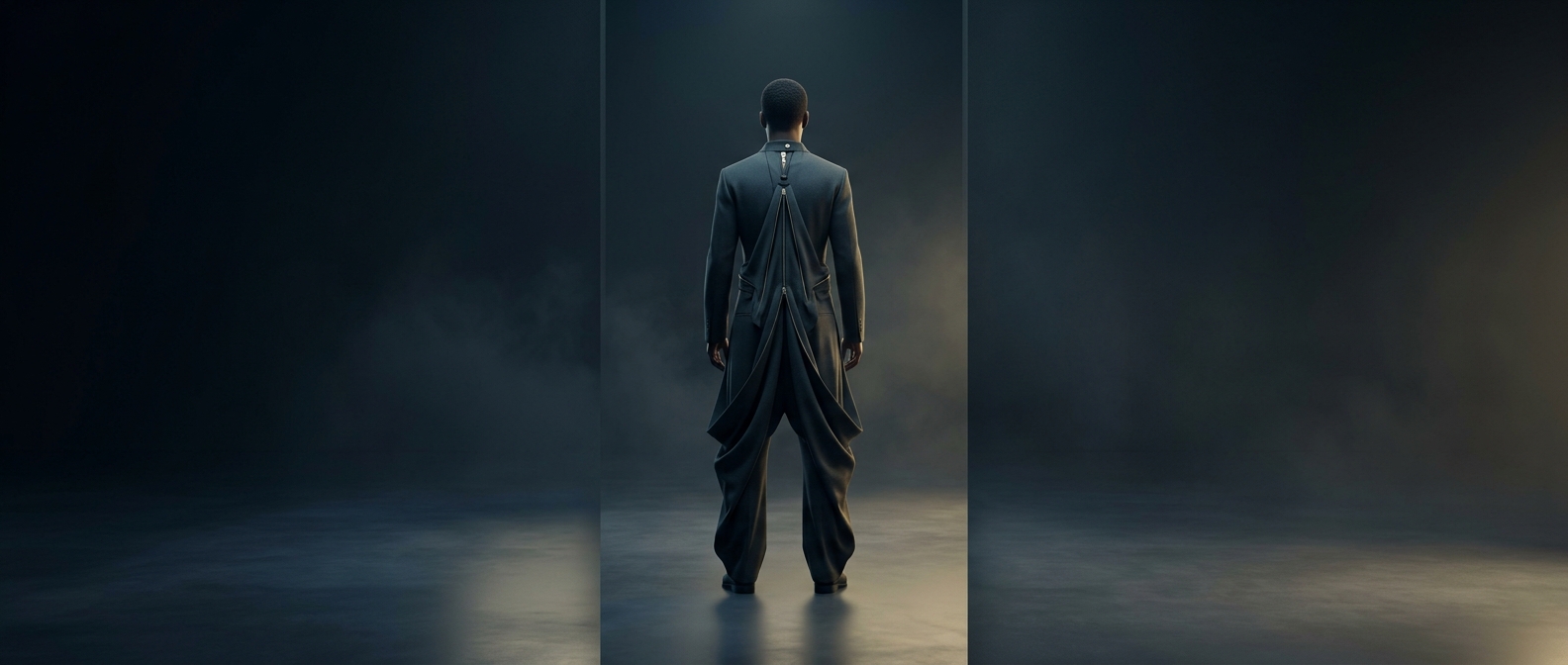
Why Backward Pants Catch the Eye
A pair of pants is easy to recognize partly because its details have predictable places. The fly sits at the front, pockets follow familiar patterns, and seams trace a shape the brain has seen countless times. Turn the pants around, and those cues no longer line up with expectation. The garment remains recognizable, but its visual arrangement feels wrong.
The Brain Notices the Mismatch
Perception is not a fresh inspection of every object. The brain uses past experience to anticipate what it is about to see, then pays attention when the evidence does not fit. With backward pants, the outline still says “trousers,” while the displaced details suggest an unfamiliar orientation. That gap between recognition and expectation creates a moment of visual surprise.
The effect is especially legible because clothing is a familiar, structured object. A misplaced pocket is easy to spot precisely because viewers already know where pockets usually go. The outfit turns an ordinary design convention into the source of its impact.
Confusion Becomes a Style Choice
In everyday dress, people generally expect clothes to be worn as designed, so reversing them can look like a mistake at first glance. Deliberately wearing them that way changes the interpretation: the apparent error becomes the point. The wearer uses a small disruption—not an entirely unfamiliar costume—to invite a second look.
That second look is the payoff. The pants are still recognizable enough for the viewer to detect what has changed, but strange enough to make the familiar silhouette briefly difficult to read.