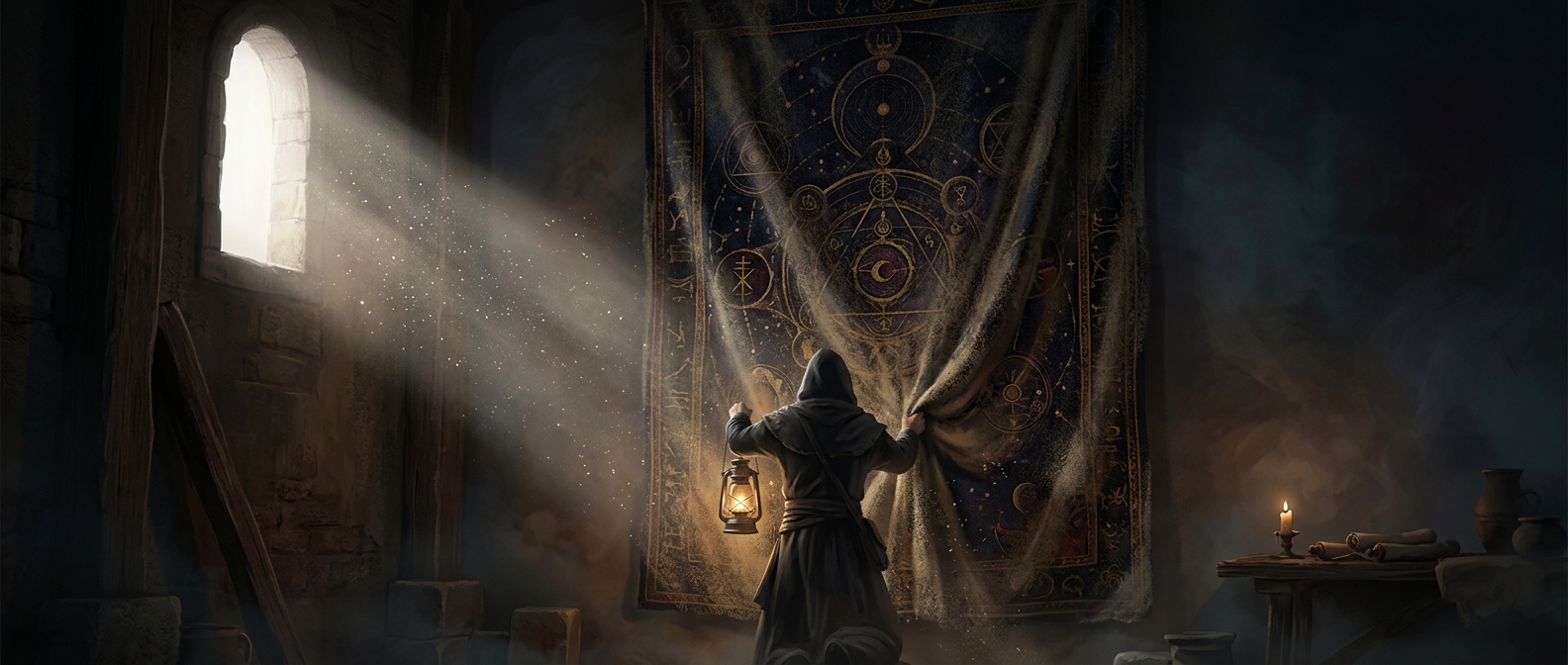
Why a Wall Hanging Collects Dust
A tapestry is a large field of interlaced fibers, and loose airborne particles can settle among its threads. Movement through a room may stir those particles back into the air, where they can settle again. The result is less a sudden layer of grime than a slow buildup that can be easy to miss until the textile is handled or viewed up close.
Cleaning Is a Handling Problem, Too
Unlike a small rug or cushion, a wall hanging may be too large and heavy to take down, support, and wash safely at home. Water can cause some fibers to swell or dyes to run; lifting a wet textile also puts strain on its weave and seams. Even dry cleaning requires care: vigorous brushing or strong suction can pull at loose threads and fragile edges.
For that reason, routine dust removal is usually gentler than washing, while valuable or delicate pieces may need a textile conservator—a specialist in caring for historic and fragile fabrics. The awkward part is not simply getting the dust out; it is doing so without making the tapestry itself bear the cost. A dramatic wall hanging can complete a room’s atmosphere, but its size turns ordinary upkeep into a task that calls for patience and support.