A ball game that rehearsed mounted movement
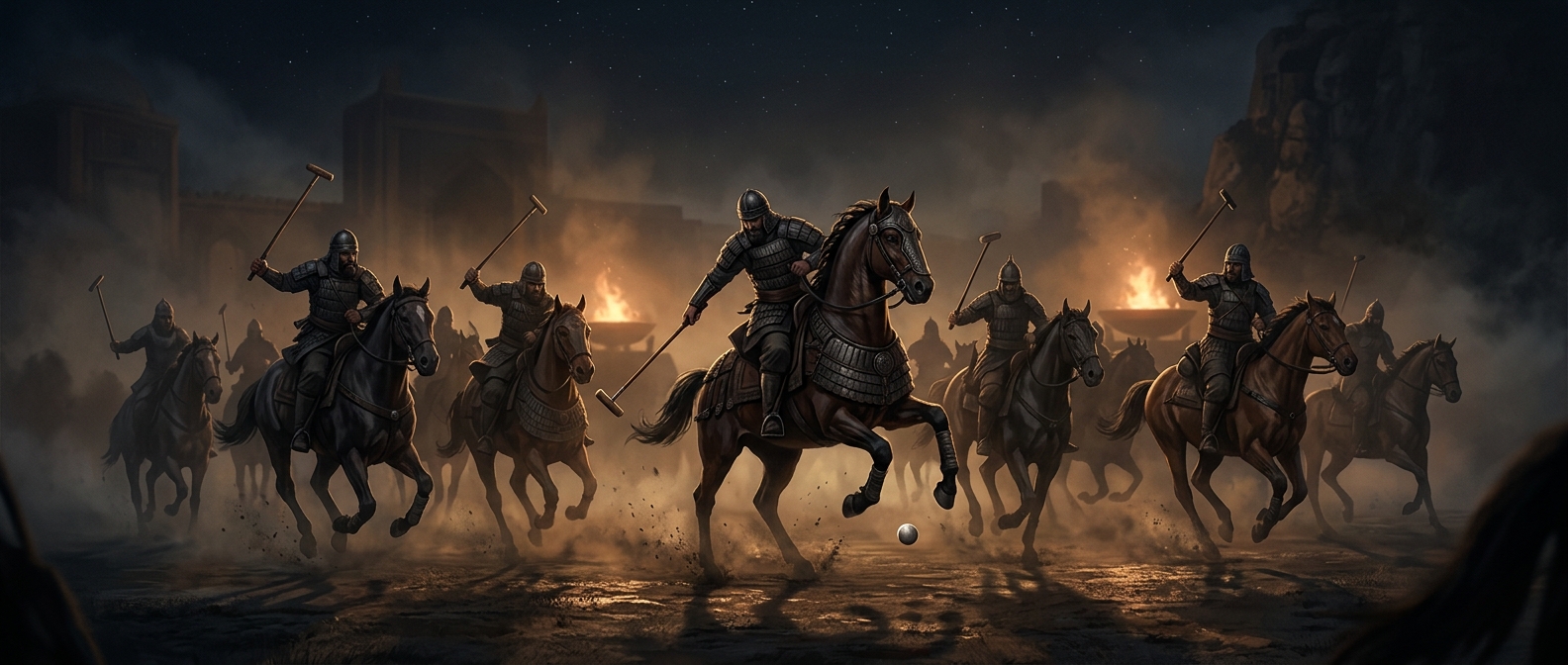
On horseback, even a simple task becomes a test of balance and control. A polo player must guide a moving horse, watch other riders, and swing a mallet toward a ball—often while changing direction at speed. Those demands made the game useful practice for cavalry: riders had to stay composed and responsive amid sudden movement and close-quarters confusion.
The training value lay less in copying a particular battle maneuver than in building habits. A rider who could keep control of a horse while tracking the ball and nearby players was practicing attention, timing, and coordination under pressure. Playing in a group also required riders to react to one another rather than move as if alone.
Practice, not a battle in disguise
Polo could not teach everything a mounted soldier needed. A mallet and ball were not weapons, and a game followed rules that combat did not. But the physical problem at its center—managing a horse while making quick decisions in a crowded, fast-moving space—overlapped with the challenge of riding in a cavalry force.
That overlap helps explain why polo could serve both as recreation and preparation. Its value was built into the play itself: every turn, chase, and contested approach demanded control from rider and horse at once.