Why a Quieter Hour Can Feel More Restorative
The brain does not stop working when a task ends. It may still be holding unfinished intentions, remembering what needs a reply, or staying alert for the next interruption. Each new demand can require attention to shift, decide what matters, and return to what was left unfinished. That mental bookkeeping can make a day feel draining even when its hours were not unusually long.
The Cost of Keeping Things in Mind
A useful way to understand this strain is cognitive load: the amount of information and mental effort being handled at once. A conversation, a notification, and a task deadline compete for limited attention. Switching among them also means rebuilding context—recalling where a task stood and what to do next. The work may be brief, but repeated switches can leave less attention available for the task itself.
This is why “free time” is not always restful. A person can be off the clock while still monitoring messages, anticipating requests, or mentally rehearsing what comes next. The body may be still, but attention remains on call.
What a Real Pause Changes
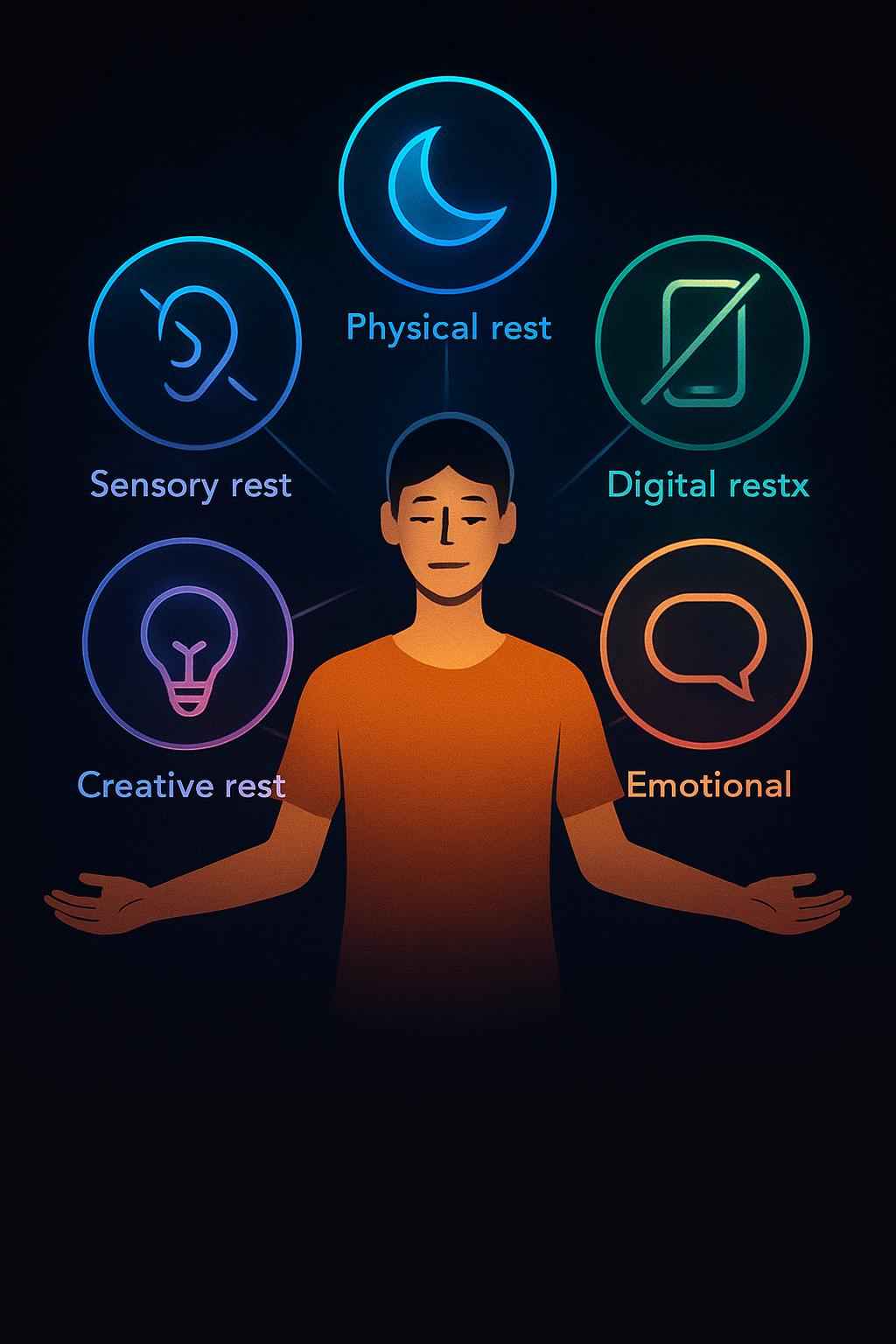
A pause helps when it reduces demands rather than simply replacing one stream with another. Muting alerts, stepping away from conversation, or doing one low-stakes activity can give attention fewer decisions to make. The point is not to eliminate thought; it is to stop repeatedly redirecting it.
That distinction can make rest more practical. Instead of asking only, “How long have I worked?” it can help to ask, “How many things am I still tracking?” Sometimes the most restorative break is not a longer one, but a stretch in which nothing is waiting for an immediate response.