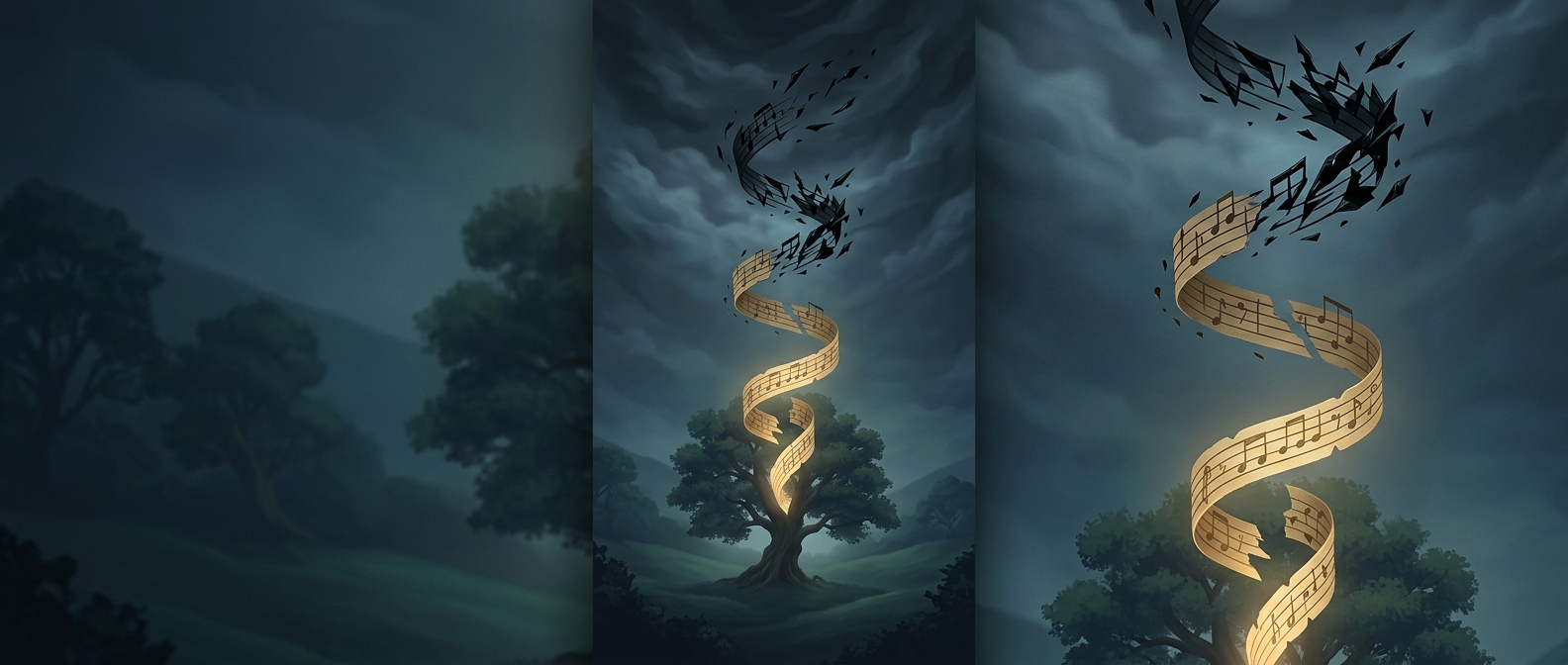
How the Shire’s musical home loses its warmth
A recurring melody can make a fictional place feel familiar before the audience sees it. In The Lord of the Rings, Howard Shore uses the Shire theme as a musical sign of home: its bright, buoyant character belongs to the ordinary life Frodo is leaving behind. As the story grows more dangerous, the melody’s changing arrangement lets that home remain present while making it feel less secure.
The same tune, under greater strain
The effect comes from more than making the music simply louder or sadder. Shore pares back some of the theme’s cheerful instrumental color, changes its rhythmic feel, and lowers certain notes. A lowered note can make a once-settled phrase sound less comfortable, while a changed rhythm can drain some of its easy, dancing motion. Because the underlying musical identity still connects to the Shire, the audience can hear both what Frodo is carrying with him and how the journey is changing his relationship to it.
This is a form of musical storytelling: instead of announcing a character’s feelings in words, the score lets a familiar sound acquire new emotional weight. The theme does not need to disappear when Frodo leaves home. Its transformation makes the loss audible. By the time its warmth has been pared away, the music can recall the Shire and suggest how far Frodo has moved from the person who first set out.